CRAC CHINA 2026 | CONFERENCE HIGHLIGHTS
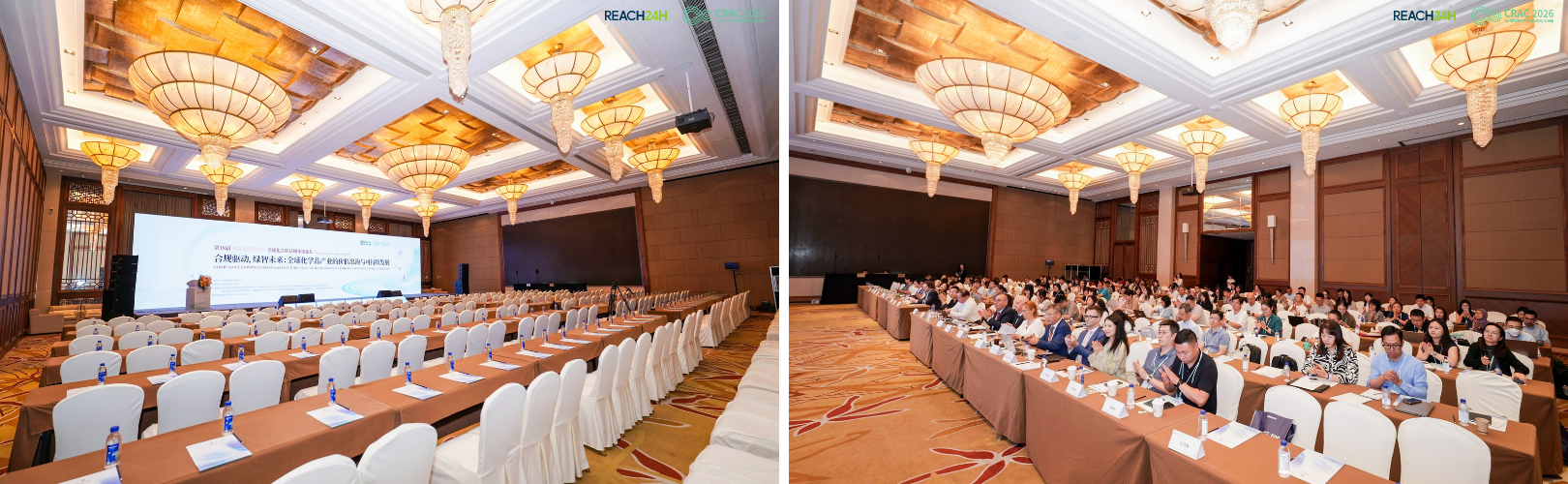
REACH24H brought together nearly 400 delegates from government bodies, international organizations, industry and the media at the 18th Chemical Regulatory Annual Conference—CRAC China 2026, held in Wuyishan, Fujian, China, on October 21–23.
Across two forums covering chemicals and agrochemicals, the conference connected regulatory developments with the decisions businesses face in market access, product stewardship and sustainable growth. The chemicals forum examined how manufacturers, importers, brand owners and supply-chain teams can turn regulatory information into practical action.
Quick Navigation
International Dialogue and Industry Collaboration
The program combined contributions from the European Chemicals Agency (ECHA), China's National Registration Center for Chemicals, Greece's General Chemical State Laboratory, Türkiye's Ministry of Environment, Urbanization and Climate Change, the Vietnam Responsible Care Council, the Nickel Institute, academic institutions and businesses. Their participation brought regulatory interpretation, inspection experience and industry implementation into the same discussion.
Organized by REACH24H and co-organized by the Zhejiang Crop Protection Industry Association, the conference demonstrated the Group's ability to coordinate international speakers, industry organizations and technical contributors around a multidisciplinary program. CRAC China also formed part of the 2026 CRAC series, which included events in Italy, Singapore and Japan.
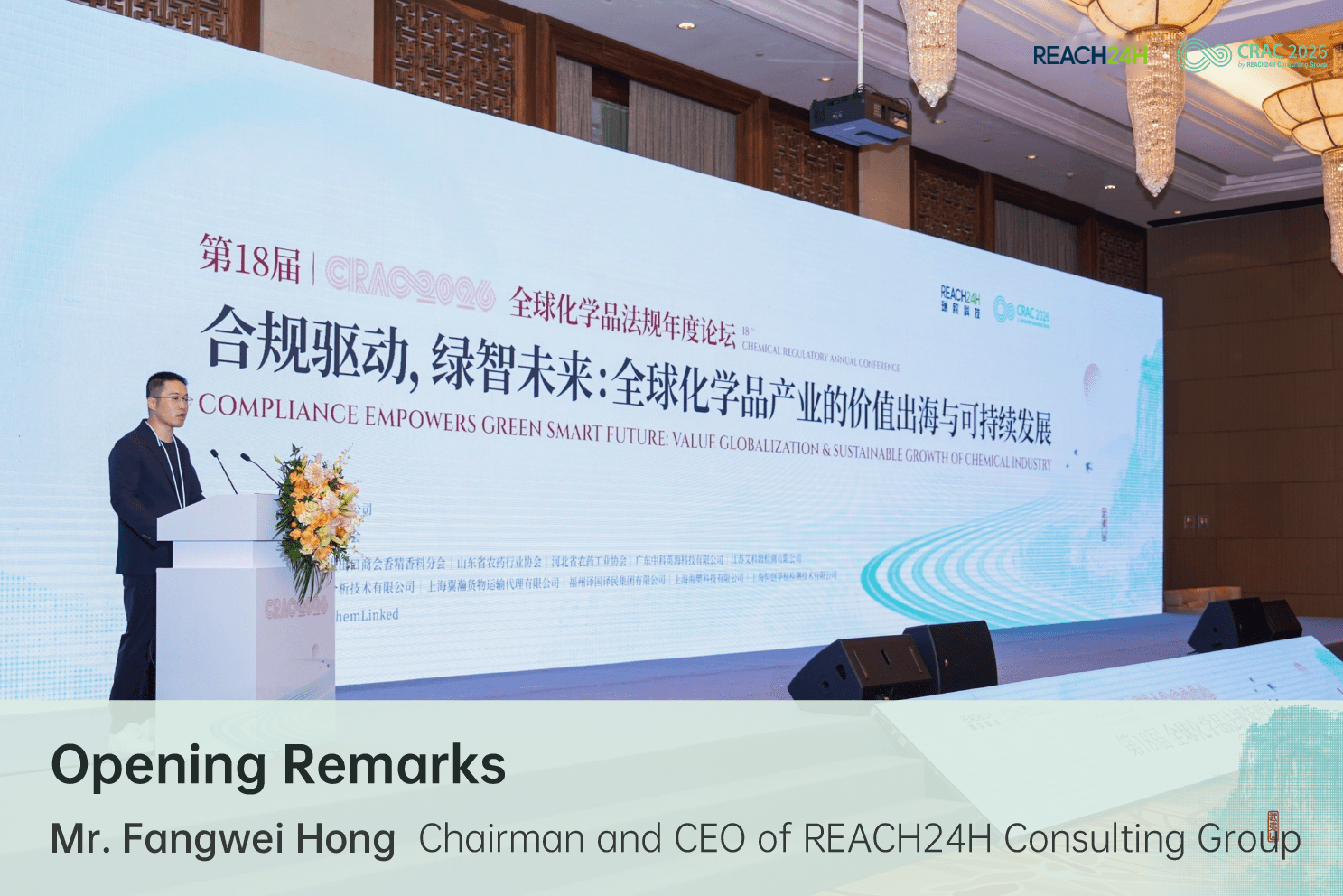
In his opening remarks, Mr. Fangwei Hong, Chairman and General Manager of REACH24H, emphasized that compliance now reaches beyond initial market entry. Raw-material traceability, supplier coordination and product life-cycle management increasingly depend on the quality of information shared across business functions. He also highlighted the potential of AI when combined with reliable data and specialist judgment, reinforcing REACH24H's commitment to creating value through compliance.
Regulatory Dialogue Focused on Market Access and Continuing Obligations
Registration and customs clearance are milestones in a continuing compliance process. Across the chemicals forum, speakers examined how businesses can maintain reliable evidence, assign responsibilities across supply chains and respond to changing requirements in their target markets.
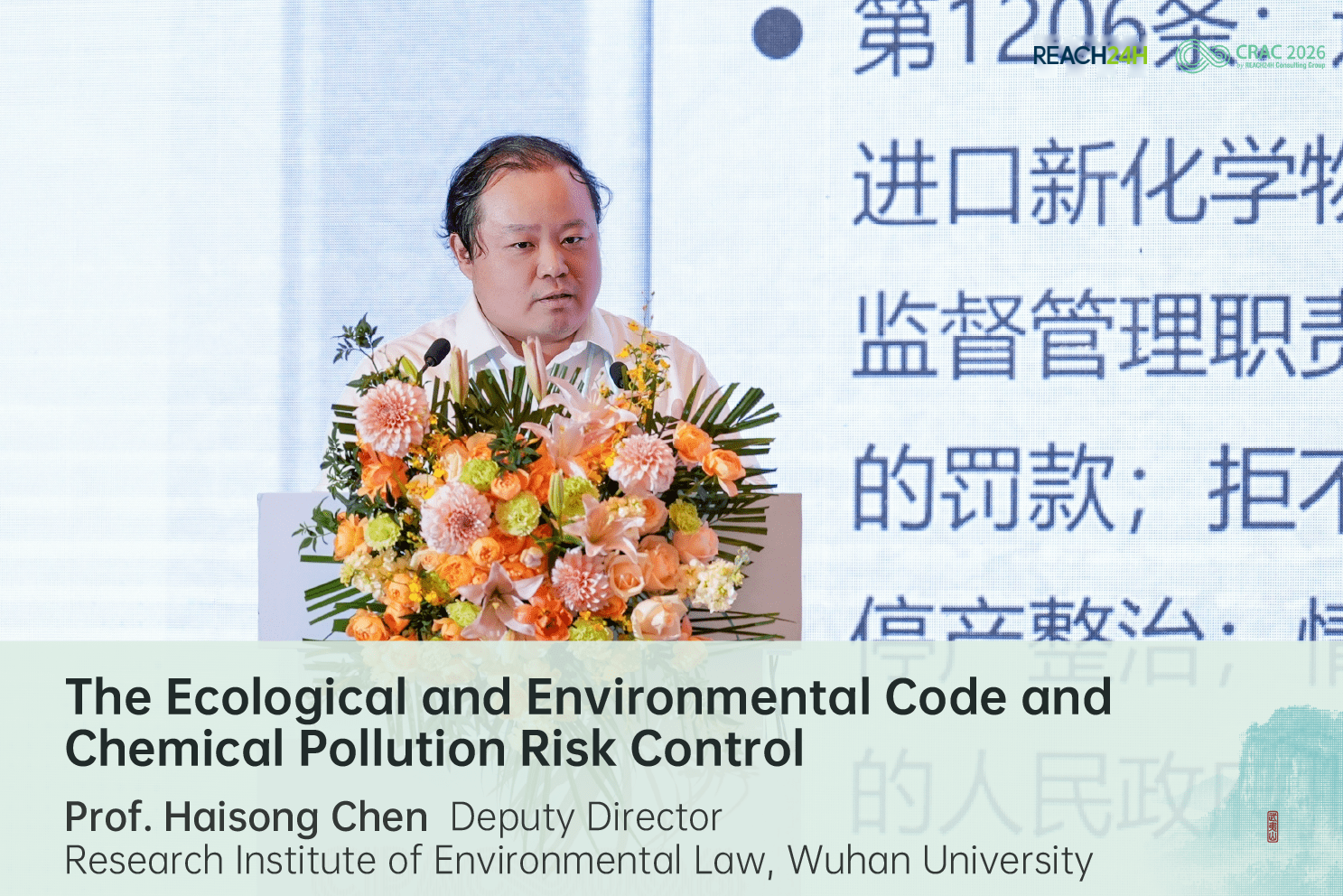
For companies operating in China, Professor Haisong Chen, Deputy Director of Wuhan University's Research Institute of Environmental Law, examined chemical pollution risk controls under China's Ecological and Environmental Code. Drawing on his involvement in the codification process, he discussed chemical information surveys, priority-controlled emerging pollutants and the environmental management registration of new chemical substances. He emphasized prevention at source, including downstream companies' responsibility to verify the compliant sourcing of new chemical substances.
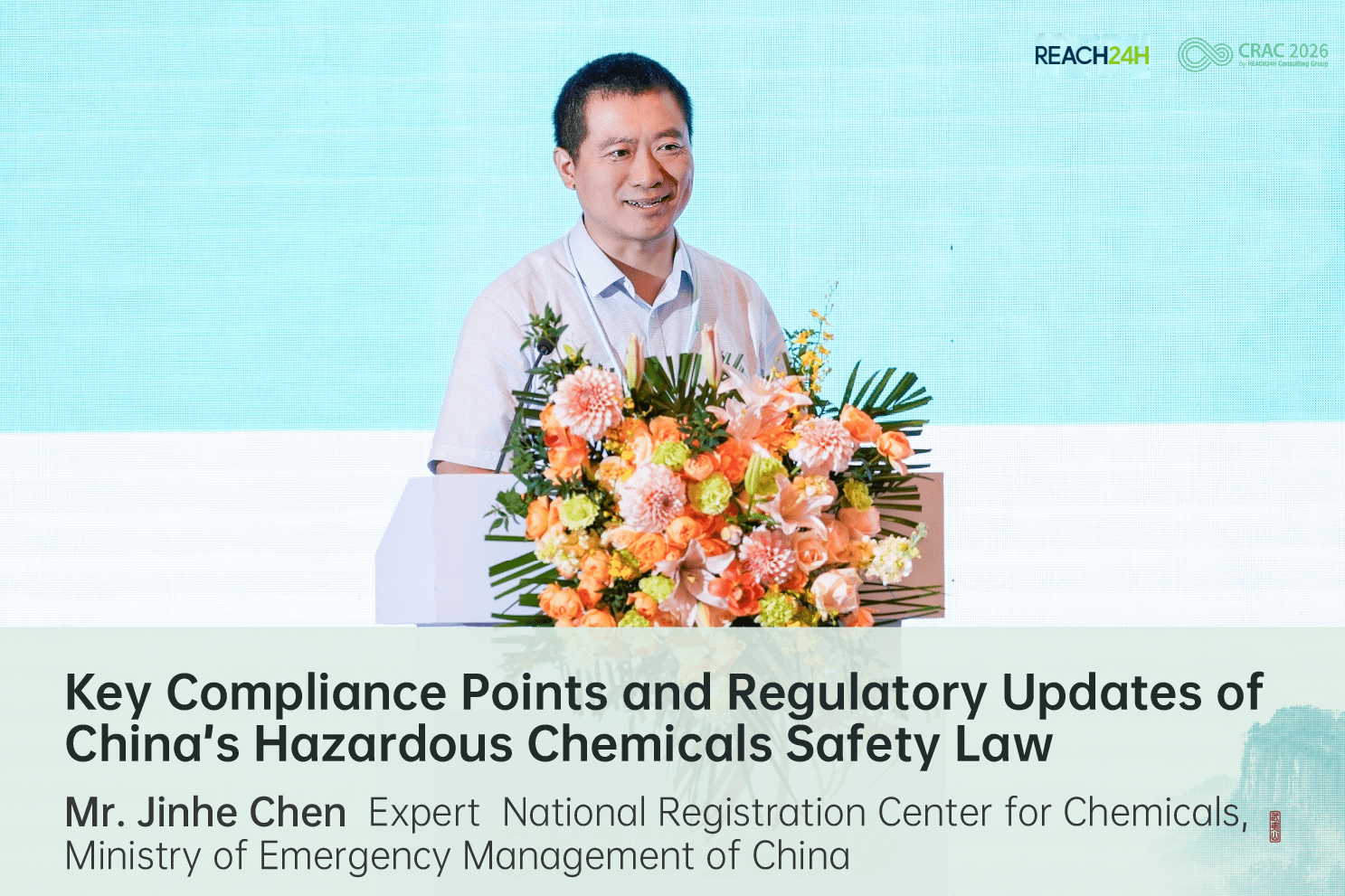
Mr. Jinhe Chen, an expert from the National Registration Center for Chemicals under China's Ministry of Emergency Management, connected hazardous chemical safety requirements with common inspection findings. He highlighted the need to link hazard identification with registration, safety data sheets (SDS), labels, inventory records and storage controls. Chemical auxiliaries and other mixtures warrant particular attention where their hazards have not been adequately assessed.
These discussions are directly relevant to overseas suppliers entering China. REACH24H's China new chemical substance compliance services support substance-status checks, registration-pathway assessment and data planning, helping businesses prepare for their intended activities.
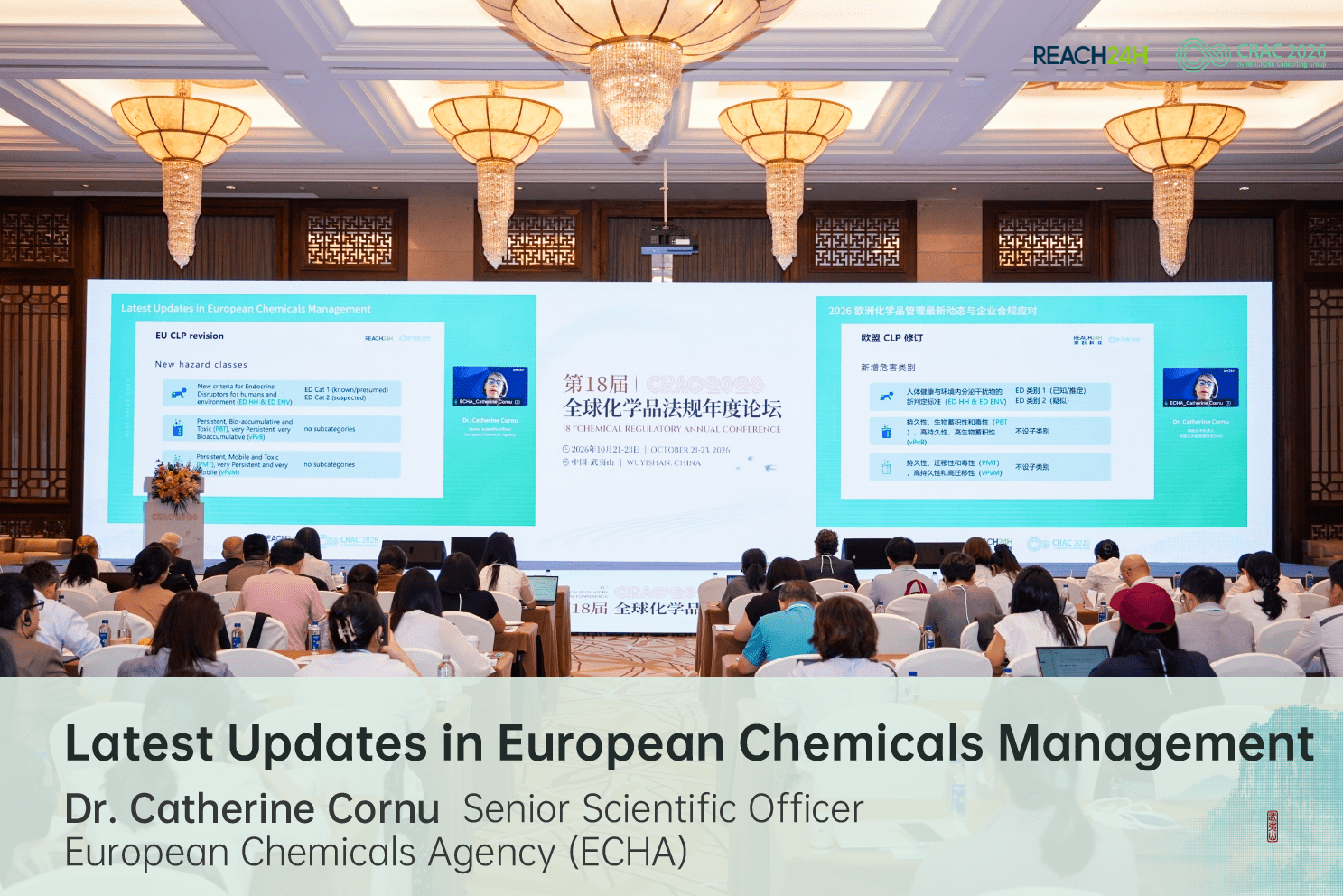
For the European market, Dr. Catherine Cornu, Senior Scientific Officer at ECHA, reviewed developments under the Classification, Labelling and Packaging (CLP) Regulation and the continuing maintenance of REACH registration dossiers. She distinguished applicable requirements from postponed provisions and ongoing simplification proposals. New hazard classes and classification rules for substances containing more than one constituent may require portfolio reviews and updates to labels, SDS and relevant submissions. Findings from import enforcement also underscored the importance of providing importers with current, consistent written evidence.
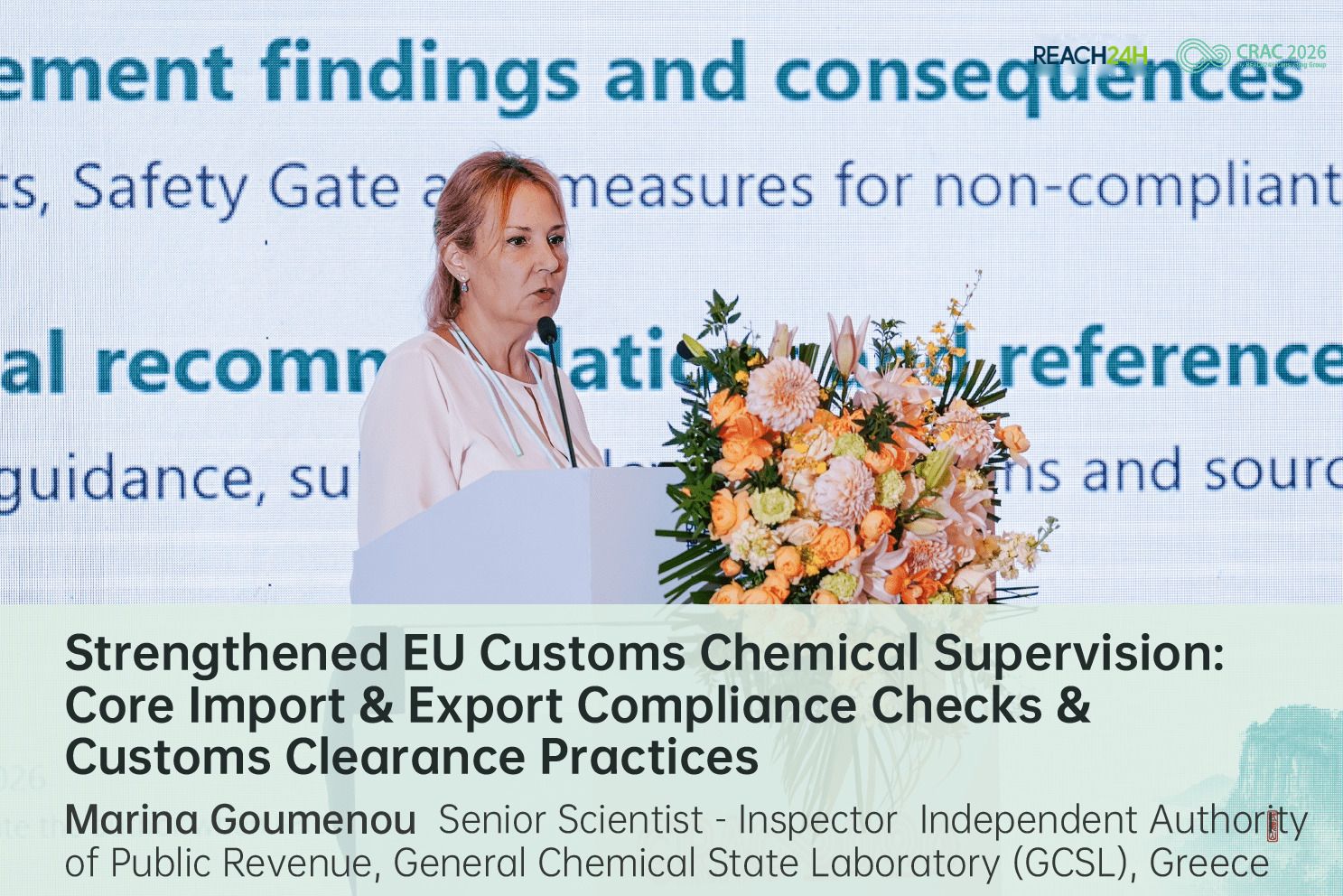
Dr. Marina Goumenou, Senior Inspector at Greece's General Chemical State Laboratory, part of the Independent Authority for Public Revenue, contributed an inspection perspective in her personal professional capacity. She explained that release into free circulation does not establish conformity with all applicable chemical requirements. Practical priorities included verifying composition, substance-level registration coverage within mixtures, restrictions and hazard communication before shipment. She also clarified that appointing an Only Representative for relevant REACH obligations does not automatically transfer CLP responsibilities.
The regional sessions explored how businesses should manage differences between neighboring markets:
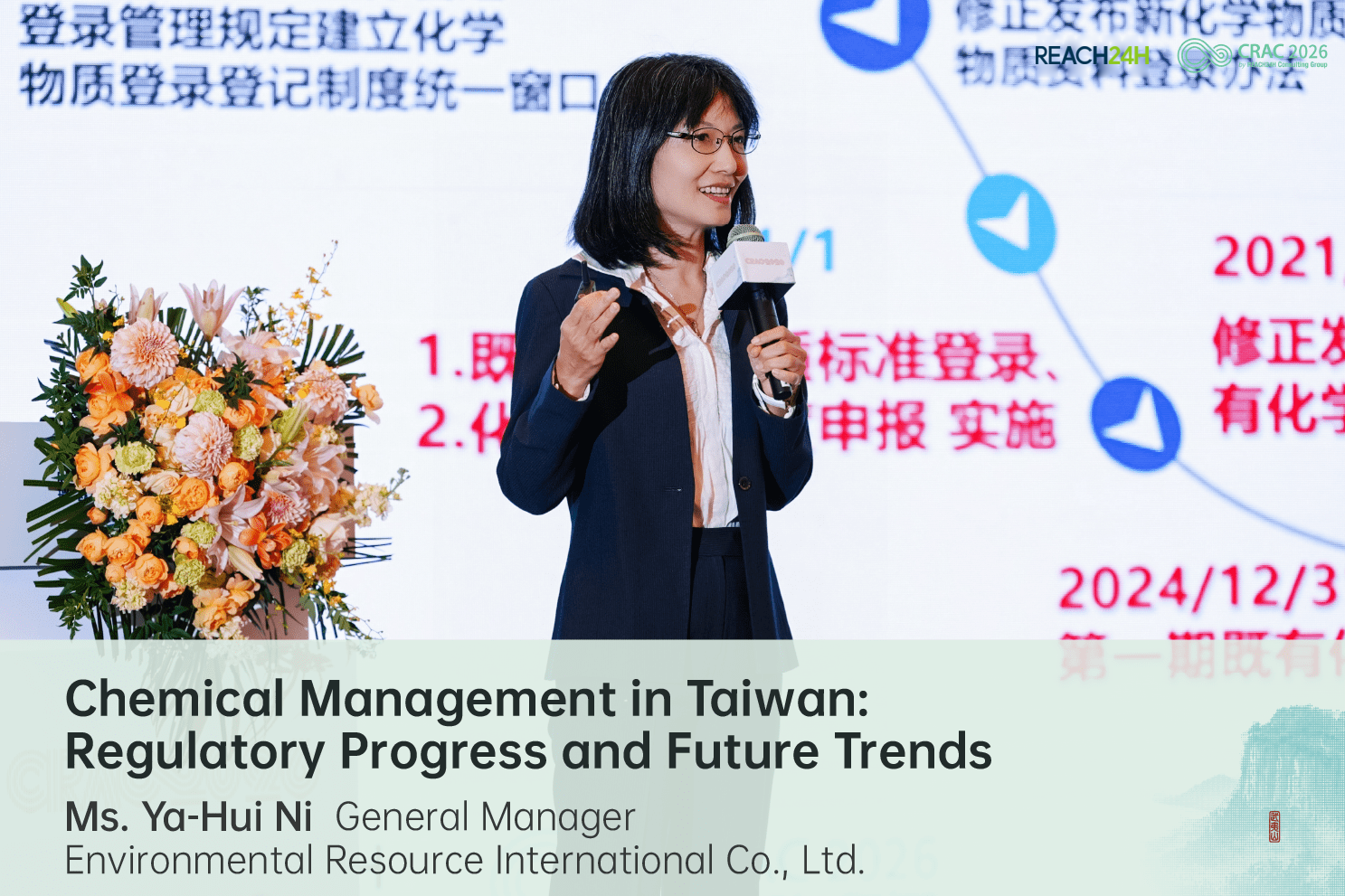
Ms. Ya-Hui Ni, General Manager of ERI, discussed supplementary information requirements following standard registration in Taiwan, China. She highlighted the year-end 2026 arrangements for designated registrants of antimony trioxide, sulfuric acid, toluene and zinc oxide, emphasizing the need to prepare manufacturing, use and exposure information in response to authority notifications.
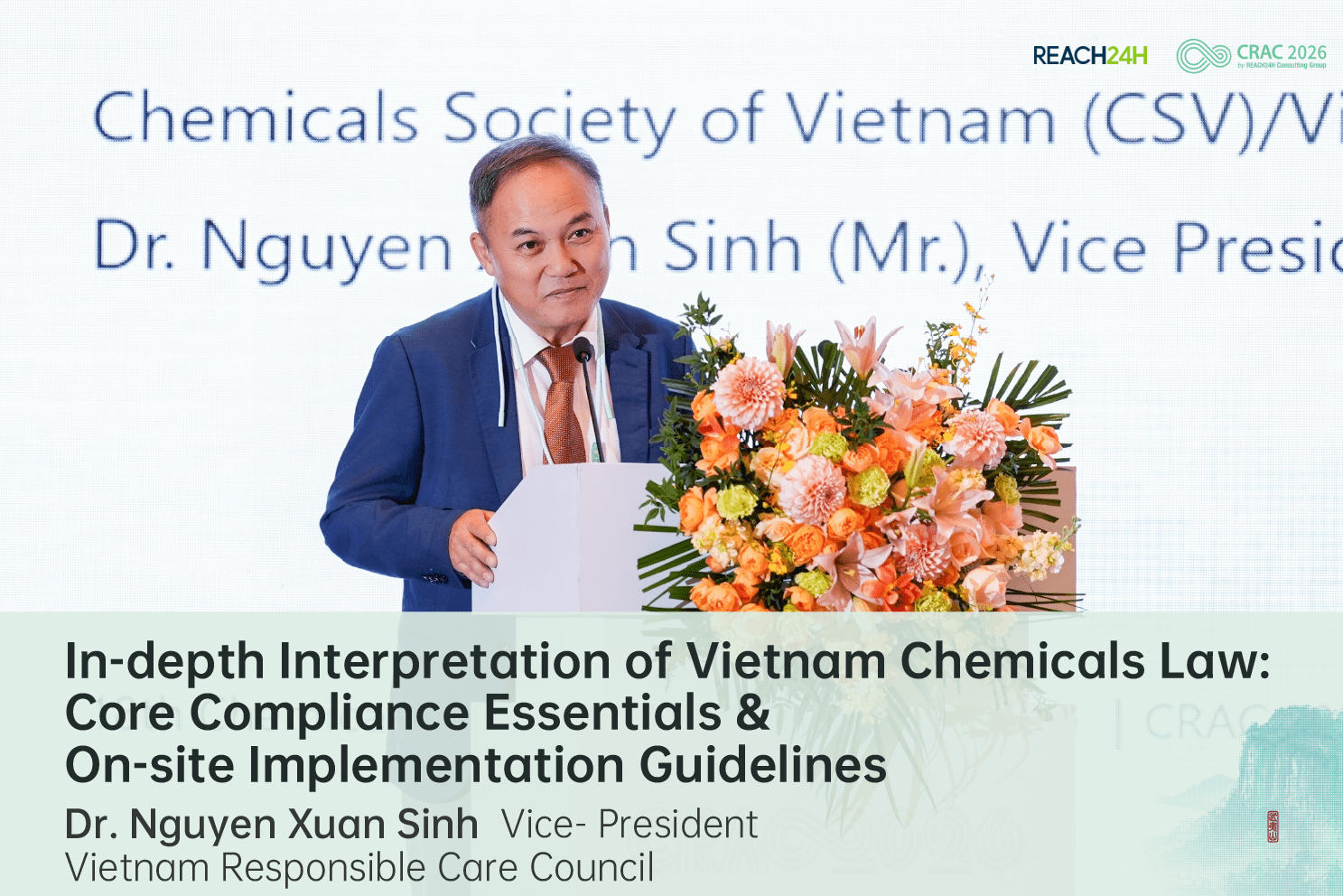
Dr. Nguyen Xuan Sinh, Vice President of the Vietnam Responsible Care Council, examined obligations under Vietnam's Law on Chemicals and its implementing decrees. Chemical-list screening and the activities a company actually performs determine the applicable licensing, declaration and operational requirements. He also discussed Vietnamese-language SDS, storage conditions, personnel competence and incident prevention, while distinguishing the current framework from further amendments under consideration.
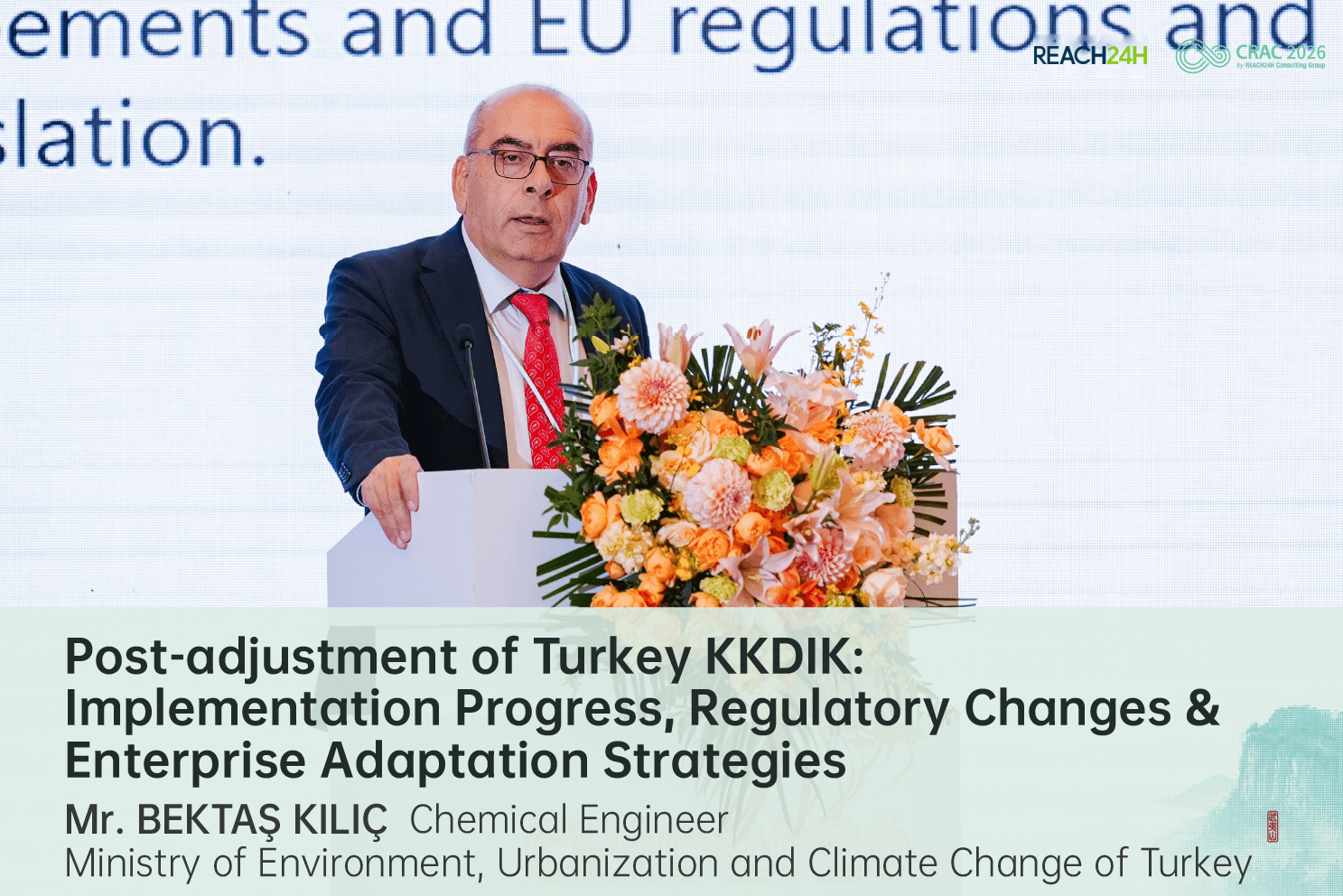
Mr. Bektaş Kılıç, Chemical Engineer at Turkey's Ministry of Environment, Urbanization and Climate Change, explained provisional registration, joint submission and phased full registration under KKDIK. Provisional registration does not replace the data preparation required for full registration under the applicable tonnage- and hazard-based timetable. Overseas manufacturers should coordinate with Only Representatives, importers and joint-registration participants to confirm that coverage matches their business.
For businesses planning or maintaining access to the Turkish market, REACH24H's KKDIK (Turkey REACH) compliance services support registration pathway assessment, Only Representative arrangements and data preparation.
Mr. Fabien Henry, Regulatory Affairs Manager for Southeast Asia at the Nickel Institute, compared frameworks in Vietnam, the Philippines, Singapore, Malaysia, Thailand and Indonesia. Differences in GHS implementation, classification lists, language requirements and permitting call for substance-by-substance, market-by-market records. He also emphasized engagement through industry associations and regional cooperation platforms to understand emerging requirements and contribute practical evidence while rules are being developed.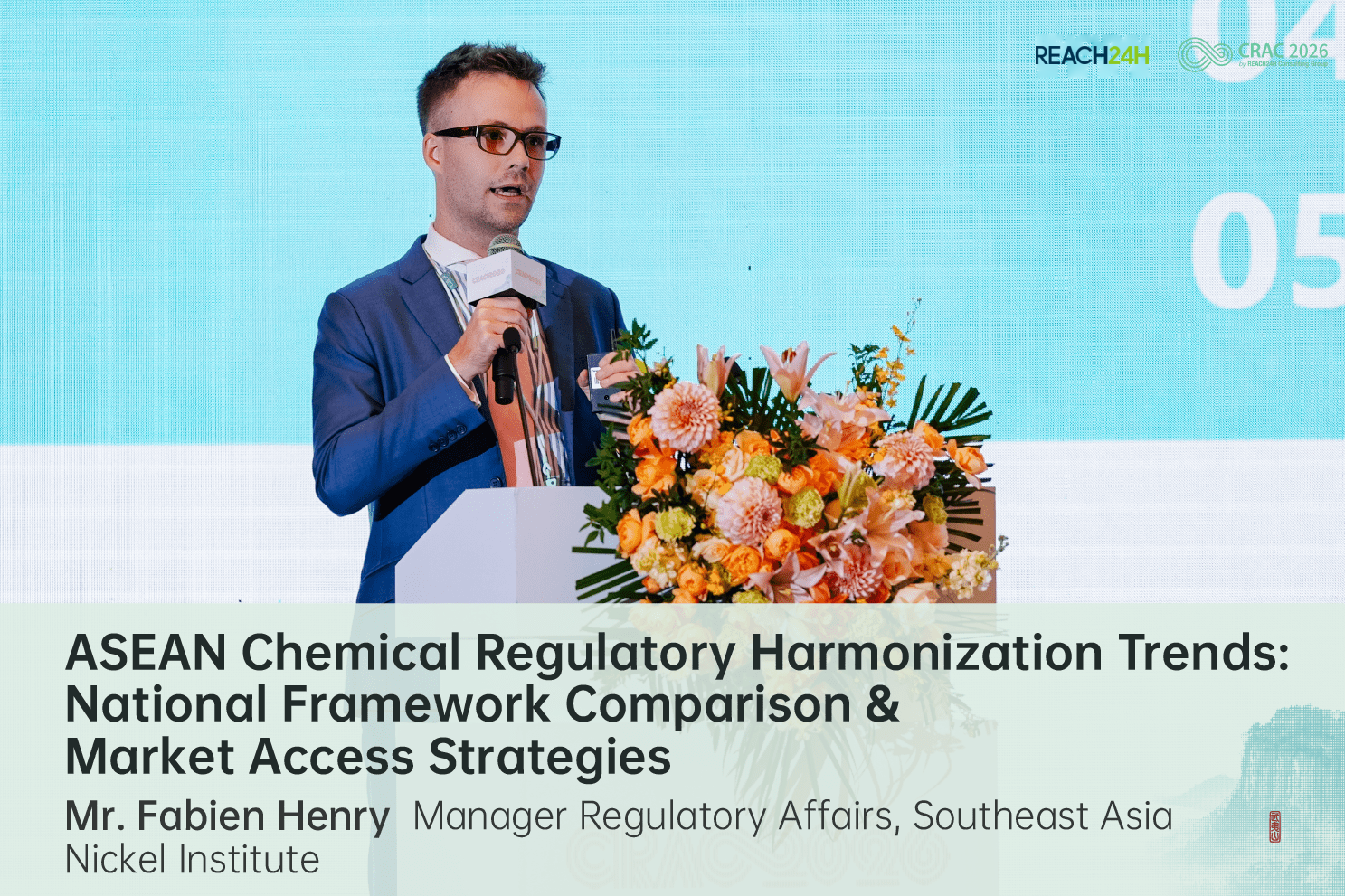
Bringing Sustainability into Procurement, Packaging and Production
The sustainability sessions connected policy developments with decisions about energy, materials, suppliers and operational investment.
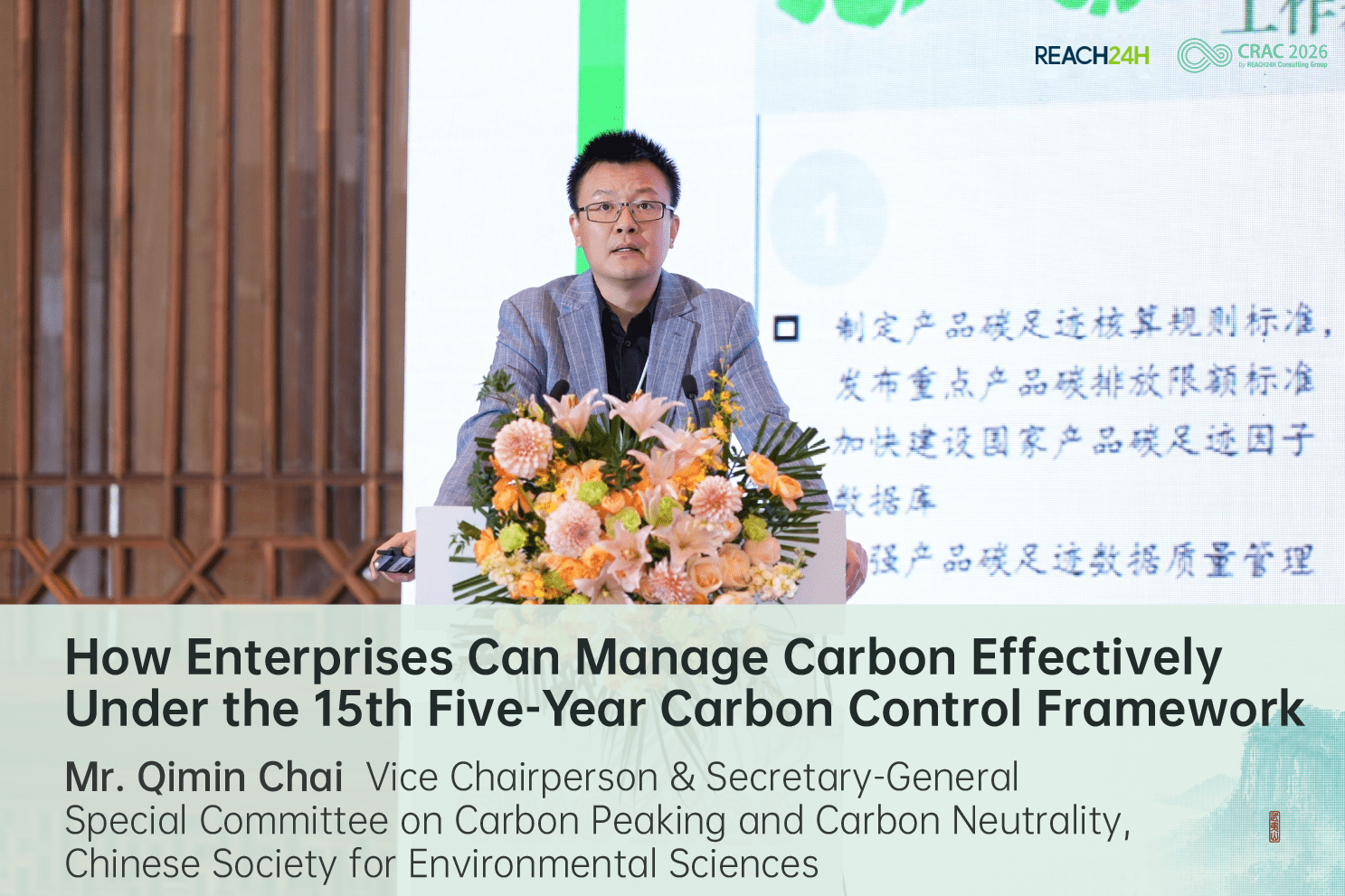
Mr. Qimin Chai, Director of the Strategic Planning Department at China's National Center for Climate Change Strategy and International Cooperation, examined the transition toward controls on both total carbon emissions and carbon intensity during the 15th Five-Year Plan period. He connected planned carbon-market expansion and product carbon footprint management with corporate investment and operating decisions. Priorities included reliable emissions accounting, proactive compliance planning, cleaner energy, supply-chain traceability and the use of green finance to support the transition.
Dr. Carol Shi, Regulatory Expert at REACH24H, translated the EU Packaging and Packaging Waste Regulation (PPWR) into practical supply-chain preparations. She discussed substance restrictions, recyclability, recycled content, packaging minimization, reuse and extended producer responsibility, with attention to their respective application dates. Companies need to identify their legal roles and maintain packaging records covering composition, weight, suppliers and intended use. These records support technical documentation, EU declarations of conformity, labeling and national EPR obligations.
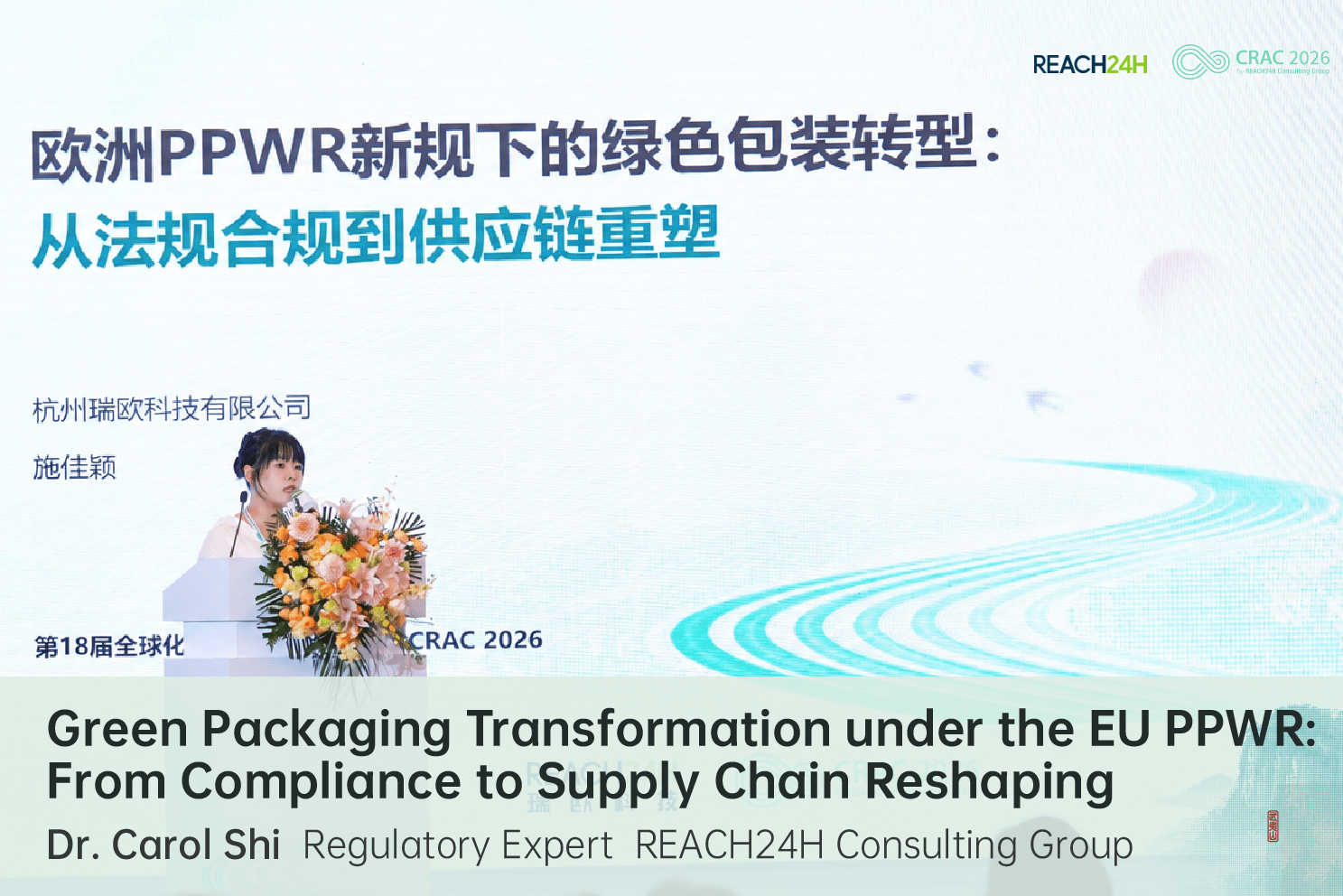
REACH24H's EU PPWR packaging compliance services help businesses assess these requirements and incorporate compliance considerations into packaging and supply-chain planning.
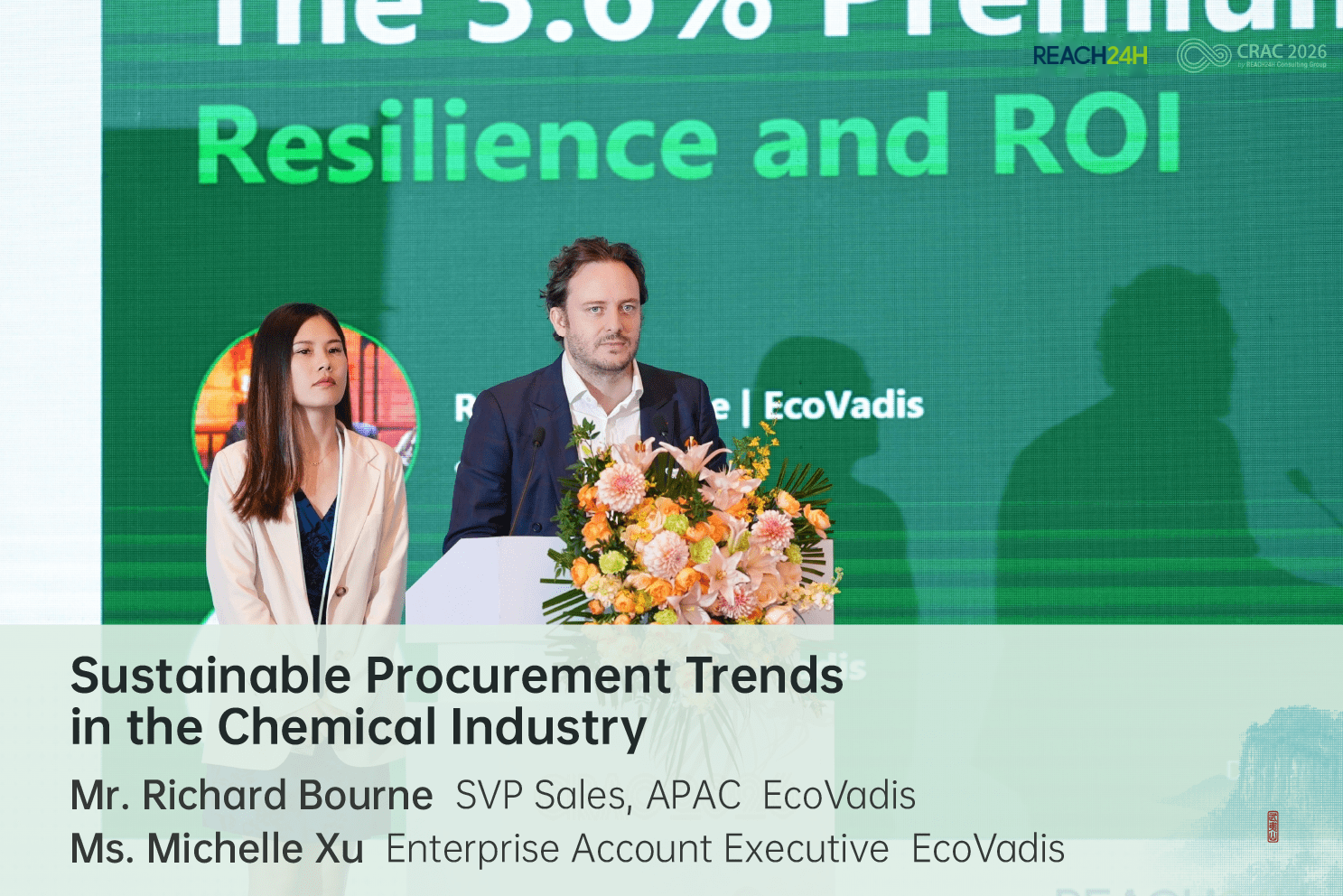
Mr. Richard Bourne, Senior Vice President, APAC, and Ms. Michelle Xu, Key Account Manager at EcoVadis, examined the relationship between sustainable procurement, resilience and business performance. Drawing on the 2026 Sustainable Procurement Barometer and EcoVadis ratings data, they highlighted the gap between collecting supplier information and using it in purchasing decisions. Sustainable procurement remained a comparatively weak area within the chemical-industry assessment sample. Their recommendations centered on integrating ESG data into sourcing and supplier management, building supplier capabilities and linking sustainability performance with commercial incentives.
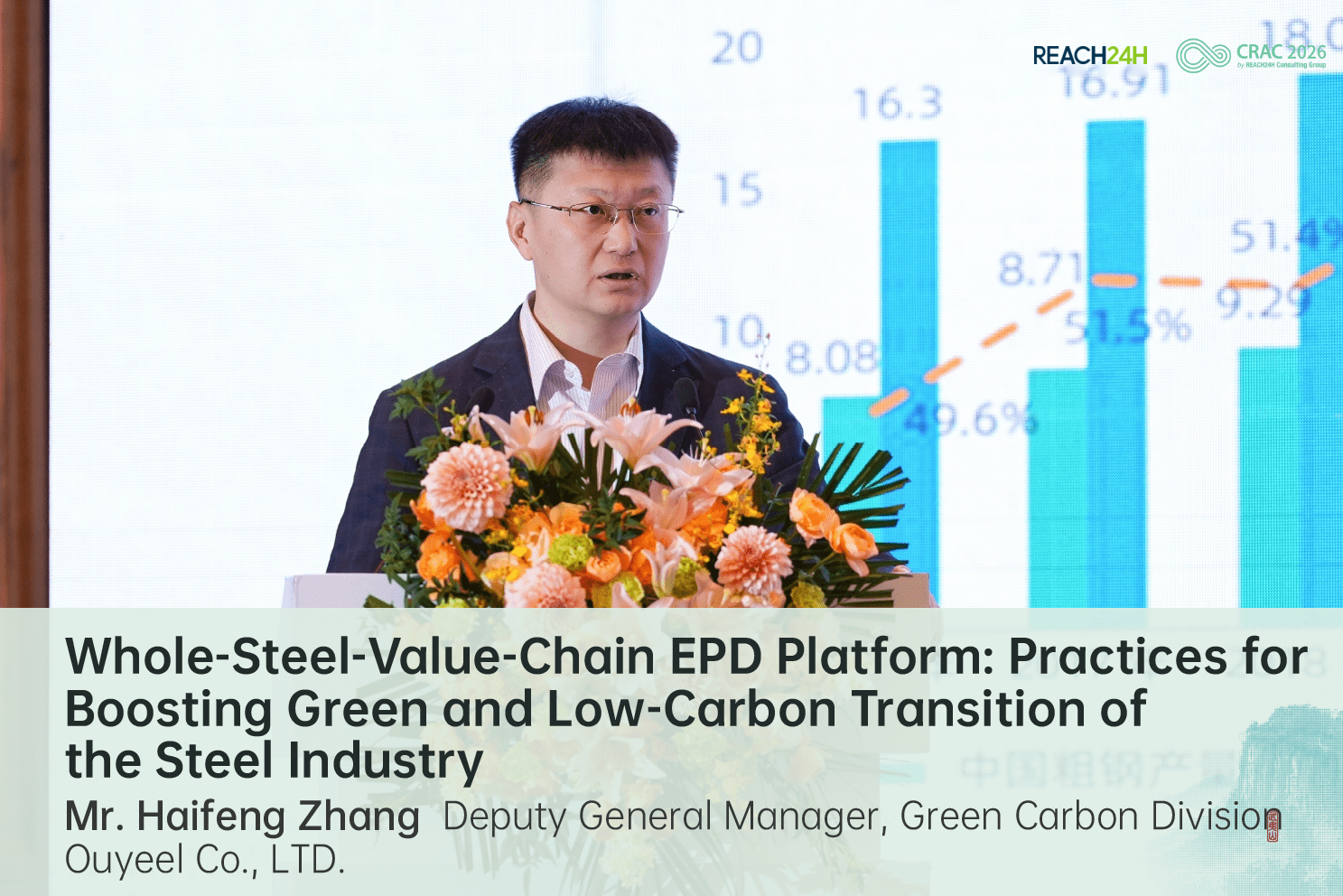
Mr. Haifeng Zhang of Baowu Group's Ouyeel presented the steel industry's Environmental Product Declaration (EPD) programme and its separate low-carbon emission steel evaluation initiative. Product Category Rules, life-cycle assessment and independent verification provide a structured basis for environmental disclosure. Examples from export orders, customer procurement and product labeling illustrated how verified information can support communication across the value chain. He also described international cooperation to improve alignment between programmes and standards.
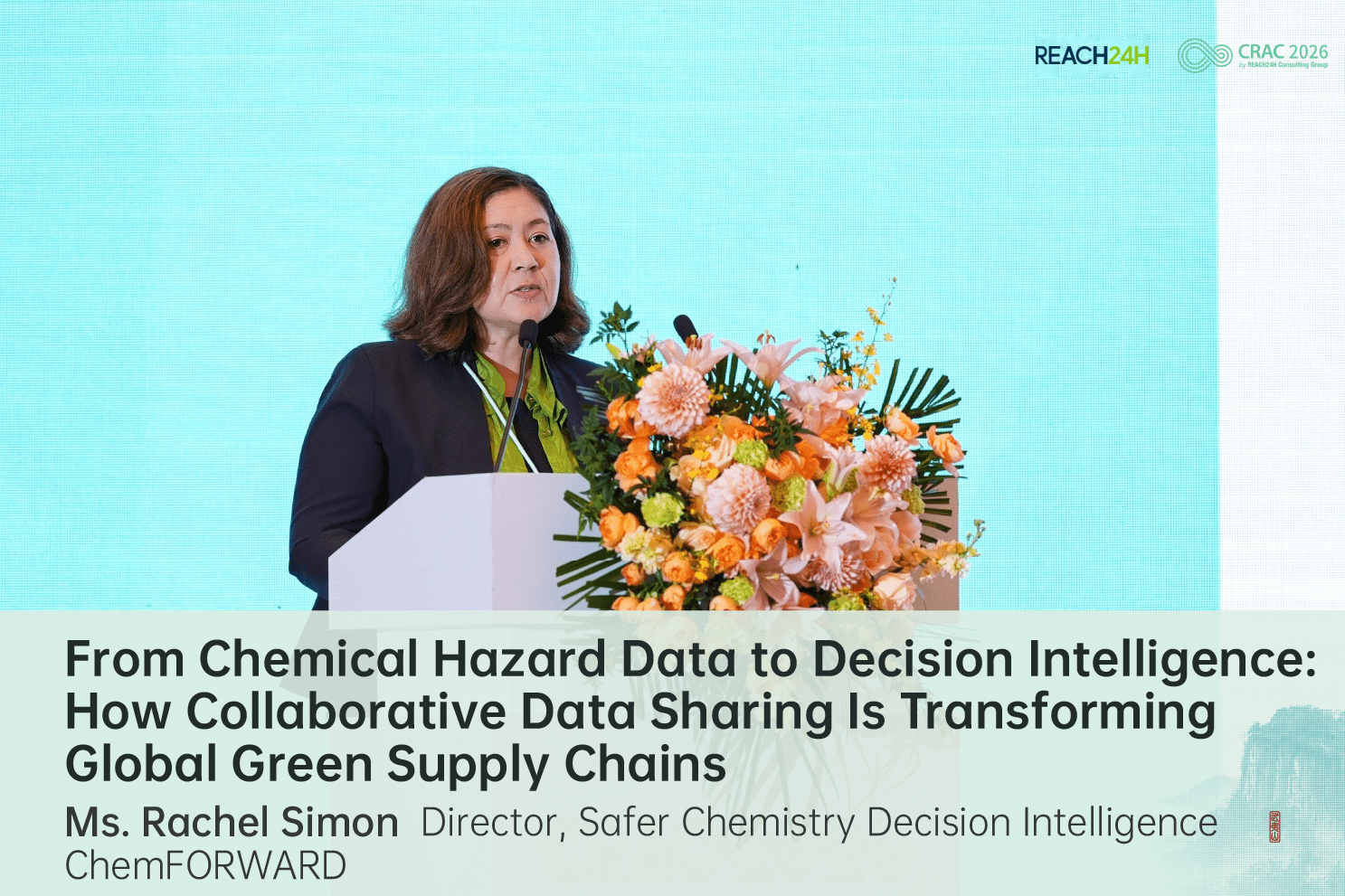
Ms. Rachel Simon of ChemFORWARD addressed a complementary challenge: making chemical hazard information usable in procurement and substitution decisions. She explained that missing hazard data should not be interpreted as evidence of safety. Shared assessments, independent peer review and common metrics can help companies identify data gaps, prioritize chemicals of concern and track progress toward safer chemistry. Examples from electronics, apparel and beauty and personal care showed how assessments developed in one sector can be reused in others, reducing duplication and supporting better-informed alternatives selection.
Building Circular Supply Chains with Reliable Materials and Safety Evidence
Circular business models depend on the quality of recovered materials, credible traceability and coordination between recyclers, manufacturers and customers.
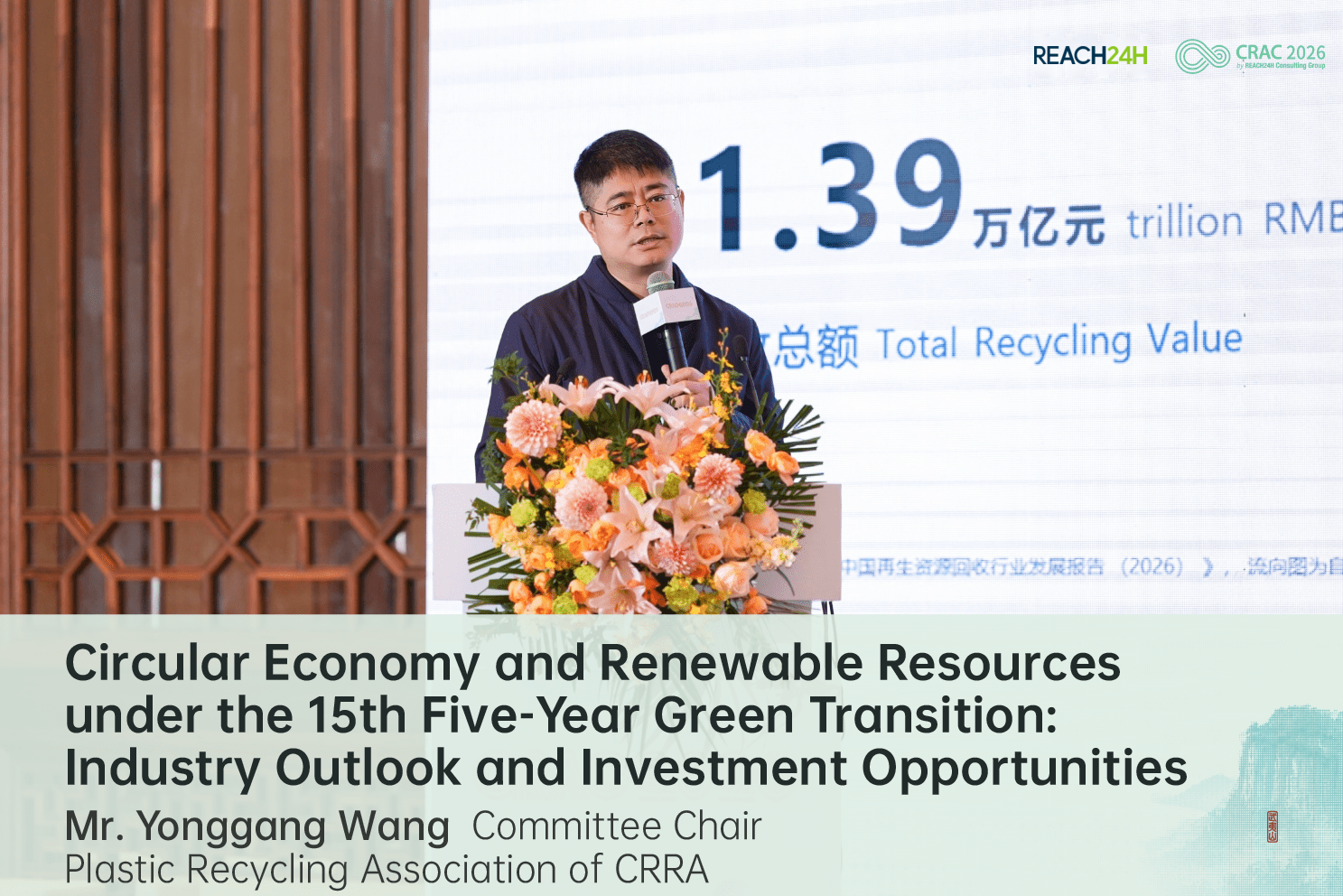
Mr. Yonggang Wang, Chair of the Plastics Recycling Branch of the China National Resources Recycling Association, examined opportunities for resource recovery and recycled materials under China's 15th Five-Year Plan. He described mechanical recycling as the industry's foundation, with chemical recycling offering additional pathways for suitable waste streams. Priorities included better sorting, consistent material quality and traceability, alongside closed-loop applications such as vehicle-to-vehicle and appliance-to-appliance recycling. China–EU pilot projects illustrated how ecodesign and extended producer responsibility can connect material performance, environmental benefits and commercial feasibility.
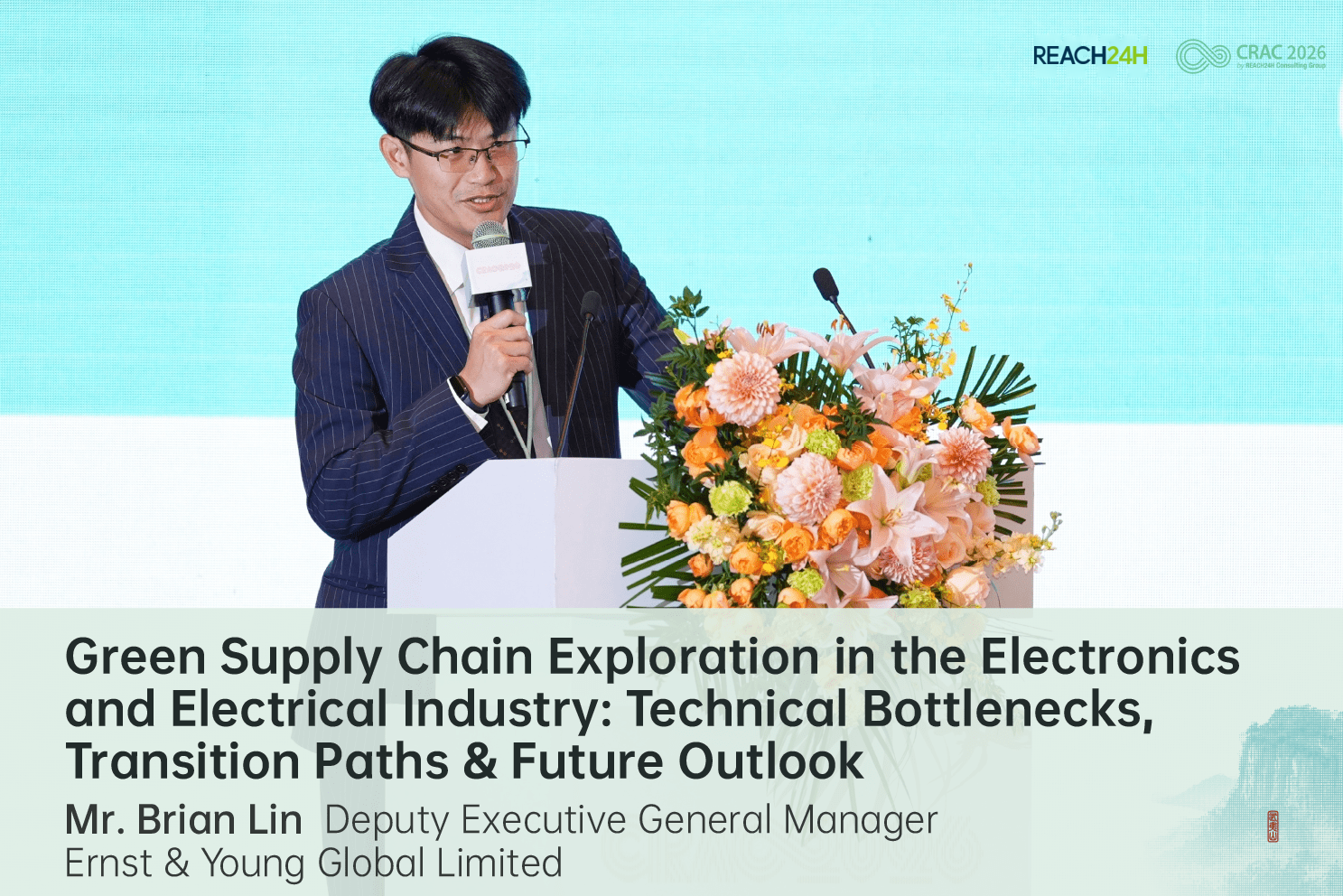
Mr. Brian Lin, Executive Vice President and Partner at EY Taiwan, explored the management challenges behind sustainable supply chains, drawing on electronics-sector experience. Inconsistent customer templates, repeated data requests, manual verification and fragmented responsibilities make compliance difficult to scale. He advocated integrating sustainability into product design, procurement, manufacturing and recovery, supported by supplier segmentation and risk management. Connected systems and reusable, traceable data can strengthen customer communication, disclosure and operational decisions.
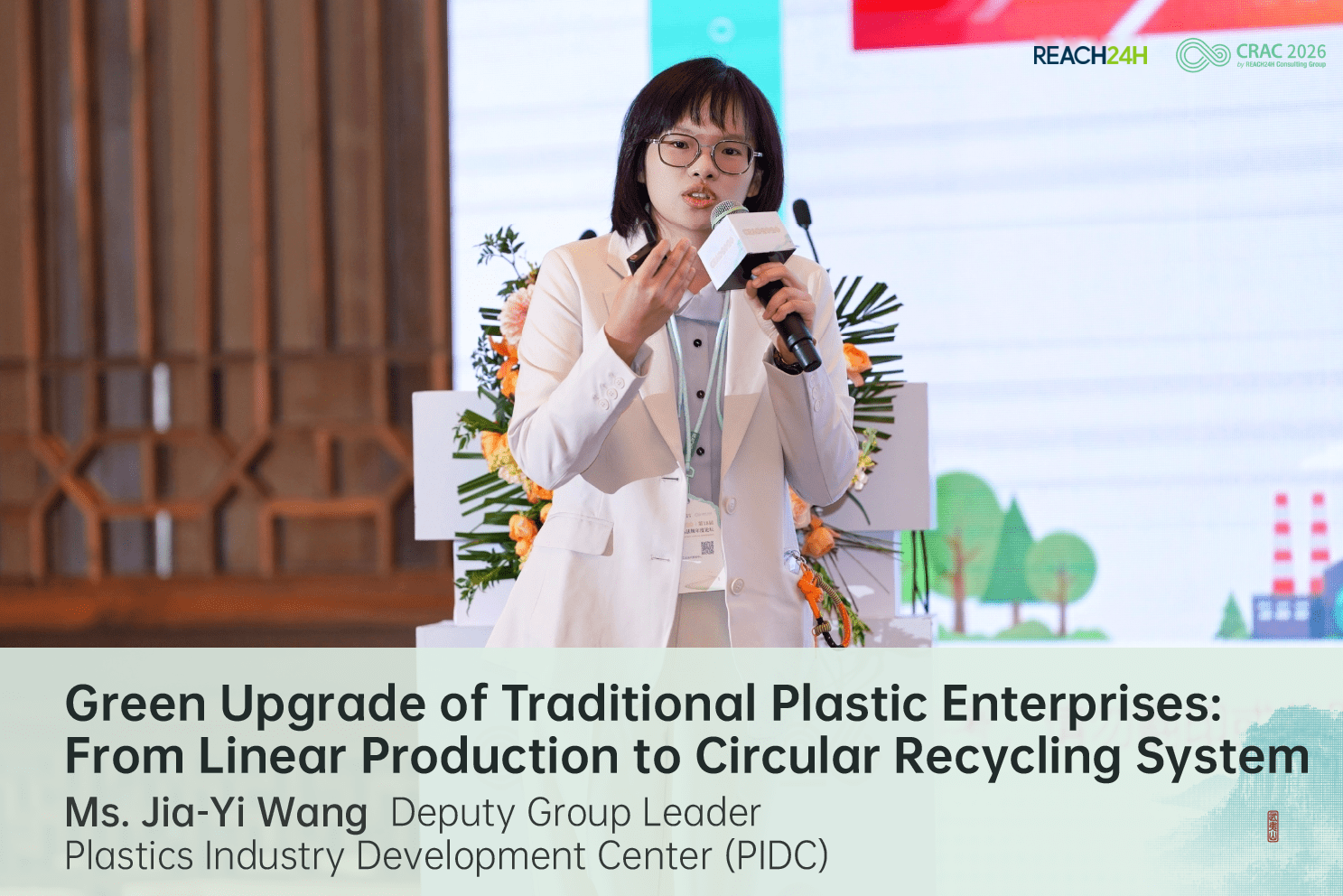
For food-contact applications, Ms. Jia-Yi Wang, Deputy Head of the Verification Technology Group at the Plastics Industry Development Center, examined the evidence needed to support the safe use of recycled plastics. Her presentation compared the EU framework for recycled plastic food-contact materials with the US FDA's voluntary No Objection Letter process. Feedstock controls, decontamination performance, potential migration and intended conditions of use remain central considerations. She also discussed traceability, mono-material design and bottle-to-bottle recycling as elements of a broader transition from material manufacturing to circular supply-chain management.
For companies pursuing US food-contact applications, REACH24H's FDA No Objection Letter support for recycled plastics addresses the evidence and submission needs associated with a specific recycling process and its intended uses.
Trusted AI: Connecting Regulatory Evidence with Business Decisions
The digitalization sessions focused on a shared operational challenge: connecting regulatory information with formulations, supplier records and the decisions teams make every day.
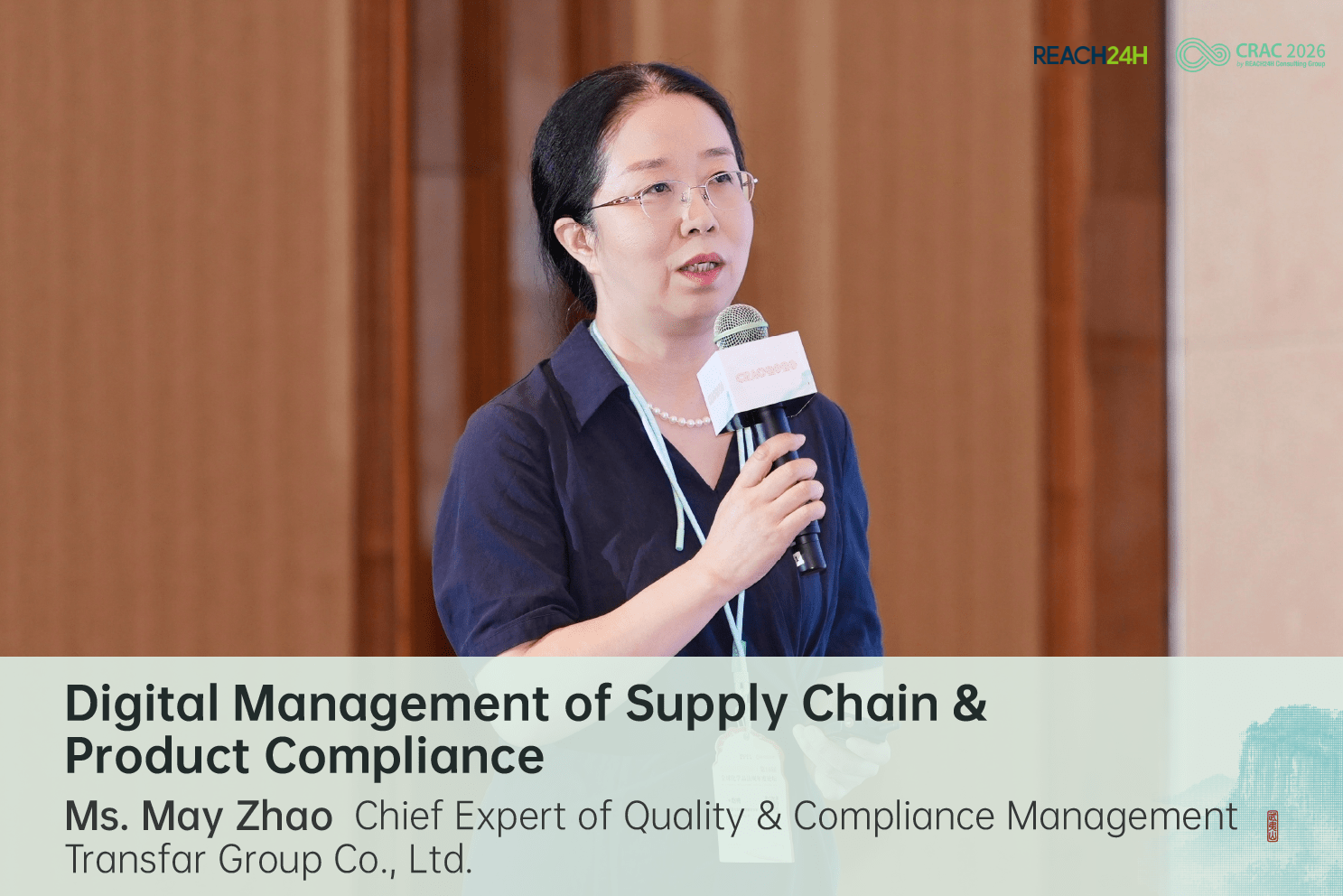
Ms. May Zhao, Compliance and Quality Management Expert at Transfar Group, presented an approach to compliance governance and AI-agent development. Applications included formulation screening, linking regulatory changes to affected products, checking supplier documents and coordinating corrective actions. She emphasized that technology needs to work alongside defined procedures, staff capabilities and supplier performance management. Traceable outputs and expert review at key decision points are central to this approach.
Mr. Raymond Zhu, AI Technology Expert at REACH24H, explained how trusted AI combines structured regulatory data, specialist workflows and practical compliance experience. Preserving the context of provisions—including tables, footnotes, exemptions and source locations—helps make conclusions verifiable. A data-gap analysis example showed how an agent can identify missing information, use specialist tools and pause for expert input before continuing.
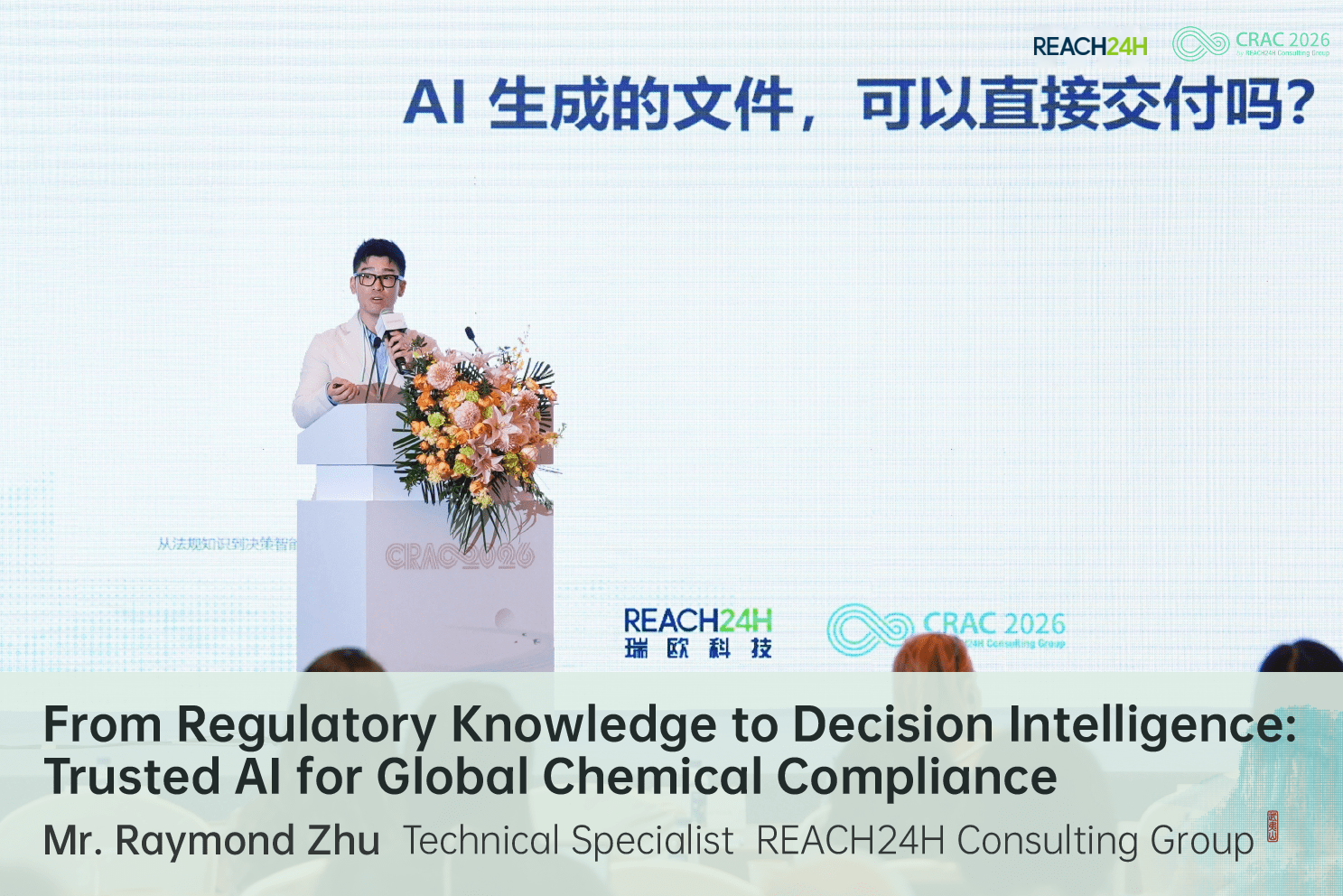
He also presented three complementary products within REACH24H's AI ecosystem:
ChemCheck provides chemical inventories, regulatory data and specialist search tools, including batch checks for substances in a formulation.
Enterprise KnowHub supports regulatory research and professional tasks, bringing source evidence, monitoring, reporting and expert-guided workflows into one workspace.
Chemwise connects regulatory requirements with product and supplier information through bill-of-materials assessments, formulation scenarios, regulatory monitoring and document checks.
Together, these applications demonstrated how REACH24H is bringing its regulatory expertise into tools that help businesses investigate requirements, assess product implications and retain reusable compliance knowledge. Expert judgment remains integral to the process, with AI supporting research and execution while professionals review critical conclusions.
Continuing the Conversation Beyond Wuyishan
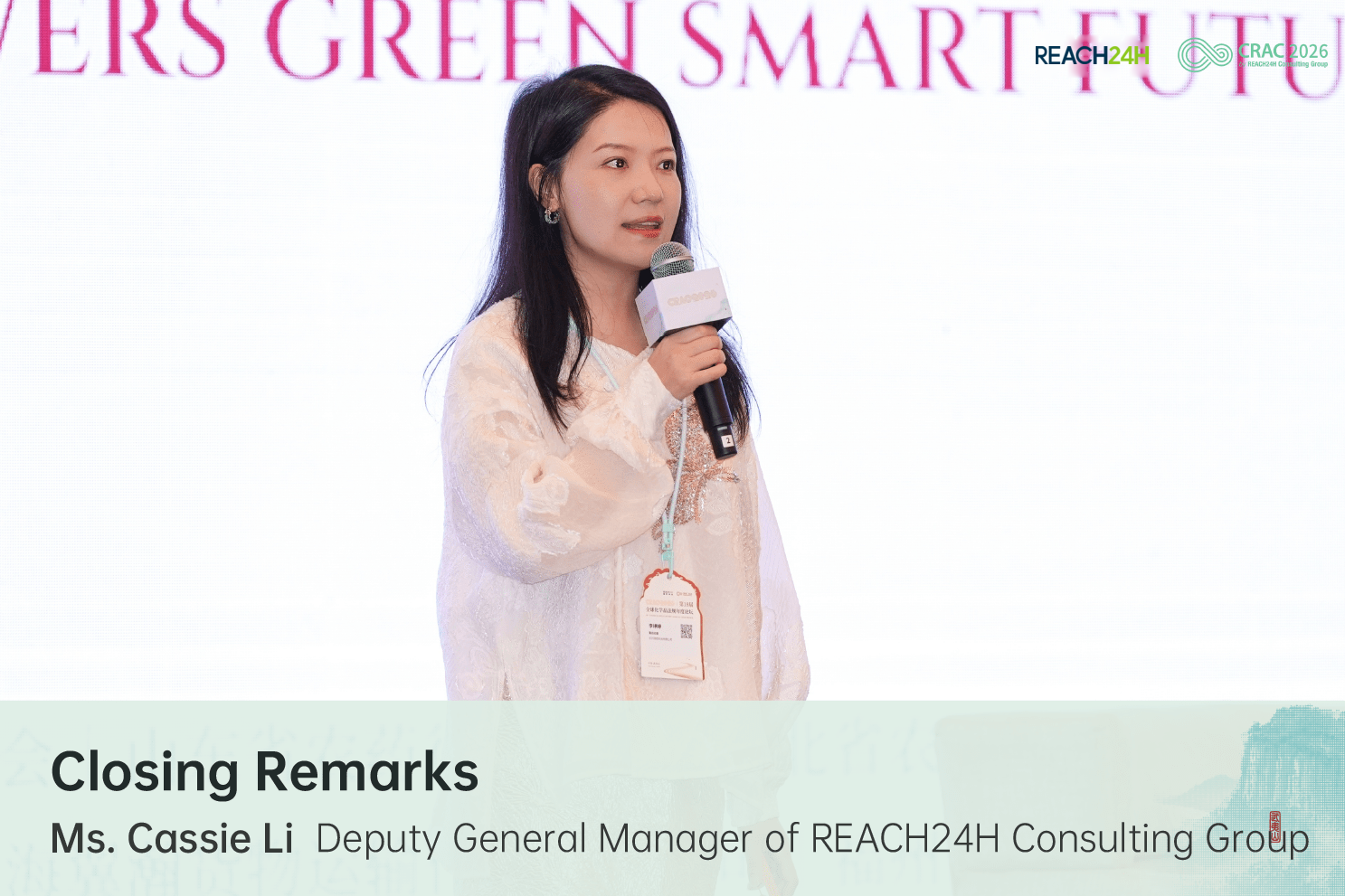
In her closing remarks, Ms. Cassie Li, Deputy General Manager of REACH24H, thanked the speakers, supporting organizations, delegates and organizing team. Drawing on Wuyishan's tea culture, she reflected on the patience behind both professional progress and lasting relationships: expertise develops through sustained work, while trust grows through repeated exchange and cooperation.
The setting also gave the conference's sustainability discussions a more personal context. Wuyishan's mountains, waterways and tea traditions offered space to connect beyond the technical program—and a reminder of the environment that responsible industrial development seeks to protect.
REACH24H will continue to use CRAC to bring regulatory, scientific and industry perspectives together, supporting knowledge exchange and practical collaboration. For businesses, the next step is to carry those discussions into product decisions, supplier relationships and market-access plans.
Discuss your next compliance priority
Whether you are preparing for a new market, reviewing packaging requirements or developing a food-contact recycled material, REACH24H can help identify the applicable pathway and evidence priorities.
Recommended Reading
Turkey KKDIK Individual Interim Registration Guide: 16 Practical Questions Answered
GreenScreen, ChemFORWARD and LCA: Choosing Tools for Chemical Substitution