CRAC SINGAPORE 2026 EVENT RECAP
On September 28-29, 2026, the Singapore stop of the 18th Chemical Regulatory Annual Conference (CRAC Singapore 2026) concluded successfully. Hosted by REACH24H Consulting Group (REACH24H) with the strong support of the Singapore Chemical Industry Council (SCIC), the two-day conference brought together government representatives, industry associations, leading companies and technical experts from China, Singapore, Vietnam, India, Thailand, the Philippines, Australia, New Zealand and Europe.
Discussions focused on chemical compliance and sustainable development in Asia-Pacific, including market-specific substance controls, dangerous goods transport, REACH-like regulations, PFAS, sustainable packaging, cosmetics and Halal requirements. The conference connected these topics around one practical business question: when the same substance or product enters several markets, which requirements apply, and how far can existing data and supply chain documentation support market access?
By bringing regulatory rules and industry practices from multiple jurisdictions into one forum, CRAC Singapore helped companies identify cross-market differences and connect otherwise fragmented compliance tasks. It also reflected REACH24H's long-standing role in linking global regulatory resources, facilitating industry dialogue and helping businesses turn regulatory insight into workable market-entry plans.
Quick Navigation
Jump to the key sections of this event recap.
Key Takeaways from CRAC Singapore 2026
Market access remains jurisdiction-specific. Inventory status, intended use, supply chain role and annual volume may lead to different registration, notification, licensing or reporting obligations.
Shared data still require local interpretation. Hazard data, SDS content and study reports may support several markets, but classifications, legal representatives, data rights and submission routes cannot simply be copied.
Sustainability is moving upstream. PFAS, recycled content, food-contact safety, packaging design and EPR increasingly influence material selection and product development before launch.
Compliance must be managed as a connected system. Substance identity, formulation data, SDSs, labels, transport documents, supplier evidence and regulatory deadlines need to remain aligned.

Asia-Pacific Market Access: What Must Companies Assess Market by Market?
Asia-Pacific does not operate under a single chemical market access regime. Speakers examined how companies should assess inventory status, product use, supply chain role and activity volume when entering China, Vietnam, Australia, New Zealand, India, Thailand and the Philippines.
China: Replanning New Chemical Substance Applications
Kintan Xu, General Manager of REACH24H's Chemical Division, discussed changes following implementation of China's Environmental Code. Since August 15, 2026, China has stopped accepting record notifications for the environmental management of new chemical substances. Projects that previously qualified for record notification must now enter a registration process before manufacture or import, while the Measures on the Environmental Management Registration of New Chemical Substances remain under revision.
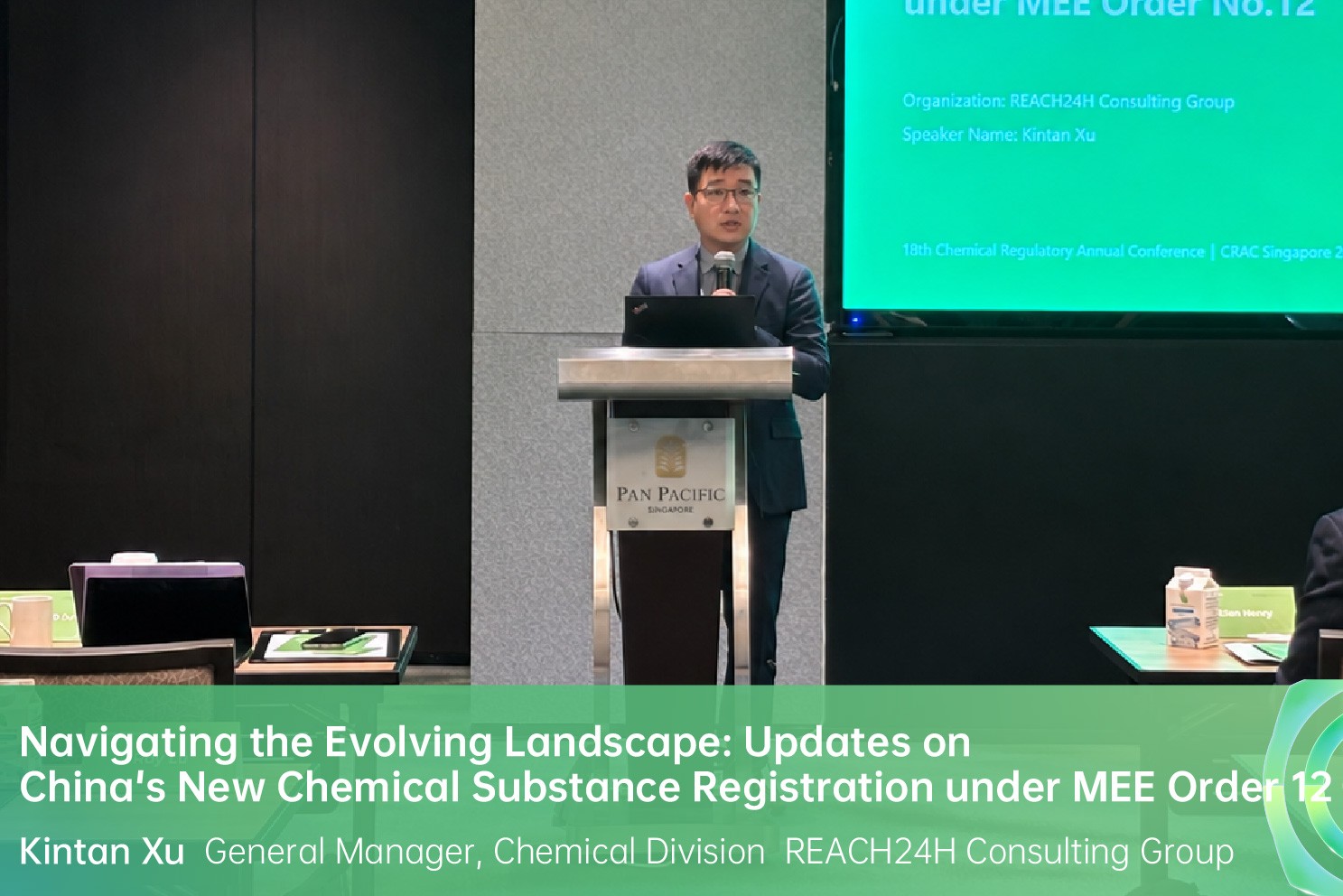
Companies should verify IECSC status and new-use controls, then revisit the applicant, domestic importer, trading structure, data sharing and post-registration obligations. Former record-notification projects may face different review requirements and lead times. REACH24H's China new chemical substance registration service provides further guidance on the applicable pathways.
Vietnam: Connecting Classification, Import Declaration and Customs
Vietnam's Law on Chemicals (No. 69/2025/QH15) took effect on January 1, 2026. Hai Tien Minh, a former Vinachemia official, explained that importers must first determine whether a product is a general chemical, a chemical subject to declaration, a conditional or specially controlled chemical, a prohibited chemical or a precursor. That classification then determines the applicable business qualifications, use statement, import declaration or permit.
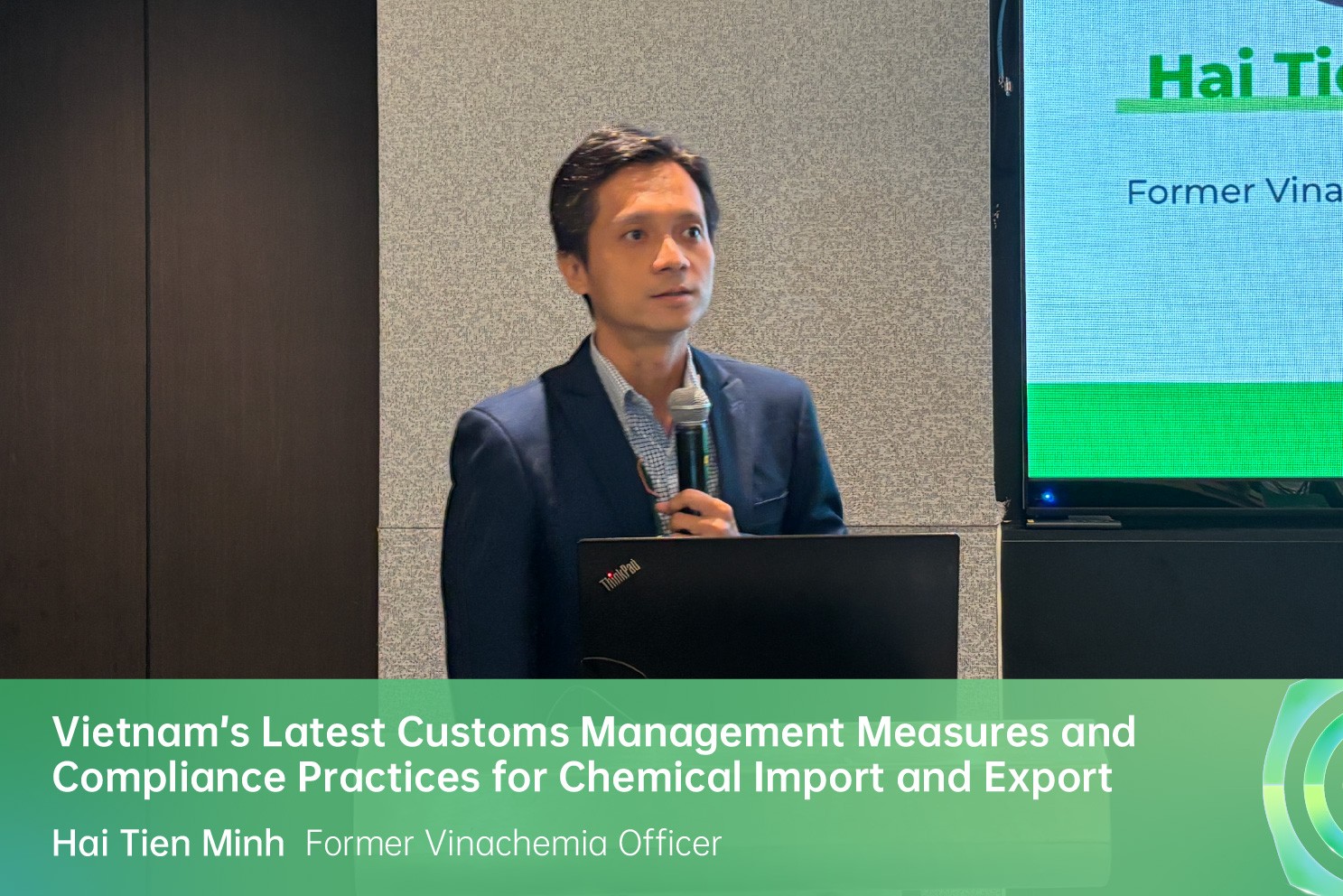
Companies should prepare Vietnamese-language SDSs and supporting composition, use and licensing documents, file through the National Single Window, and keep declaration and customs data consistent. Repackaging, filling, mixing, dilution and concentration may also be treated as chemical manufacturing activities and should be assessed separately.
Businesses planning market entry can review REACH24H's Vietnam chemical registration and compliance services for support with NCI status checks, import declarations and related licensing requirements.
Australia: Categorize the Introduction Before Mapping Wider Duties
Nick Zovko, Head of Regulatory Affairs at Chemistry Australia, reviewed the Australian Industrial Chemicals Introduction Scheme (AICIS). Businesses importing or manufacturing industrial chemicals must confirm whether a substance is listed on the Australian Inventory of Industrial Chemicals and whether its use meets the listing conditions. Unlisted introductions must be categorized according to hazard, exposure, use and volume.
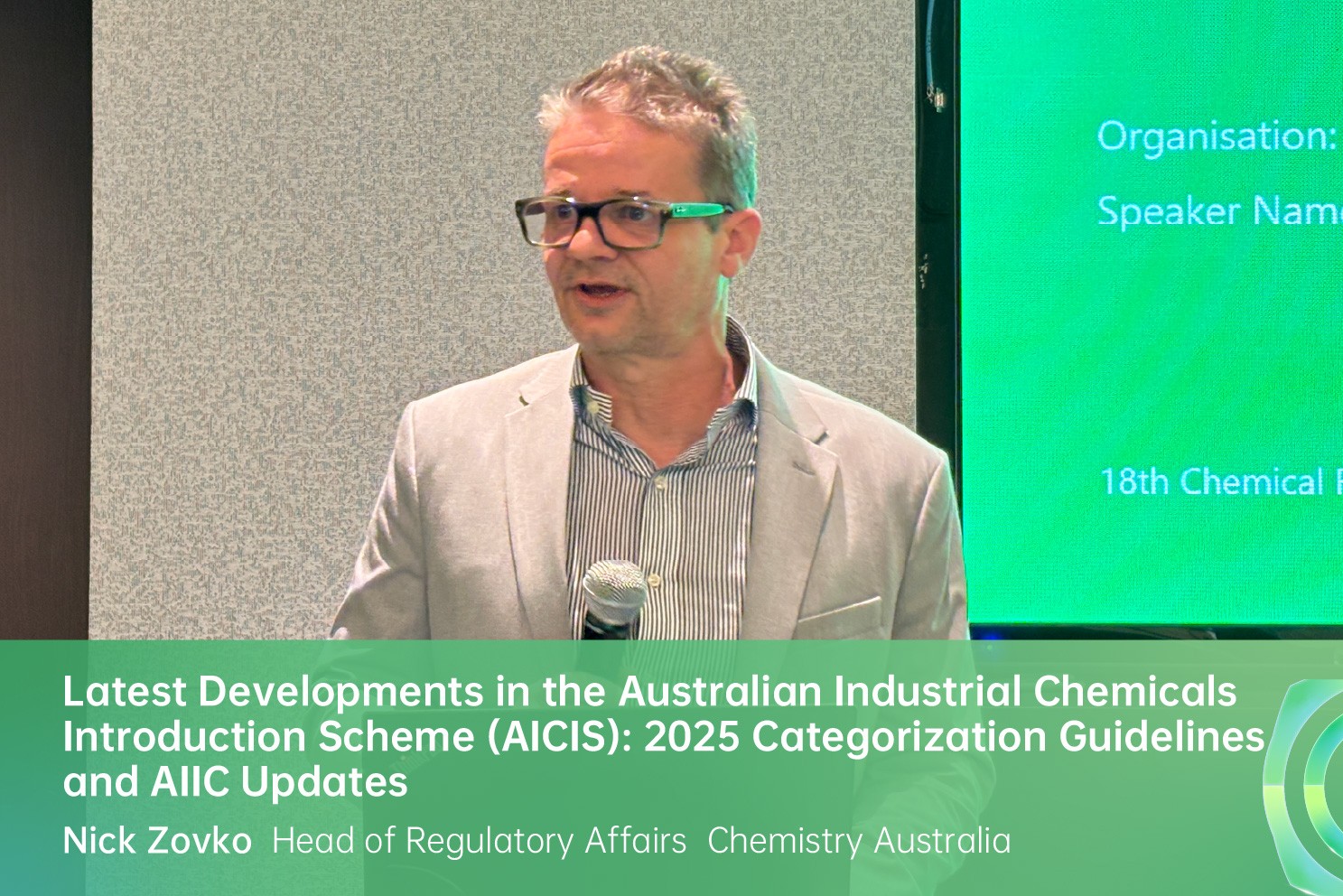
The official AICIS Categorisation Guide distinguishes listed, exempted, reported and assessed introductions. Companies must also consider federal, state and territory requirements for workplace safety, environmental protection, dangerous goods transport and waste disposal.
New Zealand: Connecting HSNO Approval with HSRN Reporting
Barry S. Dyer, Chief Executive of Responsible Care New Zealand, outlined the Hazardous Substances and New Organisms Act framework. Before importing or manufacturing a hazardous substance, companies need complete composition and hazard information, must classify the product under GHS Revision 7, and must determine whether it fits a Group Standard or individual approval.
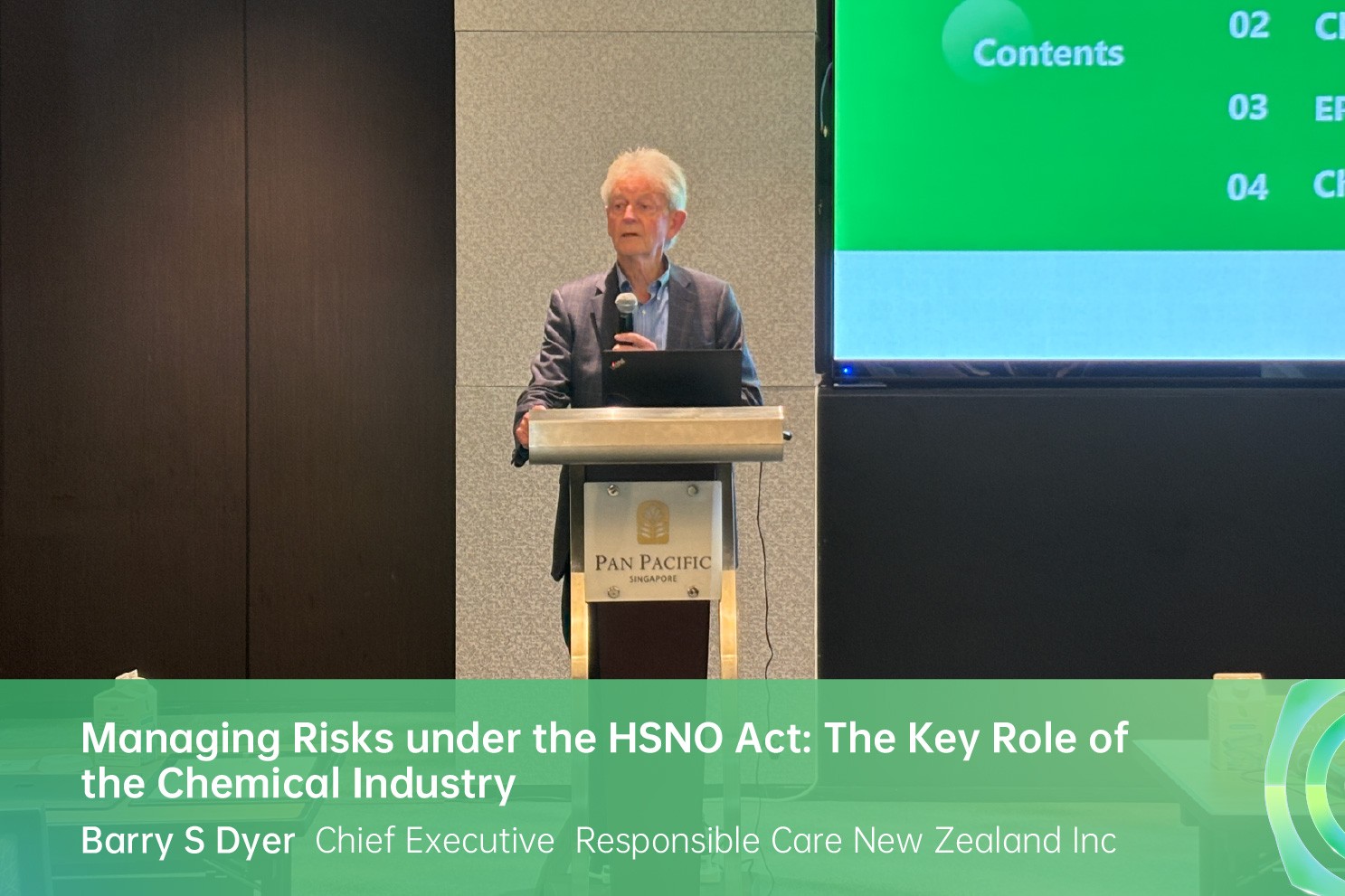
Since January 1, 2026, importers and manufacturers have also been required to provide business and substance approval information through the HSRN portal; certain substances remain subject to annual reporting. The New Zealand EPA guidance confirms these reporting requirements. Overseas data may be useful, but applicability to local environmental conditions still needs review.
India: Separating Current MSIHC Duties from the Draft CMSR
REACH24H Global Regulatory Affairs Consultant Aman Sharma compared India's rules in force with the draft Chemicals (Management and Safety) Rules (CMSR). Companies must currently assess their obligations under the Manufacture, Storage and Import of Hazardous Chemical Rules, 1989 and other applicable legislation, including requirements for SDSs, labels, import information, records and emergency management.
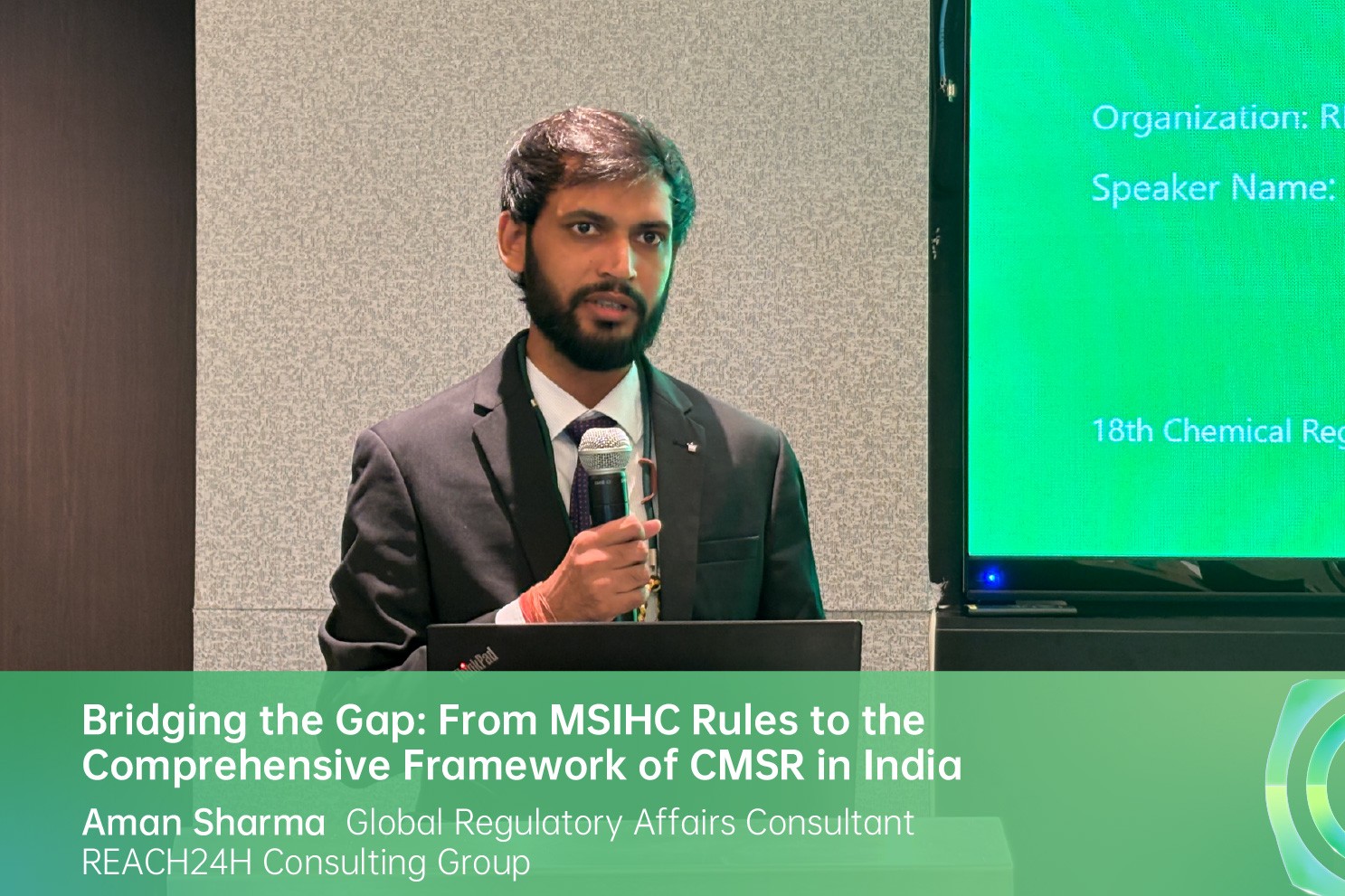
The CMSR remains a draft. Its proposed national inventory, notification, registration and overseas-manufacturer representative mechanisms should therefore be treated as preparation scenarios rather than current statutory duties. Companies can prepare by organizing substance identity, annual volume, use and hazard data while continuing to follow the existing rules.
Thailand: Authority, Substance Type and Activity Determine the Route
Cissie Yeung of SCIC explained that Thailand's regulatory responsibilities are divided among authorities responsible for industrial chemicals, consumer and public-health products, agricultural inputs and aquaculture chemicals. Under the Hazardous Substance Act, listed substances are divided into Types 1 to 4, which may trigger identification, notification, registration, licensing or prohibition requirements.
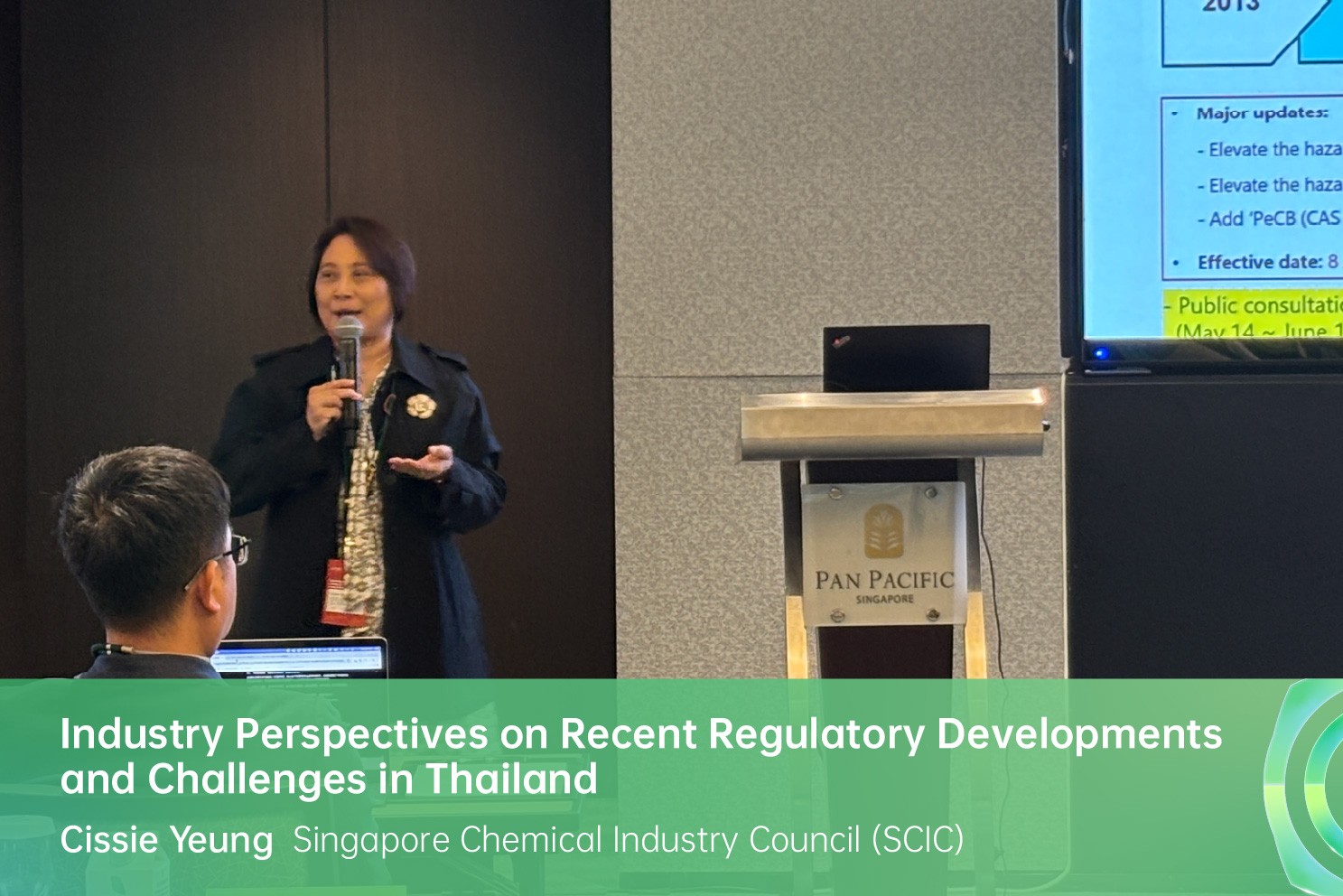
Companies should confirm product use, competent authority, list status and hazardous substance type before assessing manufacture, import, export, possession or transport duties. List 5.6 industrial chemicals may also trigger annual quantity reporting. Thailand has not formally introduced a REACH-like regulation, so current decisions should remain grounded in the Hazardous Substance Act and supporting lists.
The Philippines: PICCS Listing Is Only the First Check
Engr. Roland Omar C. Tamani of the Philippine Department of Environment and Natural Resources-Environmental Management Bureau explained that companies should first check the Philippine Inventory of Chemicals and Chemical Substances (PICCS). As of 2026, PICCS contains 22,510 chemicals. An unlisted substance is generally treated as new and may require a Pre-Manufacture and Pre-Importation Notification before manufacture or import, unless an applicable exemption can be established.
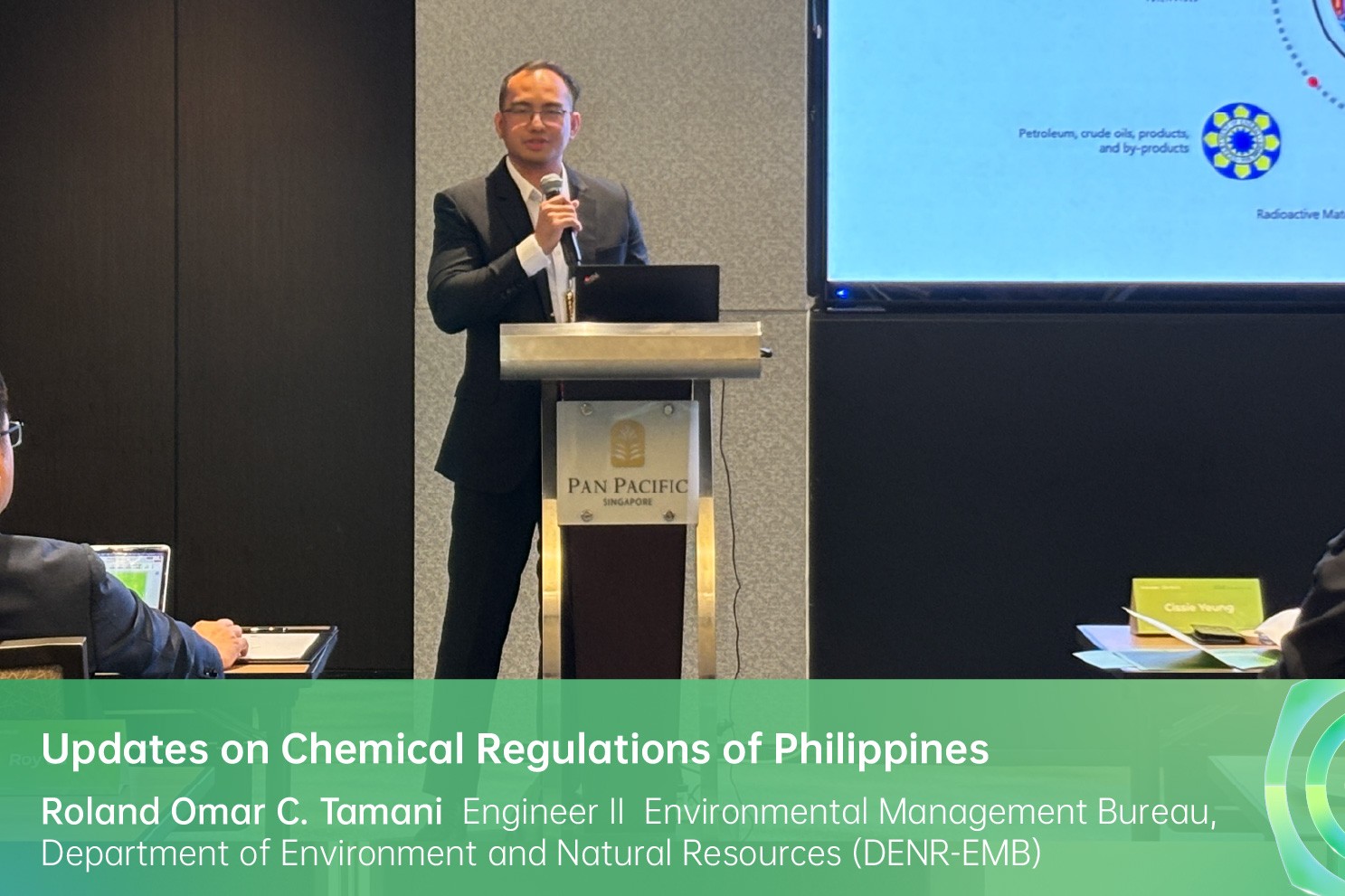
PICCS listing does not complete the assessment. Companies must also check the Priority Chemicals List, Chemical Control Orders and sector-specific requirements. These measures may require additional information, controls, restrictions, phase-outs or prohibitions.
Cross-Regional Operations: Aligning Substance, Transport and Supply Chain Requirements
Market access cannot be managed in isolation from hazard communication, transport classification and supply chain data. Sessions on GHS, dangerous goods, China's hazardous chemicals legislation and REACH-like systems highlighted where information can be shared and where legal obligations remain market-specific.
Global GHS: A Common Framework Still Requires Local Outputs
Fabien Henry, Regulatory Affairs Manager for Southeast Asia at the Nickel Institute, highlighted differences in the GHS revisions adopted, hazard classes, official classification lists, concentration limits, and SDS and label rules. The EU, for example, has introduced hazard classes for endocrine disruption, PBT/vPvB and PMT/vPvM beyond the core UN GHS framework.
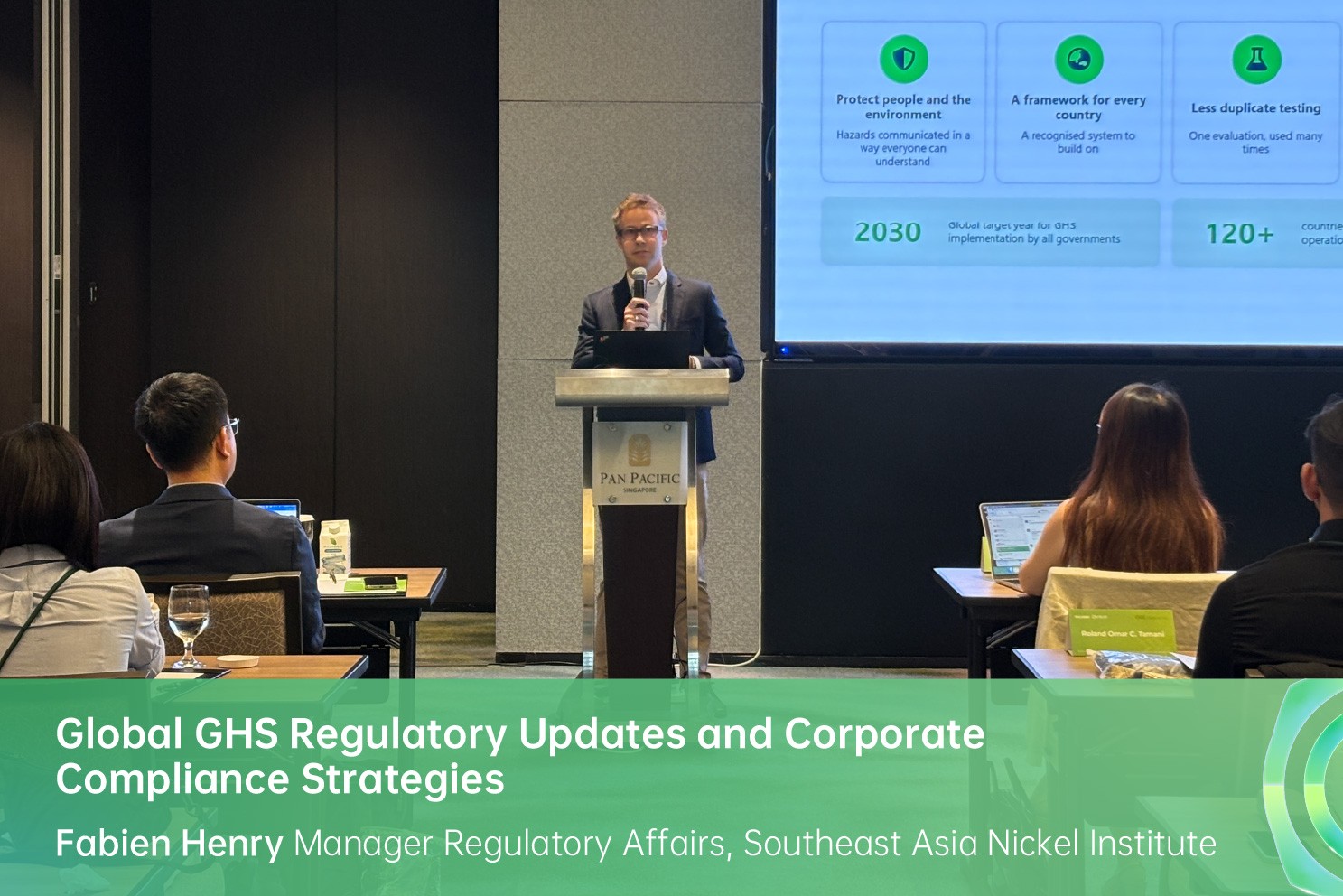
Multinational companies can maintain a common substance hazard-data foundation, but they should generate classifications, SDSs and labels against each market's rules. Data sources and decision rationales should be documented so that formulation, hazard-data or regulatory changes can trigger coordinated updates across labels, transport classifications and downstream communication.
Dangerous Goods Transport: ADR Does Not Replace Local Law
Willi Wesselowscky, Senior Expert for Dangerous Goods Management and Plant Safety at UMCO GmbH, compared road transport requirements in China, India and ASEAN countries. International systems such as ADR, the IMDG Code and the IATA Dangerous Goods Regulations share a UN foundation, but national laws, technical standards, permits and training requirements still apply.
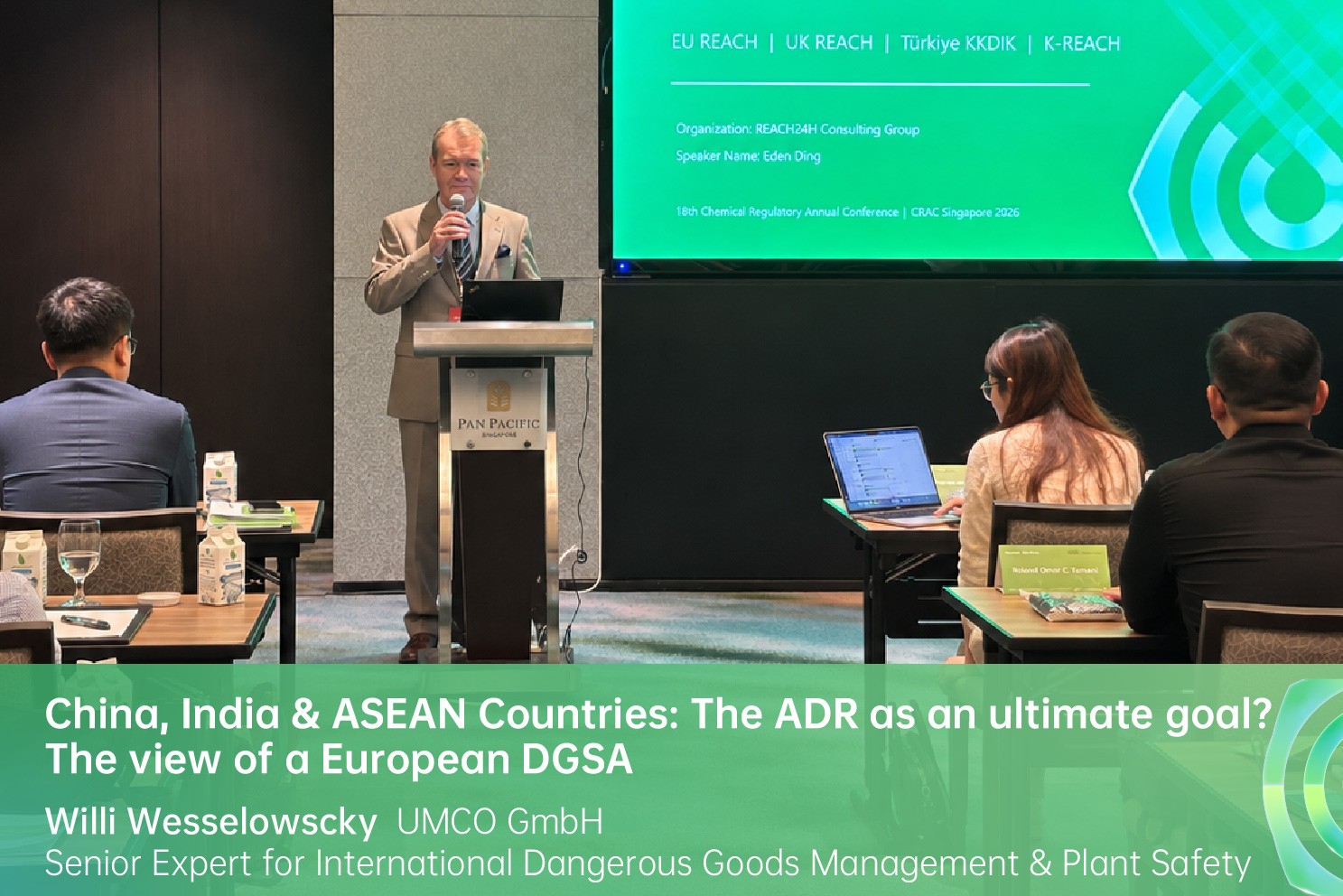
For multimodal shipments, companies should verify the UN number, proper shipping name, hazard class, packing group, marks, packaging, documents, permits and training requirements for every relevant jurisdiction. SDSs, transport classification reports and customs or carrier declarations must remain consistent.
China's Hazardous Chemicals Safety Law: Responsibility Across the Life Cycle
China's Hazardous Chemicals Safety Law was adopted on December 27, 2025 and took effect on May 1, 2026. Shanjun Mu explained that the law covers R&D, design, manufacture, storage, use, distribution, transport, waste disposal and facility closure.
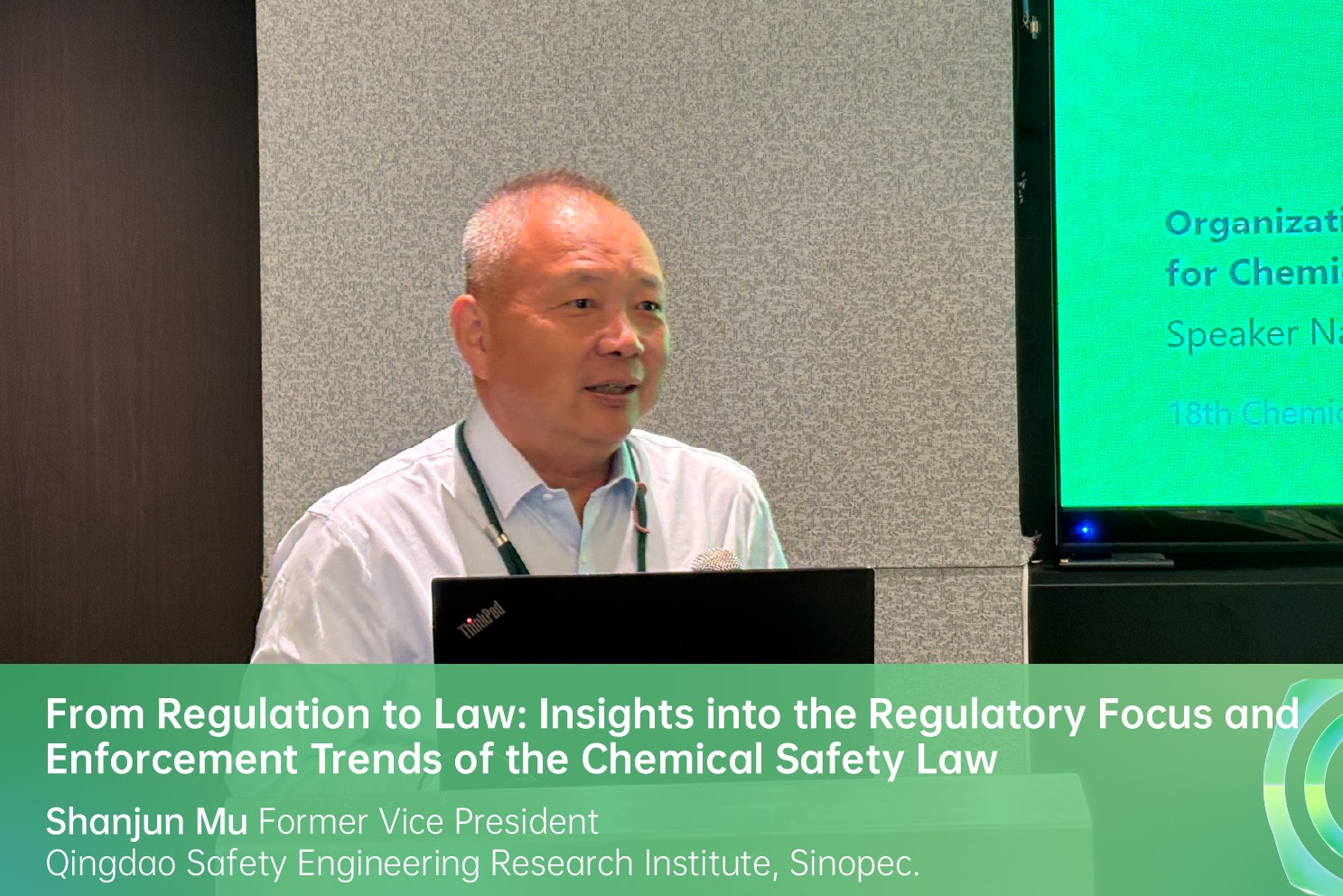
The Catalogue of Hazardous Chemicals is not the sole basis for determining obligations. Chemicals with relevant hazardous properties still require identification and classification, and chemicals whose hazards have not been clarified may not enter relevant business activities. Manufacturers, importers, distributors, users and consignors also carry SDS and label communication responsibilities. Companies should distinguish hazardous chemical registration from new chemical substance environmental registration and align both with transport and internal system data.
REACH-like Regulations: Data May Travel, Legal Duties Do Not
REACH24H Regulatory Expert Eden Ding compared EU REACH, UK REACH, Türkiye's KKDIK and South Korea's K-REACH. The systems share concepts such as substance identity, tonnage, uses, hazards and supply chain responsibility, but differ in responsible entities, submission routes, data requirements and transition arrangements.
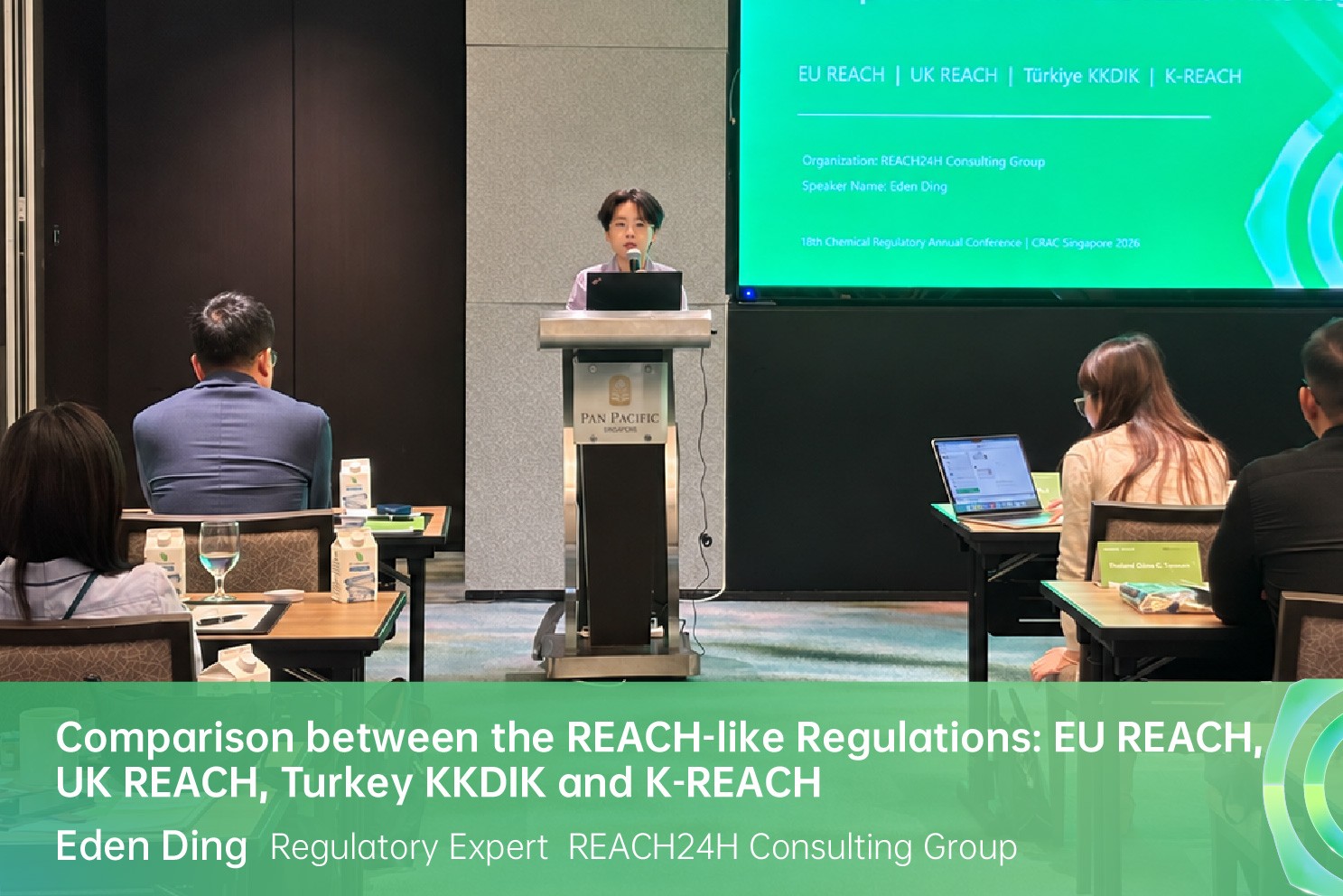
EU REACH now places greater emphasis on dossier updates, data quality and risk management. UK REACH transitional submission deadlines extend through 2029, 2030 and 2031 depending on tonnage and hazard profile. Under KKDIK, existing products must complete temporary registration by September 30, 2026, while formal deadlines are phased through 2026, 2028 and 2030. Under K-REACH, new substances at one tonne or more per year require registration, while lower volumes follow notification. Study data may be reusable, but data ownership, territorial rights, local requirements and representative appointments must be assessed separately.
Bringing Sustainability into Product Compliance Decisions
PFAS, recycled materials, green chemistry and EPR are moving into R&D, sourcing and packaging decisions. The conference examined how companies can consider these factors before substitution or product launch rather than treating sustainability as a separate post-market workstream.
Green Chemistry: Avoiding Regrettable Substitution
REACH24H Regulatory Expert Yvonne Zhang explained that replacing a restricted substance solely for immediate functional fit can lead to regrettable substitution when hazards, life-cycle impacts or supply risks are overlooked. Alternatives should therefore be assessed against their intended function, chemical hazards, exposure, environmental impacts, technical performance, economic feasibility and data gaps.
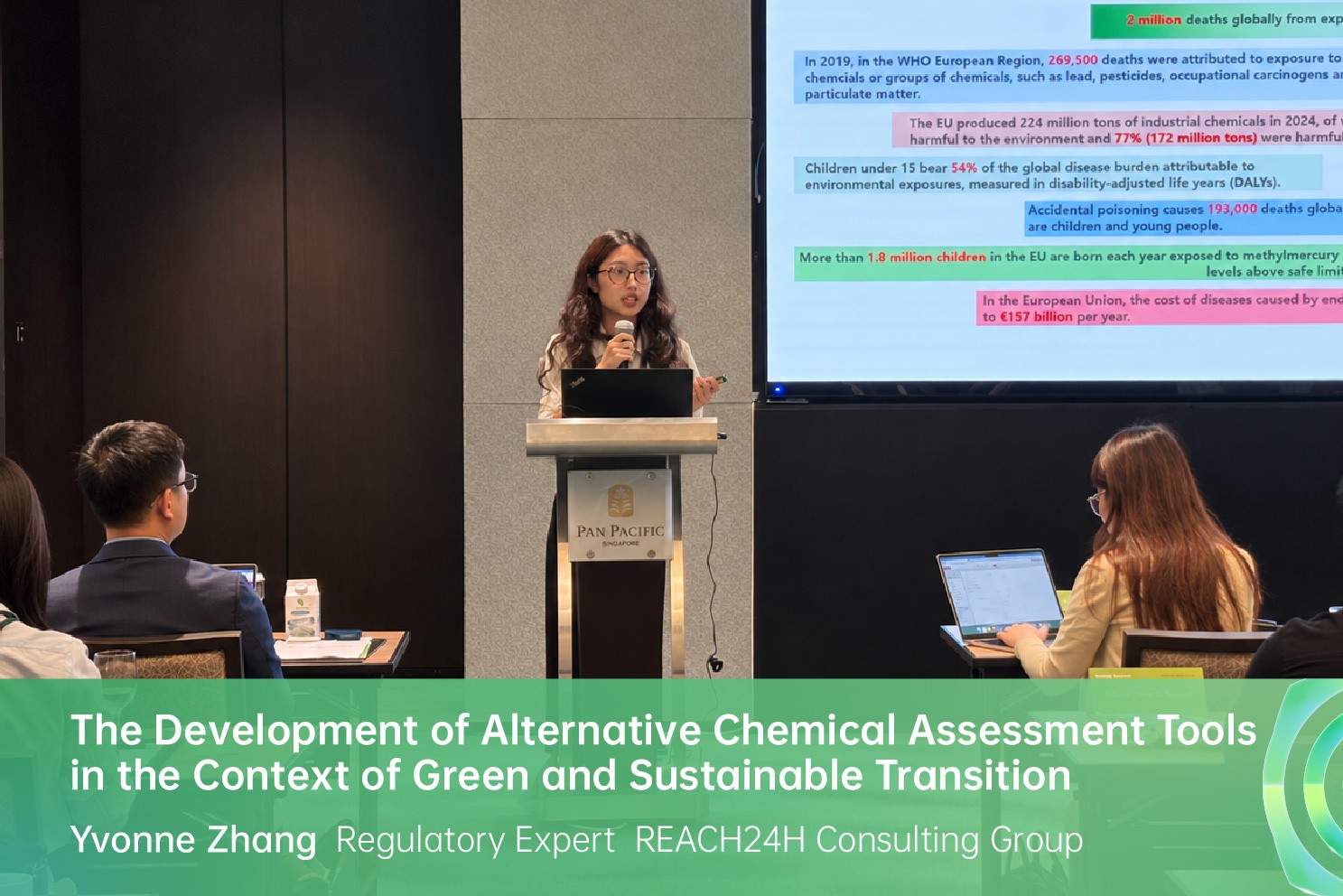
For substance hazard comparison, the US EPA Safer Choice criteria, GreenScreen and ChemFORWARD can help evaluate human-health and environmental hazards, persistence, bioaccumulation and data gaps. Life-cycle assessment (LCA) extends the analysis from raw-material sourcing and manufacturing to use and end of life, with the EU Safe and Sustainable by Design (SSbD) framework serving as a voluntary decision-support tool for broader life-cycle evaluation.
In the electronics sector, EPEAT and TCO Certified are increasingly becoming industry standards, while GreenScreen and ChemFORWARD assessments can support the evaluation of relevant chemical criteria.
PFAS: Assessing Substance, Use, Product and Market
PFAS differ in functionality, persistence, mobility and bioaccumulation potential, while fluoropolymers may require consideration of non-polymeric PFAS emissions across manufacture, use and disposal. The broad EU PFAS restriction remains within the REACH restriction process and is not yet a comprehensive restriction in force.
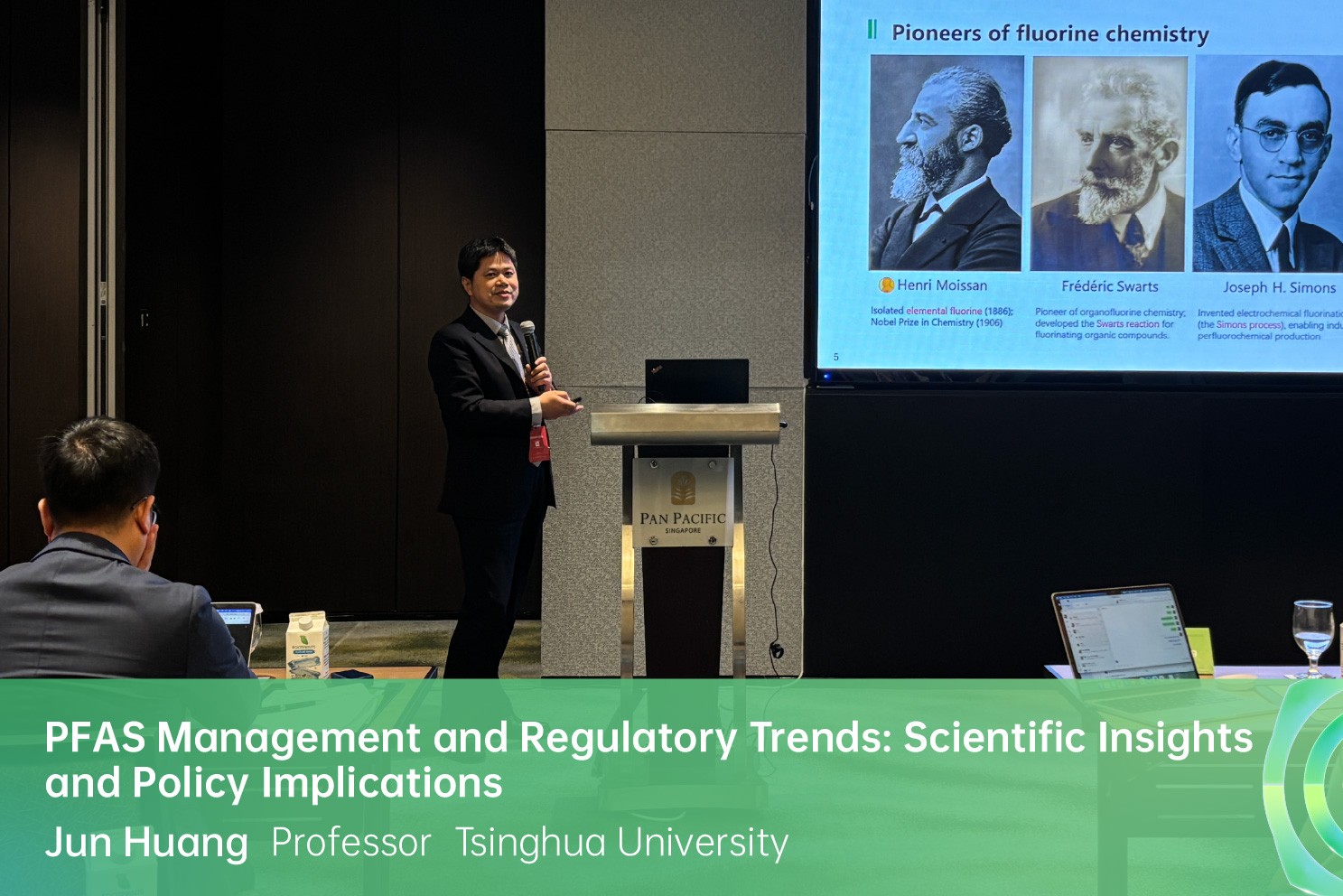
Professor Jun Huang of Tsinghua University recommended a "substance-use-product-market" screening pathway. Companies should review raw materials, additives and processing aids; clarify the PFAS definition and evidence used in supplier declarations; and determine whether testing, disclosure, substitution or demonstration obligations apply in each target market.
Sustainable Packaging: Food-Contact Safety and PPWR Must Work Together
REACH24H Regulatory Expert Aaron Cheng compared the US FDA's voluntary, case-by-case No Objection Letter pathway for recycled food-contact plastics with the EU's mandatory framework under Regulation (EU) 2022/1616. He also reviewed the EU Packaging and Packaging Waste Regulation (PPWR).
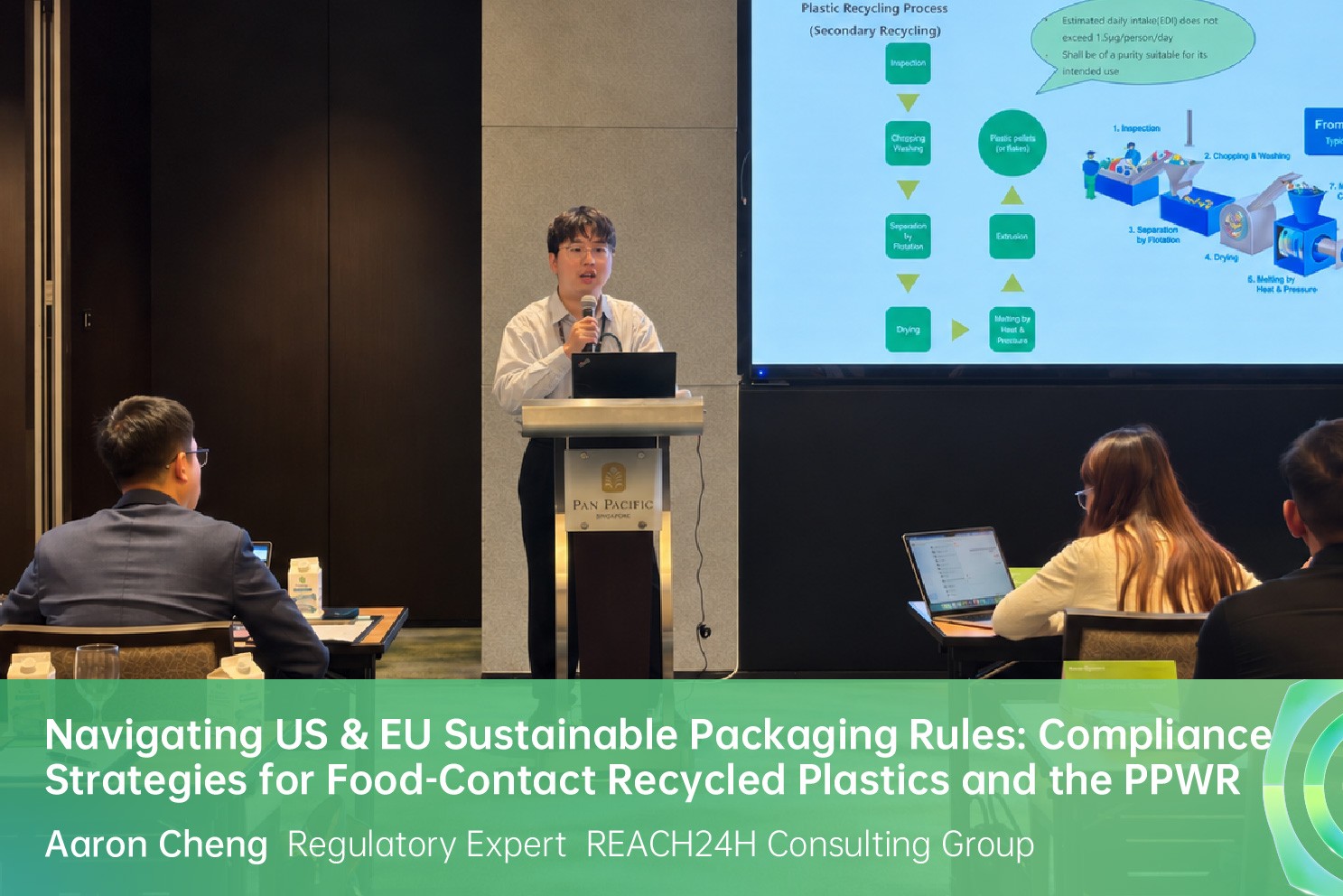
The PPWR has generally applied since August 12, 2026 and introduces phased requirements covering recyclability, recycled content, packaging minimization, labeling and producer responsibility. It also sets PFAS concentration limits for food-contact packaging. REACH24H's EU PPWR packaging compliance service supports companies assessing their roles, material data and evidence needs. Higher recycled content or reduced material use does not replace food-contact safety assessment.
EPR: Managing Product and Packaging Data After Market Placement
The panel discussion examined how extended producer responsibility connects recycling targets with post-market obligations. Participants noted that China's current management already covers waste electrical and electronic equipment, power batteries and certain packaging, while future scope will depend on further policy development. PCR requirements may stimulate recycled-material demand, but costs, infrastructure and fee allocation affect feasibility.

For food-contact recycled plastics, companies should also prepare decontamination-process information, challenge-test results, feedstock controls and additive-compliance evidence. Responsibilities for collecting, maintaining and transferring these data should be assigned across the supply chain.
Market Access Beyond Chemicals: Cosmetics and Halal Requirements
As businesses expand into finished consumer products, product classification, safety assessment, local responsible entities and Halal requirements create additional market access workstreams.
China and ASEAN Cosmetics: One Core PIF, Different Local Routes
China applies filing to general cosmetics and registration to special cosmetics, supported by formula information, ingredient safety data, product safety assessments and efficacy-claim evidence. ASEAN uses the ASEAN Cosmetic Directive as a common technical foundation, but Member States separately implement cosmetics notification and post-market supervision, and local responsible companies must maintain a Product Information File (PIF).
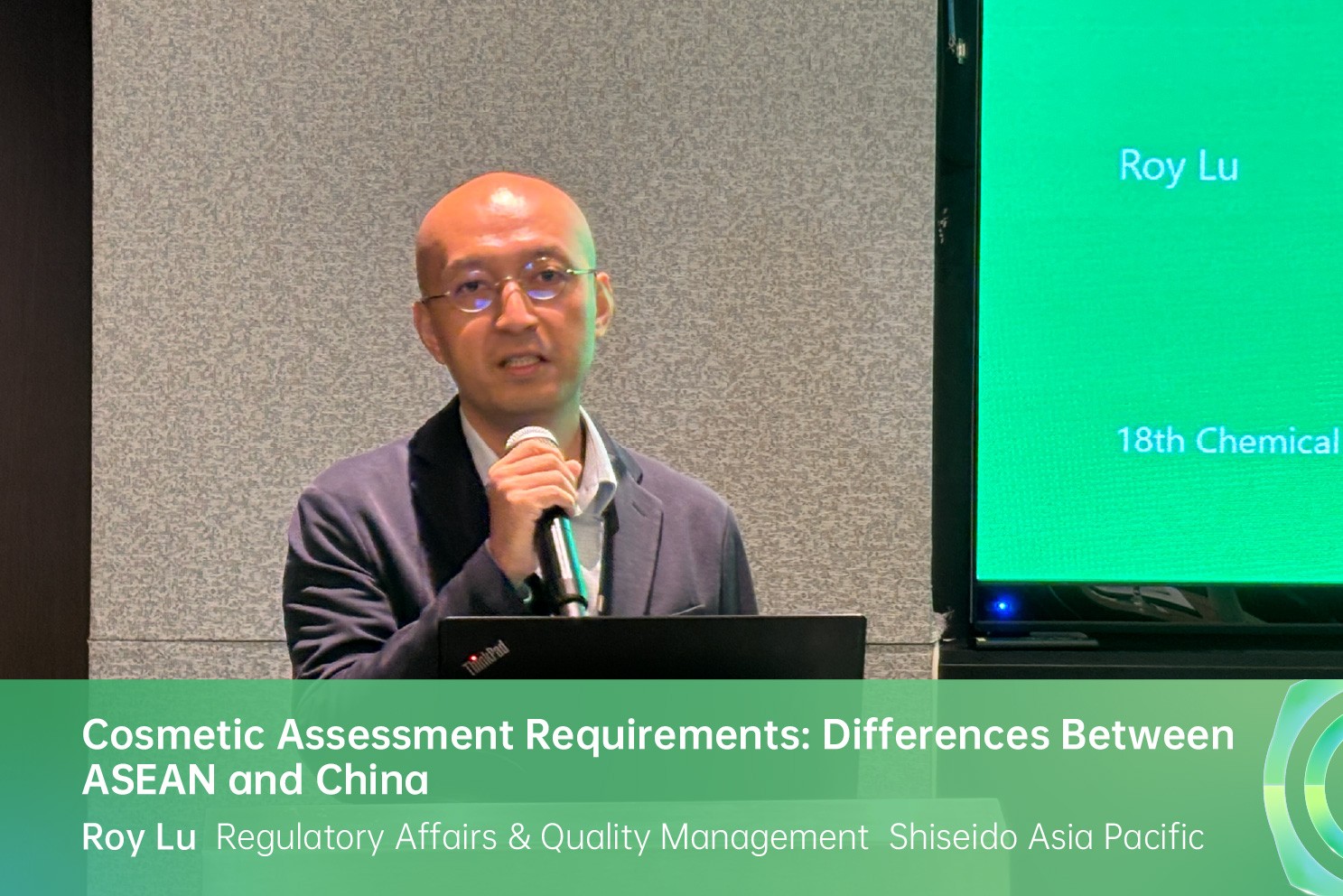
Roy Lu, Regional Director of Regulatory Affairs and Quality Management for Asia-Pacific at Shiseido, advised companies to build a consistent core product file and then localize classification, ingredient restrictions, claim borderline, labels and responsible-person (RP) arrangements for each market.
Indonesia Halal: Extending Control to Materials, Processes and Imports
The certification transition period for cosmetics, chemical products, traditional medicines, health supplements and certain consumer goods ends on October 17, 2026. REACH24H Indonesia Regulatory Consultant Arsy Asyafra Nabila explained that overseas businesses may need regular certification or foreign Halal certificate registration, depending on the product and existing certificate.
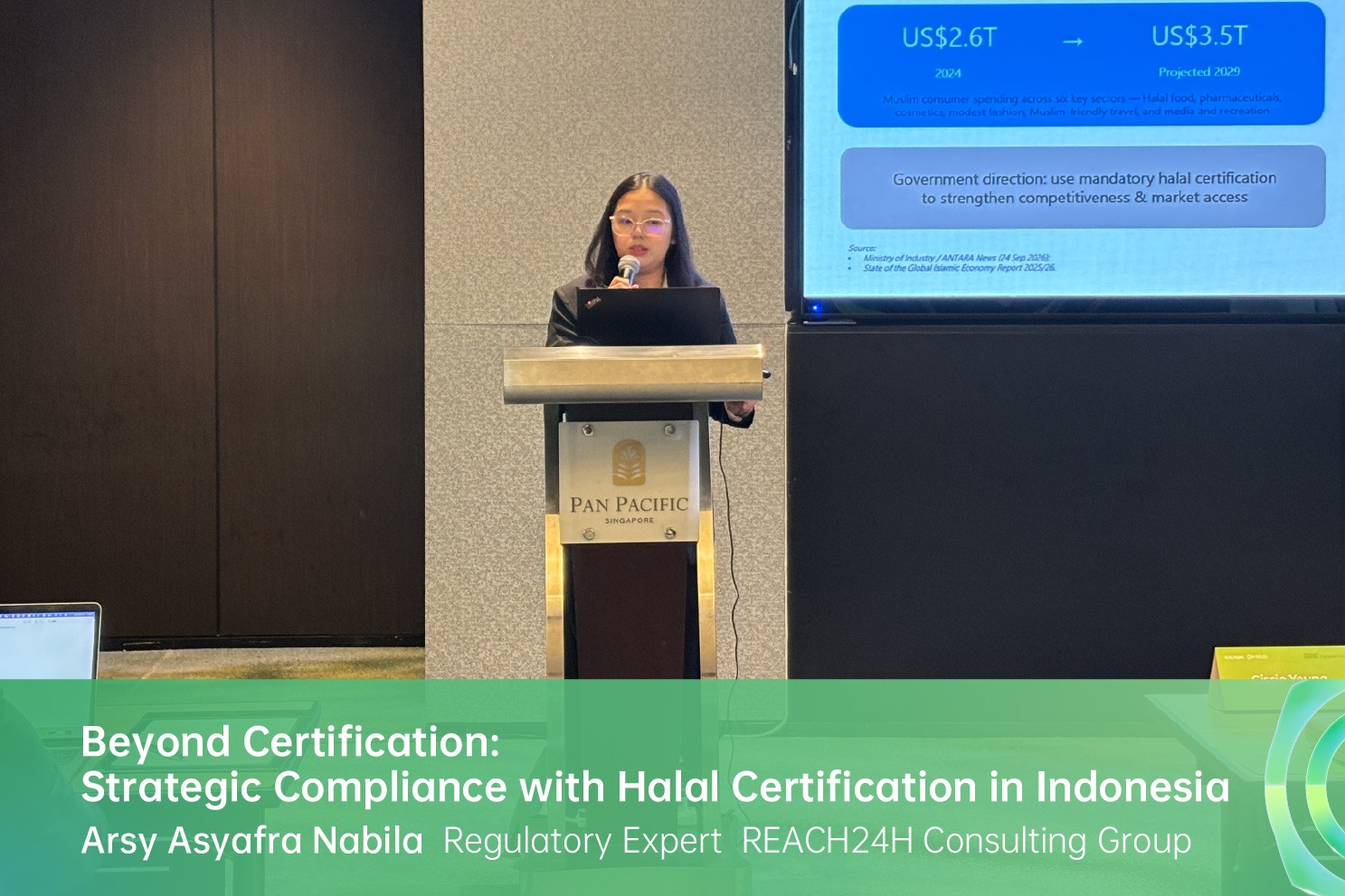
Companies should maintain the Halal Product Assurance System across Commitment and Responsibility, Materials, Halal Product Process (PPH), Product, Monitoring & Evaluation. Processing aids, carriers, enzymes and fermentation media may affect the assessment, while exemptions depend on source, composition and process. REACH24H's Indonesia BPJPH Halal certification service provides pathway and documentation guidance for overseas manufacturers and exporters.
From Global Regulatory Insight to Practical Market-Entry Decisions
CRAC Singapore 2026 demonstrated that cross-market compliance depends on more than monitoring individual rules. Companies need to identify substances and products accurately, define supply chain roles, verify whether data are technically and legally fit for purpose, and build regulatory milestones into R&D, sourcing, production and launch planning.
How REACH24H Can Help
REACH24H monitors regulatory developments in major markets and supports companies through regulatory assessment, registration and notification, SDS and label services, and supply chain data management. By combining global regulatory intelligence with market-specific execution, REACH24H helps businesses identify jurisdictional differences, plan market-entry pathways and maintain consistent compliance information.
REACH24H will continue to use professional platforms such as CRAC to connect regulators, industry organizations, technical experts and companies, and will translate regulatory dialogue into actionable support for Asia-Pacific and global market access.
Plan Your Cross-Market Compliance Pathway
If your company is assessing chemical market access, cross-border transport, REACH-like regulations, sustainable packaging, cosmetics or Halal requirements, discuss the applicable obligations and implementation pathway with REACH24H.