
AUSTRALIA AICIS REGULATORY UPDATE
Australia has changed the compliance pathway for retinal (retinaldehyde; CAS 116-31-4) when it has any consumer end use. From 27 June 2026, affected introductions cannot be categorised as exempted or reported. The Australian importer or manufacturer must obtain an AICIS assessment certificate before import or manufacture. The change is relevant to cosmetic supply chains using retinal in serums, moisturisers and creams, but it is not a ban and does not apply to retinol or retinol esters already listed on the AIIC. Companies can review REACH24H's Australia AICIS and industrial chemicals compliance services when assessing their introduction obligations.
Quick Navigation
Jump to the key sections of this article.
At a Glance: What Changes Matter Most?
| Topic | AICIS Position | Business Implication |
|---|---|---|
| Affected substance | Retinal / retinaldehyde, CAS 116-31-4 | Verify substance identity by CAS number and synonyms rather than relying on a trade name. |
| Affected use | Any consumer end use, including use as a cosmetic ingredient | Serums, moisturisers, creams and other products supplied to the public are within scope. |
| Unavailable pathways | Exempted and reported categories | Do not rely on a previous exempted or reported categorisation for an affected introduction. |
| Required pathway | Assessed category and AICIS assessment certificate | The Australian importer or manufacturer must obtain the certificate before introduction. |
| What is not covered | Retinol and retinol esters already listed on the AIIC | Do not assume that every retinoid follows the same Australian introduction pathway. |
What Changed Under AICIS?
AICIS published its final evaluation statement EVA00186 on 26 June 2026 following a targeted human health hazard evaluation focused on developmental toxicity. The evaluation was also listed in AICIS's notice of completed evaluations.
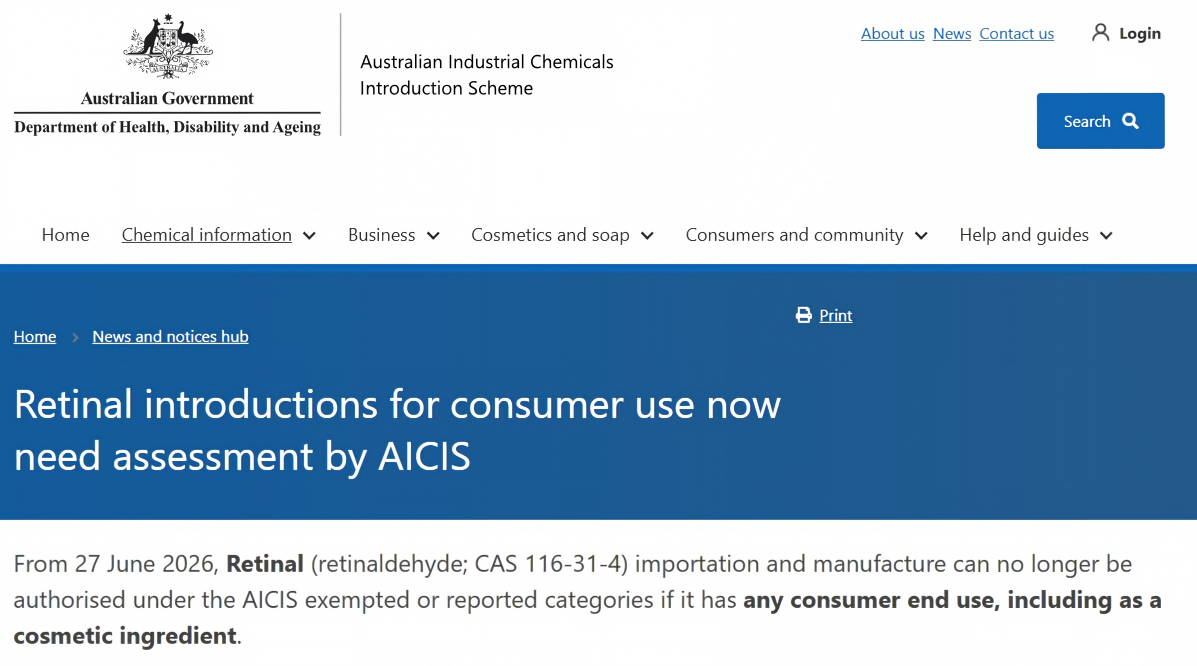 Figure 1. AICIS notice on retinal introductions for consumer use.
In its 14 July 2026 notice, AICIS confirmed that from 27 June 2026, retinal with any consumer end use can no longer be introduced under the exempted or reported categories. The appropriate pathway is the assessed category, which requires an assessment certificate before import or manufacture.
This distinction matters under Australia's Industrial Chemicals Act 2019 and AICIS framework. The pathway depends on the specific chemical identity, inventory status, end use, hazard characteristics and exposure. Companies should not assume that all members of the retinoid family follow the same route.
What Is Retinal and Why Is It Under Regulatory Scrutiny?
Retinal, also called retinaldehyde or vitamin A aldehyde, is a retinoid. It sits between retinol and retinoic acid in the metabolic pathway and is an immediate precursor to biologically active retinoic acid. This feature helps explain both its commercial use in skincare and AICIS's focus on its developmental toxicity potential.
Retinal is used in products marketed for skin ageing, texture, tone and acne-prone skin. Product-level performance nevertheless depends on formulation, concentration, conditions of use and supporting evidence. Regulatory classification also depends on the product's primary purpose, ingredients and claims.
In Australia, a product presented only for cosmetic purposes may fall within the cosmetics framework, while claims to treat a condition, such as acne or infection, may bring the product within the therapeutic goods regime. Companies should review the official AICIS guidance on cosmetics and therapeutics and assess the product boundary before launch.
Scientific and Industry Context
Retinal's scientific history predates its skincare use. Four milestones help explain how a molecule first studied in vision science became a widely used cosmetic active:
1930s: George Wald and other researchers established the role of a vitamin A-derived component, now known as retinal, in visual pigments.
1967: Wald shared the Nobel Prize in Physiology or Medicine for discoveries concerning the primary physiological and chemical visual processes in the eye.
1994: A human topical study reported that retinaldehyde showed biological activity and was well tolerated on human skin.
1996: Research in mouse skin reported conversion of topical retinaldehyde to all-trans retinoic acid, supporting the biological relevance of its metabolic pathway.
How AICIS Classified Retinal
1. Human Health Hazard Band C
Retinal-specific developmental toxicity data are limited. AICIS nevertheless noted that retinal can be converted in the body to retinoic acid, a biologically active metabolite with known teratogenicity. Using a weight-of-evidence approach that also considered data on metabolically related retinoids, including retinol, retinol esters and retinoic acid, AICIS classified retinal as a presumed human developmental toxicant.
The corresponding GHS classification is Reproductive Toxicity Category 1B, H360D: “May damage the unborn child.”
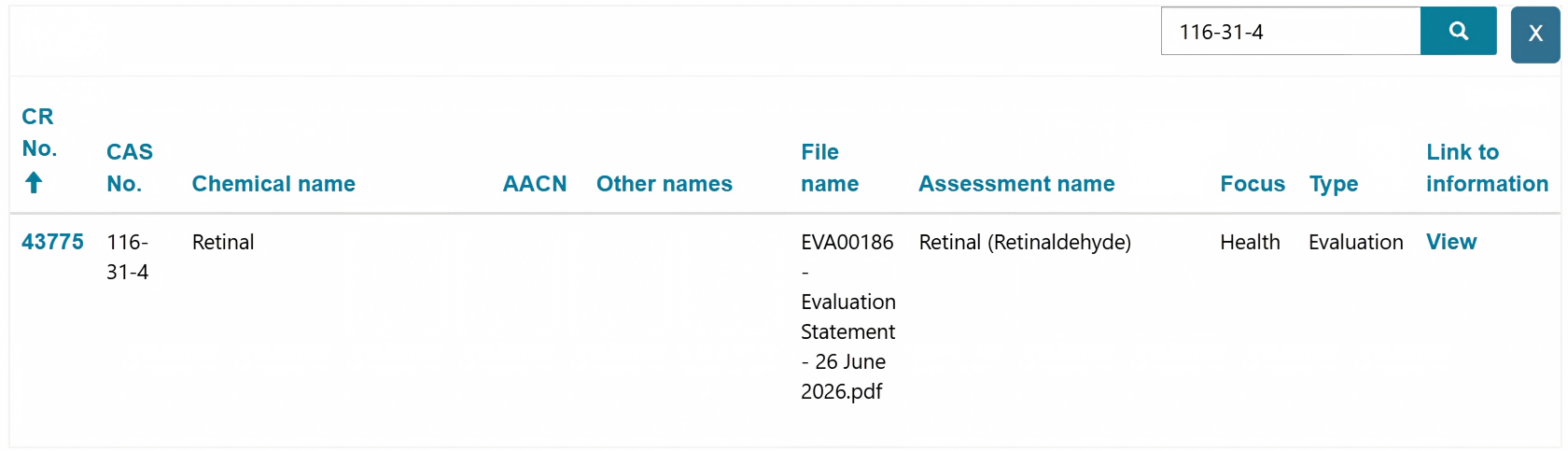 Figure 2. Developmental toxicity conclusion in final evaluation EVA00186.
Developmental toxicity is one of the seven characteristics in AICIS Human Health Hazard Band C, the highest human health hazard band in the categorisation guide. The seven listed characteristics cover inorganic arsenic compounds; chemicals containing beryllium, cadmium, hexavalent chromium, lead or nickel; carcinogenicity; reproductive toxicity; developmental toxicity; adverse effects mediated through an endocrine mode of action; and genotoxicity.
2. Consumer Use Raises the Human Health Exposure Band
An introduction can qualify for Human Health Exposure Band 1 only when all applicable low-exposure conditions are met. For the criteria relevant here, there must be no designated type of human exposure, no consumer end use, and the concentration must be below 0.1% at introduction and in every end use.
A serum, lotion, moisturiser or cream supplied to the public is a consumer end use. Accordingly, retinal for such a use cannot be assigned Exposure Band 1 and must be in Exposure Band 2 or higher.
3. The Risk Matrix Leads to the Assessed Category
Under the AICIS human health indicative risk matrix, Hazard Band C combined with Exposure Band 2 or higher produces a medium-to-high human health indicative risk.
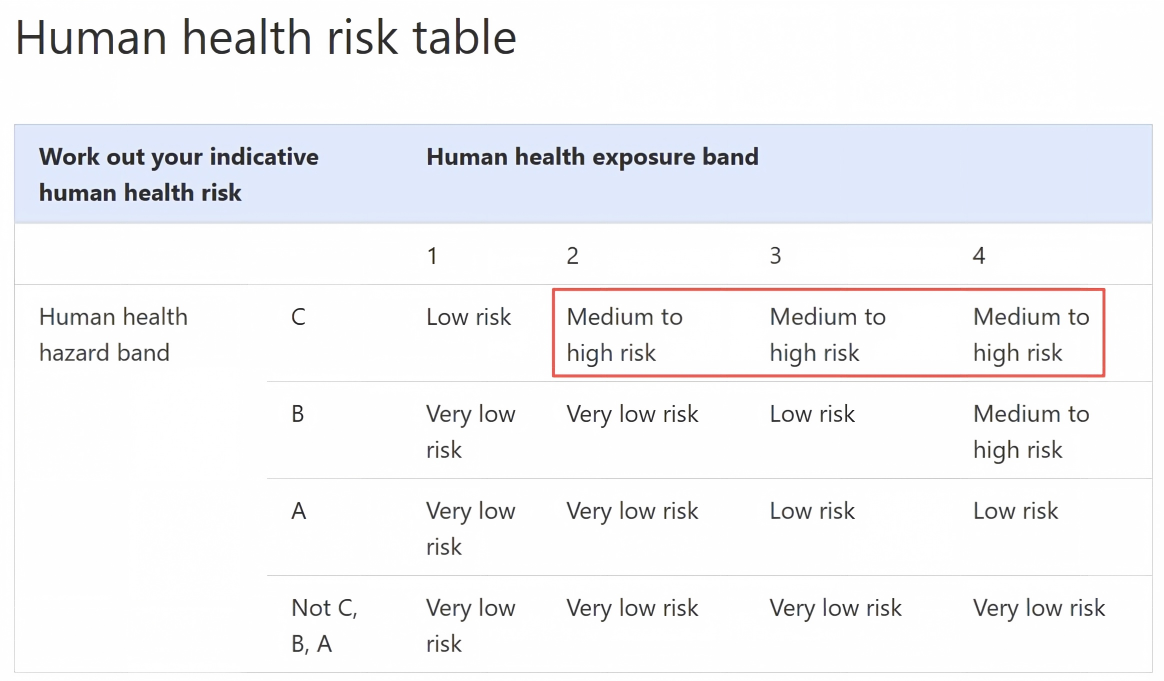 Figure 3. AICIS human health indicative risk matrix.
AICIS then determines the introduction's indicative risk by taking the higher of the human health and environment results. If either dimension is medium to high, the overall indicative risk is medium to high and the introduction belongs in the assessed category.
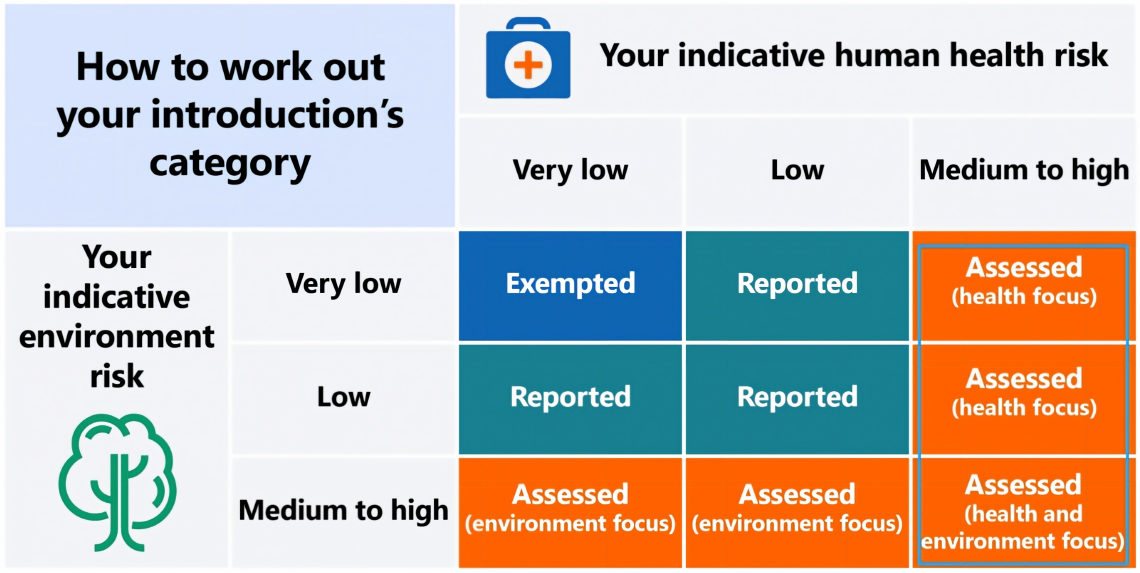 Figure 4. AICIS matrix for determining the introduction’s overall indicative risk.
What the New Requirement Means for Companies
The direct statutory duty falls on the introducer: the Australian importer or manufacturer. Brand owners, formulators, ingredient suppliers, contract manufacturers and other supply-chain participants should support the introducer with reliable identity, use, concentration and hazard information.
For affected retinal introductions, companies should stop relying on an exempted or reported categorisation and allow time for the assessment certificate process. AICIS states that, because it has already evaluated the chemical's hazards, introducers may apply for a comparable hazard assessment at a reduced application fee. AICIS recommends contacting the agency before applying to discuss the pathway and information requirements.
The requirement does not extend automatically to other retinoids. Retinol and retinol esters already listed on the AIIC are outside this specific change. Each substance should be checked separately by CAS number, chemical identity, inventory status and intended use. REACH24H's Australia AICIS compliance services can support substance-identity review, inventory checks and introduction categorisation.
Six Priority Compliance Actions for Retinal Projects
Build a substance inventory: Cross-check formulations, raw-material specifications, supplier declarations and ingredient lists for CAS 116-31-4 and names such as retinal and retinaldehyde. Do not rely on trade names alone.
Confirm every end use: Determine whether the introduced chemical will be used in a product supplied to the general public, including serums, lotions, moisturisers, creams or other personal-care products.
Identify the Australian introducer: Confirm the legal importer or manufacturer and document the responsibilities of the brand owner, distributor, contract manufacturer, supplier and any overseas dossier owner.
Change the introduction pathway: For retinal with consumer end use, discontinue reliance on the exempted or reported categories and plan for an assessment certificate before the first affected introduction.
Discuss comparable hazard assessment with AICIS: Contact AICIS before filing to confirm eligibility, the information package and the reduced application fee for a comparable hazard assessment.
Update internal controls: Add checkpoints for retinal identity, inventory status, end use, product claims, introducer coverage and certificate status across R&D, procurement, regulatory, quality, sales and marketing workflows.
How REACH24H Can Support Retinal Compliance
REACH24H can support companies in confirming substance identity and AICIS applicability, mapping the introduction category, assessing data gaps and coordinating information across the introducer and global supply chain.
Applicability and pathway assessment: Confirm the chemical identity, inventory status, end use and appropriate AICIS introduction category.
Dossier and data strategy: Support assessment certificate documentation, data-gap review and IUCLID materials where required.
Supply-chain coordination: Align the Australian introducer, brand owner, formulator, supplier and dossier owner on information and responsibilities.
Product-boundary review: Assess cosmetic-versus-therapeutic positioning and claims where relevant, with reference to Australia's cosmetics regulatory framework.
Learn more about REACH24H's support under the Australian Industrial Chemicals Act 2019 and AICIS. Companies should confirm the final pathway for each project before import or manufacture.
Important
This article provides general regulatory information and does not constitute legal advice. Requirements should be confirmed for the specific chemical, concentration, end use, claims, supply chain and introduction scenario.
Need support with an AICIS retinal introduction?
REACH24H can help assess applicability, confirm the introduction pathway, prepare technical documentation and coordinate compliance information across the supply chain.
Related REACH24H Service
Navigating Australia's Industrial Chemicals Act 2019 (IC Act) Under AICIS : Key Insights - REACH24H
Australia's Cosmetic Regulations Explained: How to Achieve AICIS Compliance - REACH24H


