CRAC CHINA 2026 · AGROCHEMICAL FORUM
REACH24H brought together more than 100 representatives from government bodies, industry associations and businesses at the CRAC China 2026 Agrochemical Forum in Wuyishan, China, on October 21–22. Through technical presentations, industry discussions and closed-door one-to-one meetings, participants explored how pesticide registration, product development and commercial strategy can support international growth.
Forum Overview
The forum formed part of the 18th Chemical Regulatory Annual Conference, held on October 21–23 at Dahongpao Resort Wuyi Mountain in Fujian Province. The conference was organized by REACH24H and co-organized by the Zhejiang Crop Protection Industry Association, with strong support from the Shandong Pesticide Industry Association, the Hebei Pesticide Industry Association, AgroPages and other partner organizations.
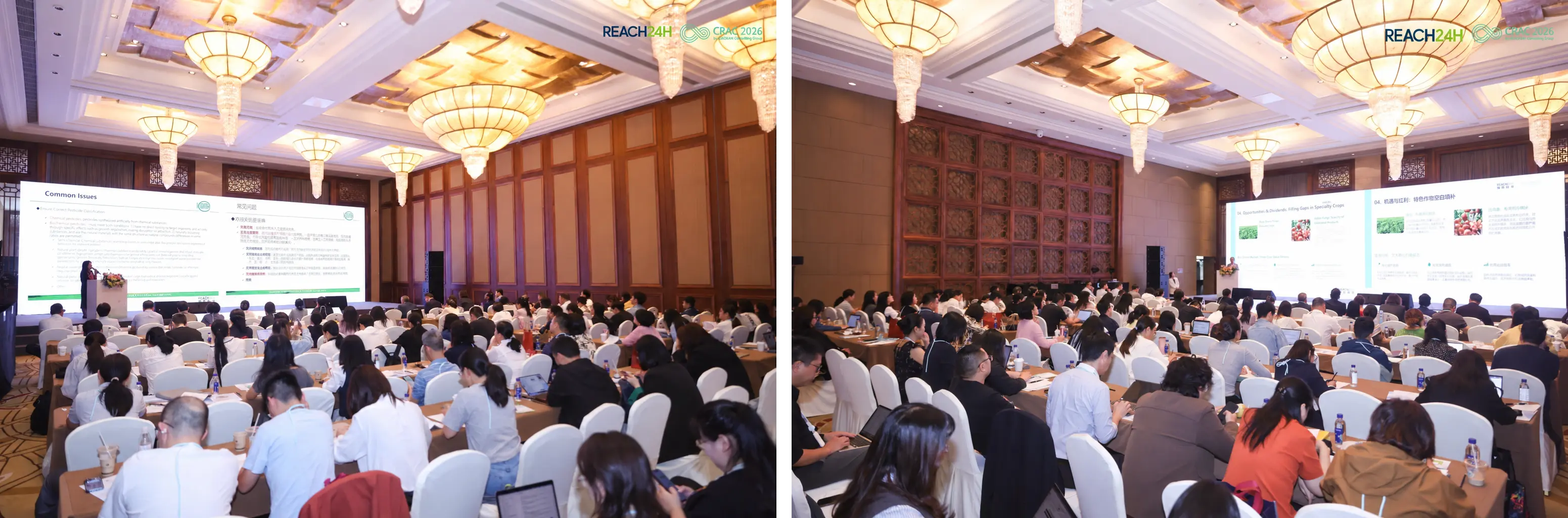
As one of the conference's two parallel forums, the agrochemical forum connected perspectives from China, Brazil, European Union, United States, Vietnam, Argentina and Canada. It gave regulatory affairs teams and business leaders an opportunity to assess individual markets within broader international strategies.
Opening Remarks: Strengthening Industry Dialogue
In his opening remarks, REACH24H Chairman Fangwei Hong welcomed delegates and thanked the regulators, experts, partners and industry colleagues who have supported CRAC over the years.
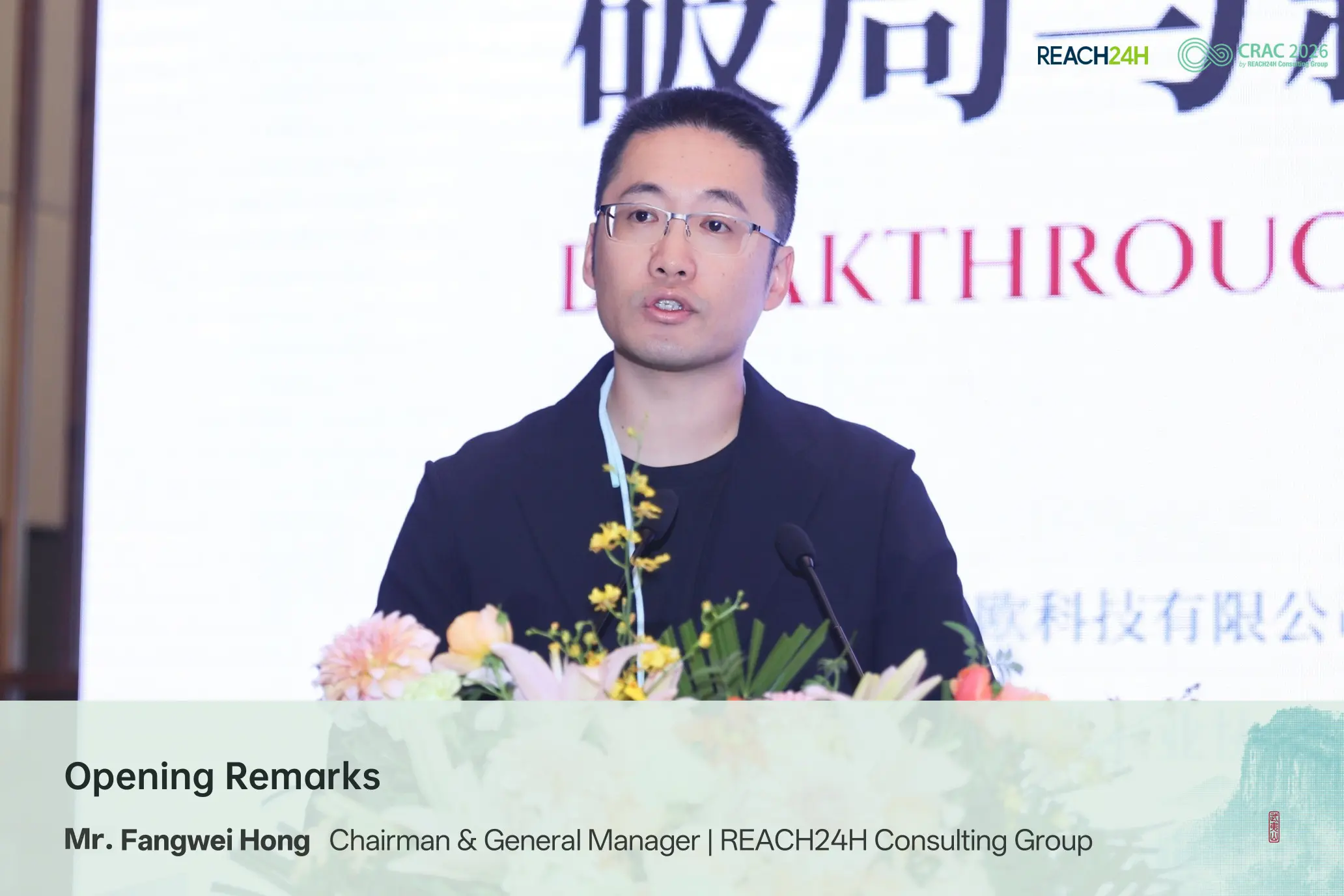
He emphasized the value of sustained dialogue as companies seek to translate manufacturing capabilities into innovation, stronger brands and lasting international competitiveness. As regulatory requirements and market conditions evolve, cooperation among government bodies, industry associations, researchers and businesses can help companies make better decisions.
The forum reflected this approach through contributions from Brazil's Ministry of Agriculture, Livestock and Food Supply (MAPA) and National Health Surveillance Agency (ANVISA), the Czech National Institute of Public Health, the China Crop Protection Industry Association (CCPIA), CropLife America, CropLife China, the Vietnam Pesticide Association (VIPA), and Argentina's Chamber of the Fertilizer and Agrochemical Industry (CIAFA).
Keynote: Turning Manufacturing Scale into Stronger Returns
Duanxiang Yan, President of CCPIA, examined how China's pesticide industry can turn its manufacturing scale into stronger economic returns.
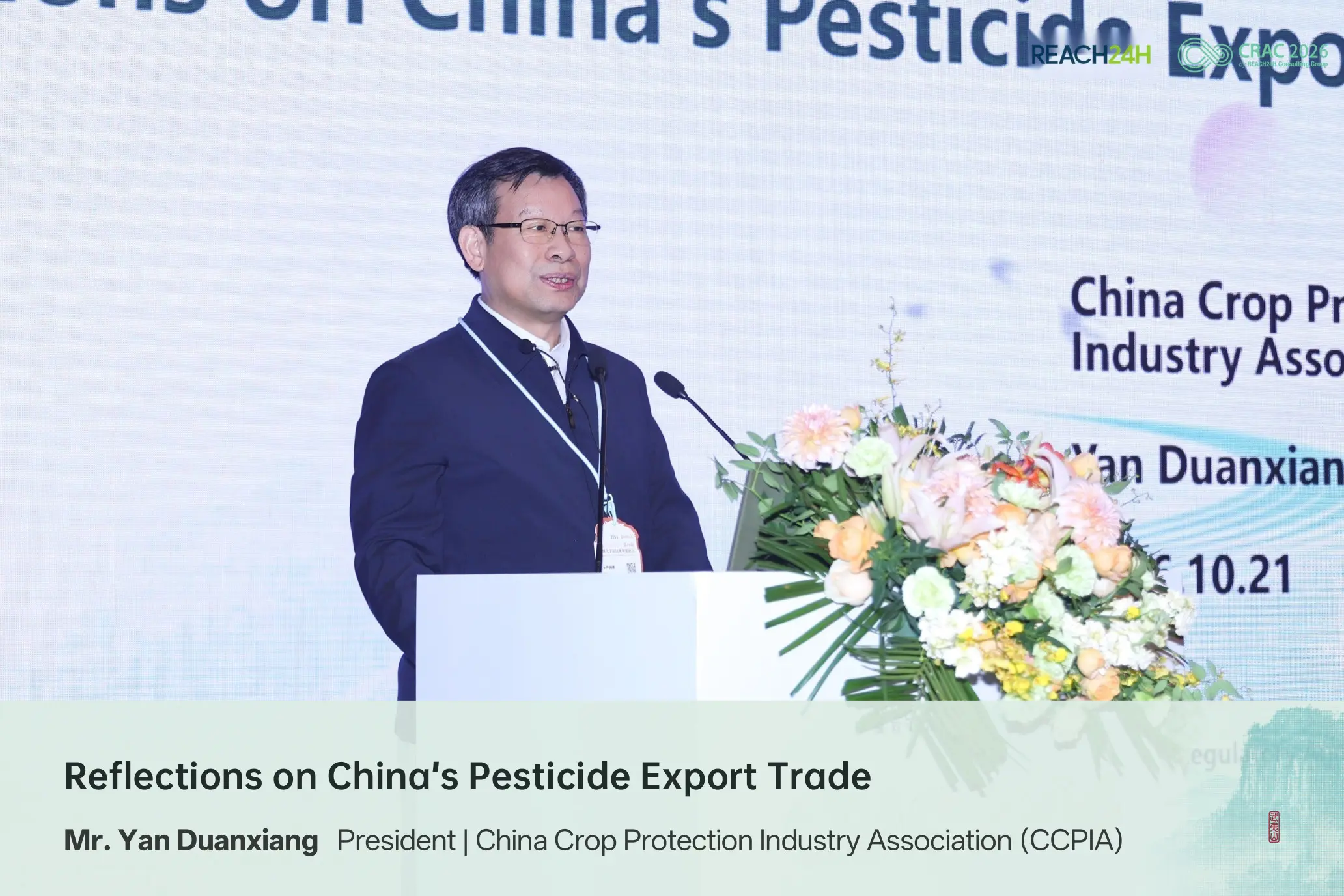
He outlined three priorities: improving profitability, strengthening formulated-product development and building a deeper presence in international markets. Formulation innovation, brand development, industry discipline and international cooperation were central to this approach.
For businesses planning overseas expansion, the discussion highlighted the importance of connecting product selection and registration investment with a clear commercial proposition and a sustainable market presence.
China: Residue Requirements, Efficacy and Early Safety Assessment
Guangfu Yang, Professor and Director of the State Key Laboratory of Green Pesticide at Central China Normal University, chaired the China-focused discussions, connecting policy developments with scientific and practical considerations.
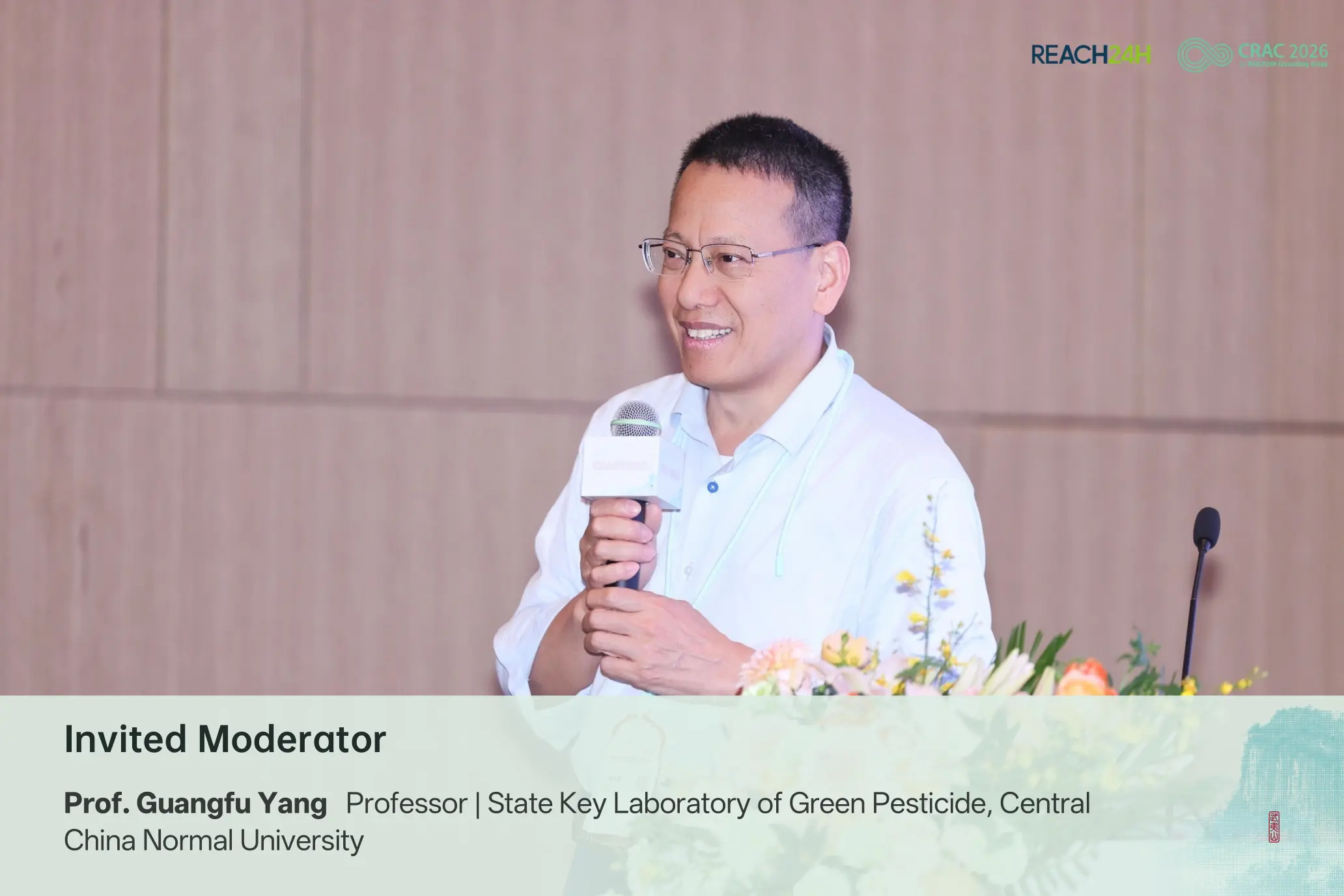
The sessions examined how decisions made during product development can affect registration outcomes, with contributions on residue requirements, efficacy evaluation and toxicological risk screening.
Residue Requirements and Agricultural Export Markets
Professor Yongzhen Yang compared maximum residue limit (MRL) frameworks across Codex, the EU, the United States, Japan and China. She examined how differences in crop coverage and residue requirements can influence pesticide development and international market planning.
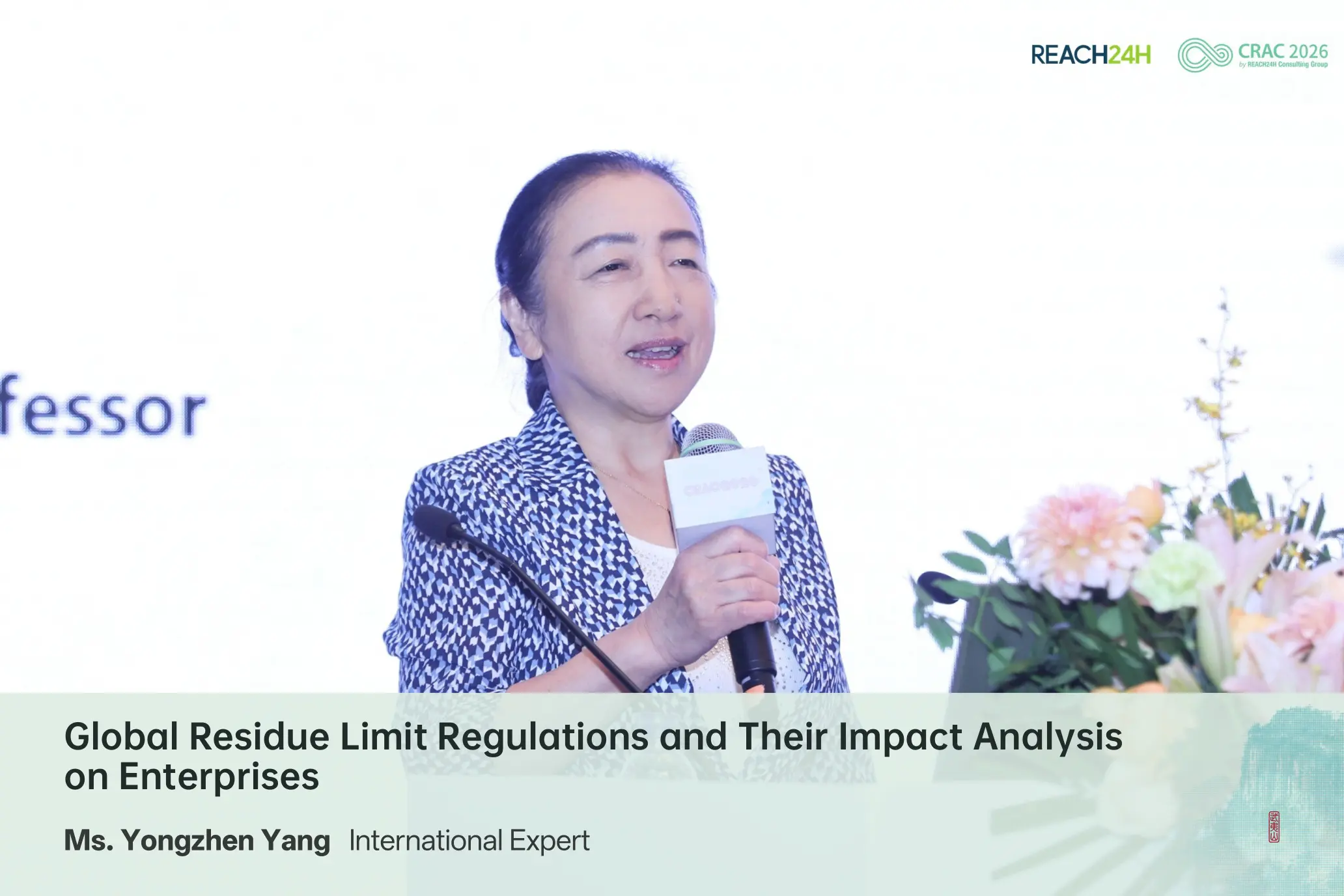
Her presentation highlighted the importance of considering MRL requirements early when selecting target crops, defining intended uses and planning registration studies, particularly for pesticides used on export-oriented crops.
Efficacy Evaluation, Crop Safety and Resistance Management
Xiaojun Wang, a former researcher at the Institute for the Control of Agrochemicals (ICAMA), Ministry of Agriculture and Rural Affairs, examined efficacy evaluation for pesticide registration in China.
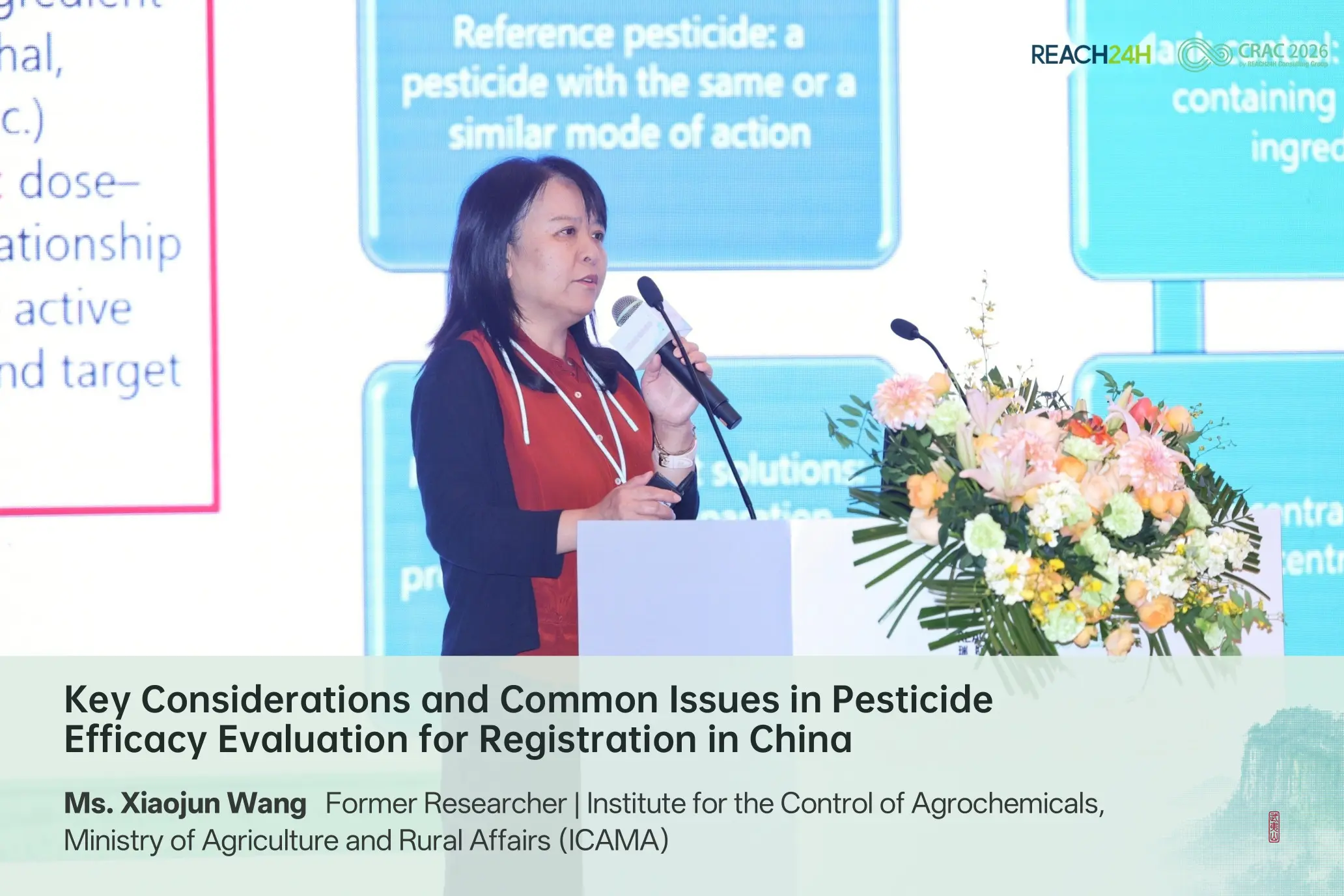
Her presentation covered biological performance, crop safety, mixture justification and resistance management, as well as the suitability of application timing, rates and methods.
She highlighted recurring weaknesses such as unclear product classification, inconsistencies between the stated mode of action and trial evidence, and insufficient justification for mixtures. Representative trial conditions and a clear connection between proposed uses and supporting evidence were central to her discussion.
Identifying Toxicological Risks Earlier
Bin Wan of the Chemical Environmental Risk Assessment Center, Research Center for Eco-Environmental Sciences, Chinese Academy of Sciences, presented a staged approach to identifying toxicological risks—from lead compounds and candidate selection through to formal Good Laboratory Practice (GLP) studies.
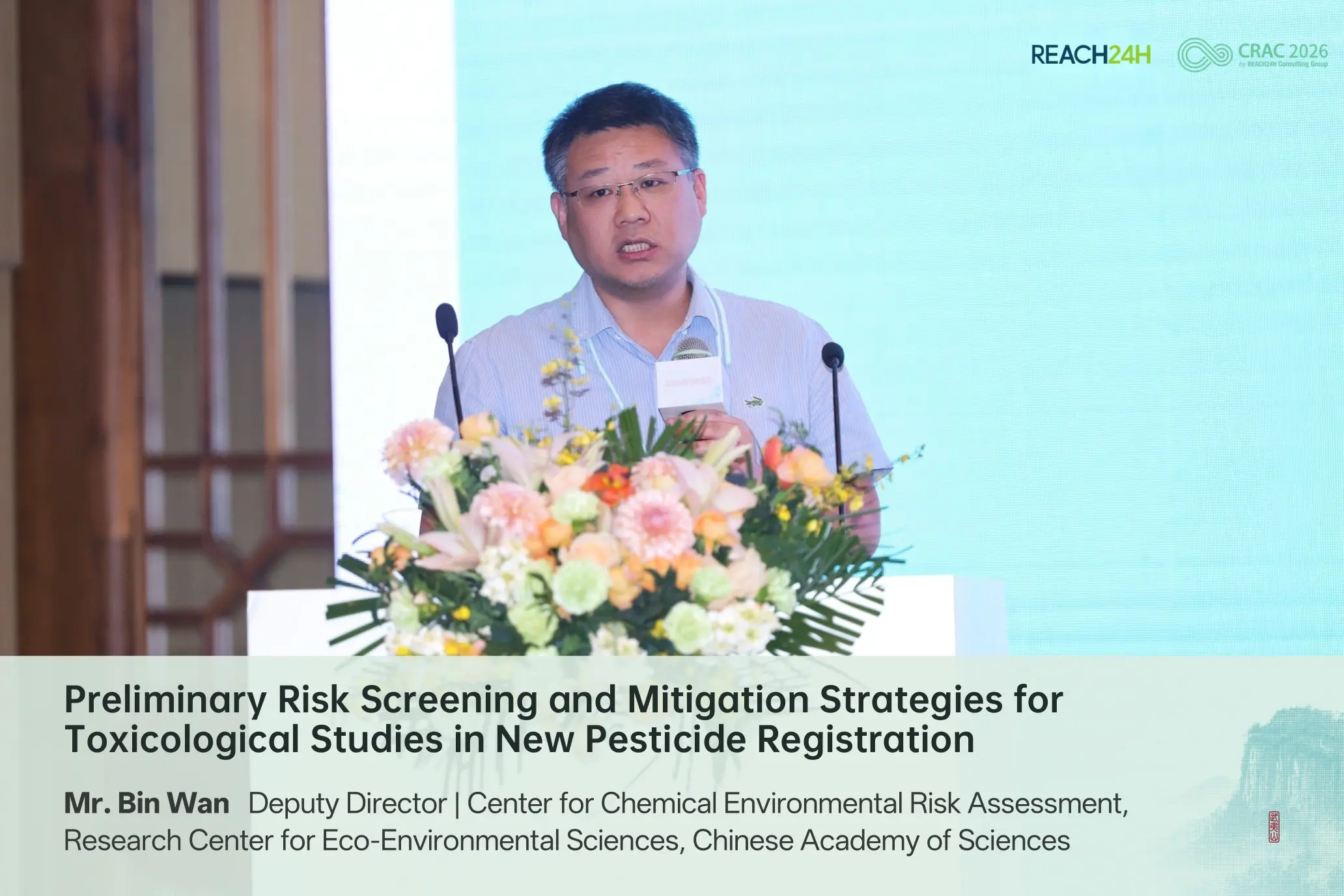
He discussed how computational tools, in vitro methods and targeted testing can help identify concerns before companies commit to more extensive research programs. Early screening can reduce uncertainty and avoidable investment, while formal registration studies remain necessary to establish the required evidence.
Together, these sessions reinforced the value of integrating pre-registration safety assessment for new pesticides in China and other regulatory considerations into product-development decisions.
Global Markets: Regulatory Updates and Market Access
The afternoon sessions on October 21 discussed developments in Brazil, the European Union, the United States, Vietnam and Argentina. Speakers connected regulatory procedures with the scientific evidence, local partnerships and commercial resources needed to enter and remain in each market.
Brazil: Digital Registration, Biological Products and Post-Market Oversight
José Victor Torres Alves Costa of MAPA presented developments in Brazil's regulatory framework, including the rollout of SISPA, the electronic system supporting pesticide submissions and evaluation. His presentation covered the transition to the system and its role in organizing applications, process information and regulatory communication.
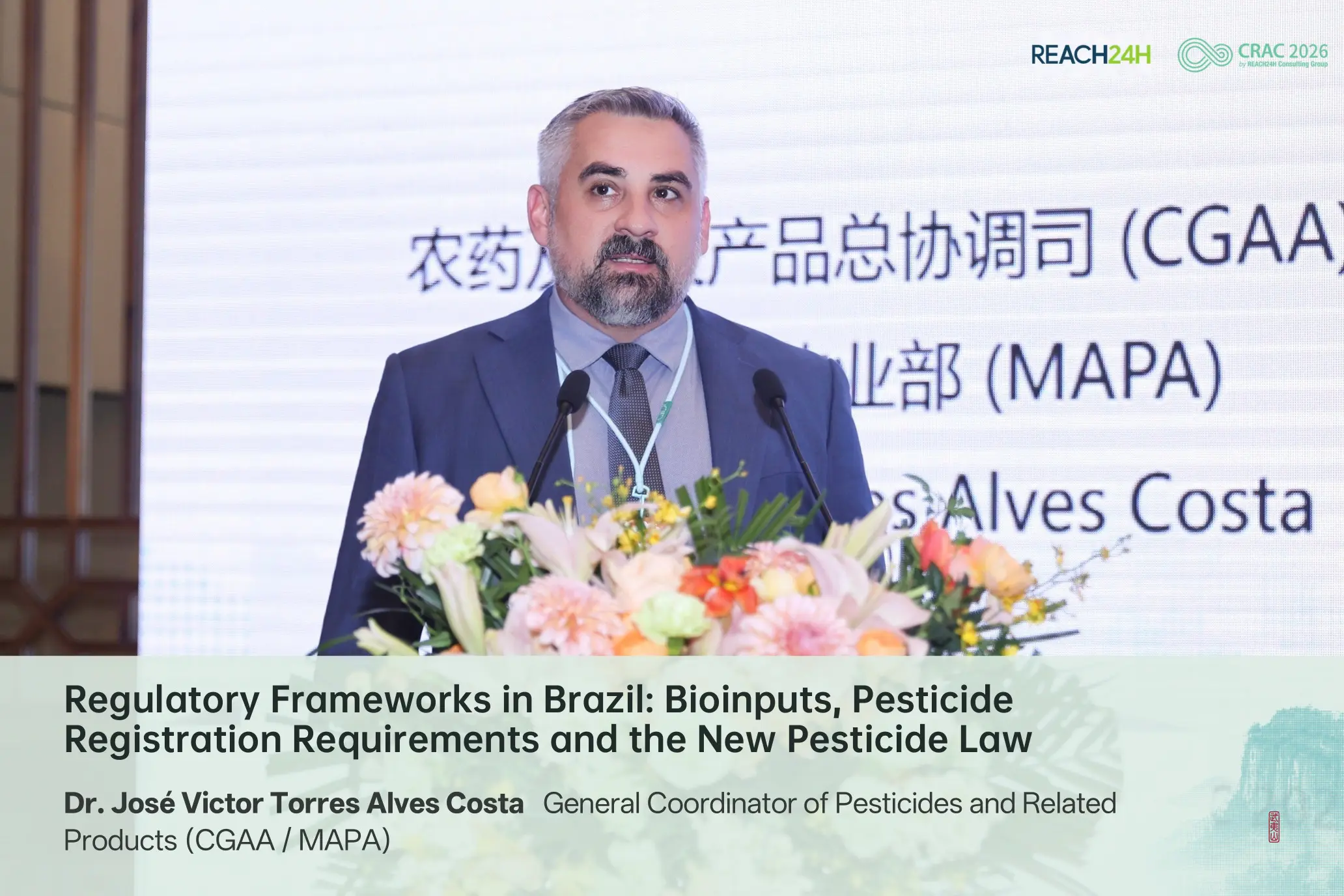
Biological products were another focus. He discussed differentiated assessment pathways and the importance of microbial strain identity, genetic stability, manufacturing consistency and contaminant control. He also addressed post-market oversight, including product quality, analytical verification and supply-chain traceability.
Juliano dos Santos Malty of ANVISA explained the agency's role in assessing health risks before and after registration, including dietary and non-dietary exposure. For biological inputs, his presentation addressed considerations such as identity, infectivity, pathogenicity and contaminants.
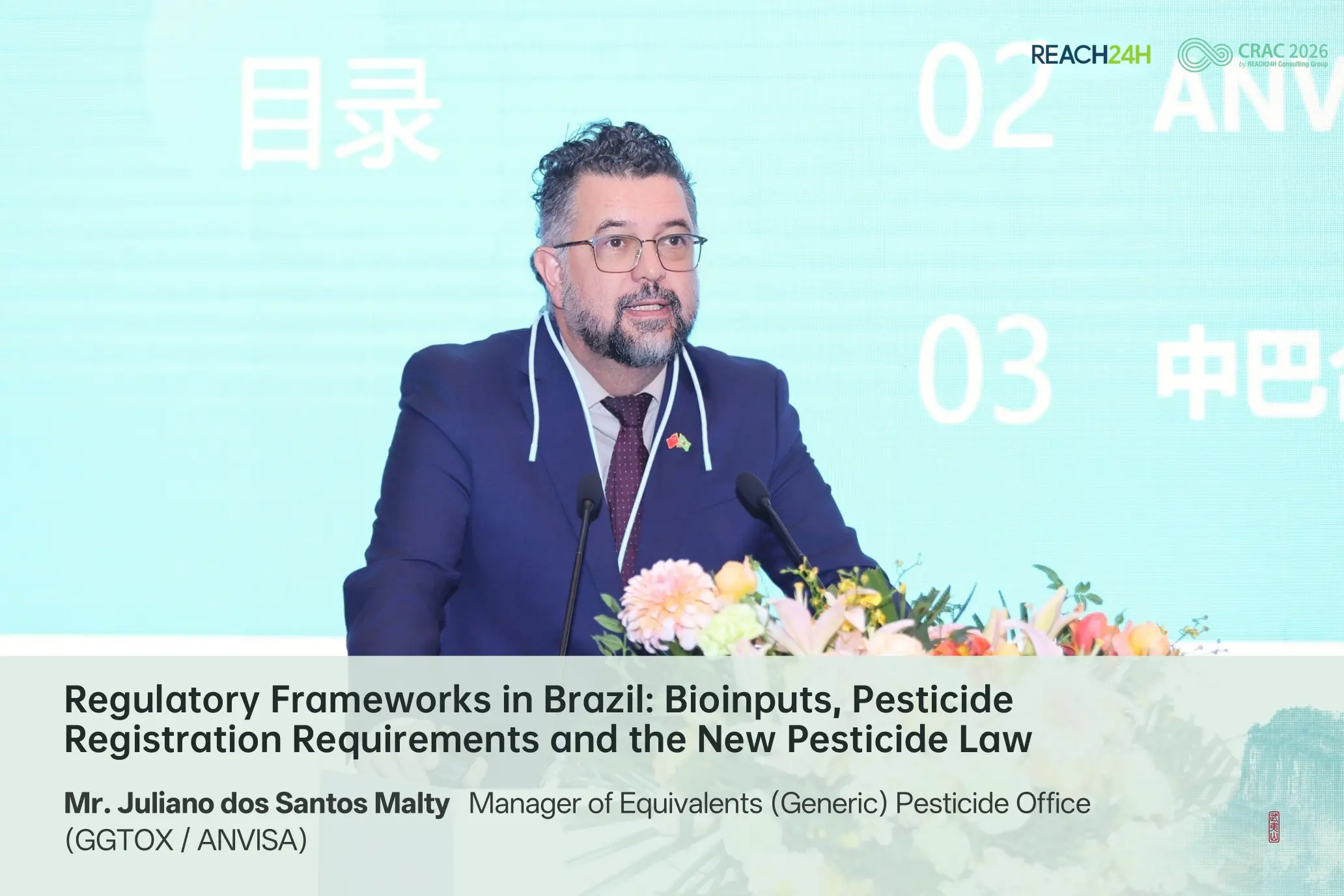
ANVISA's presentation also identified REACH24H and CCPIA among the partners supporting Brazil–China cooperation, alongside companies, producers, researchers and government institutions. This exchange helps participants better understand regulatory expectations and industry needs across markets.
European Union: Renewal Evidence, Applicant Status and Data Access
Martin Weiszenstein of the Czech National Institute of Public Health examined the "second life" of an active substance through renewal assessment. He explained why renewal requires evaluation against the applicable scientific and regulatory standards, rather than simply reaffirming an earlier approval.
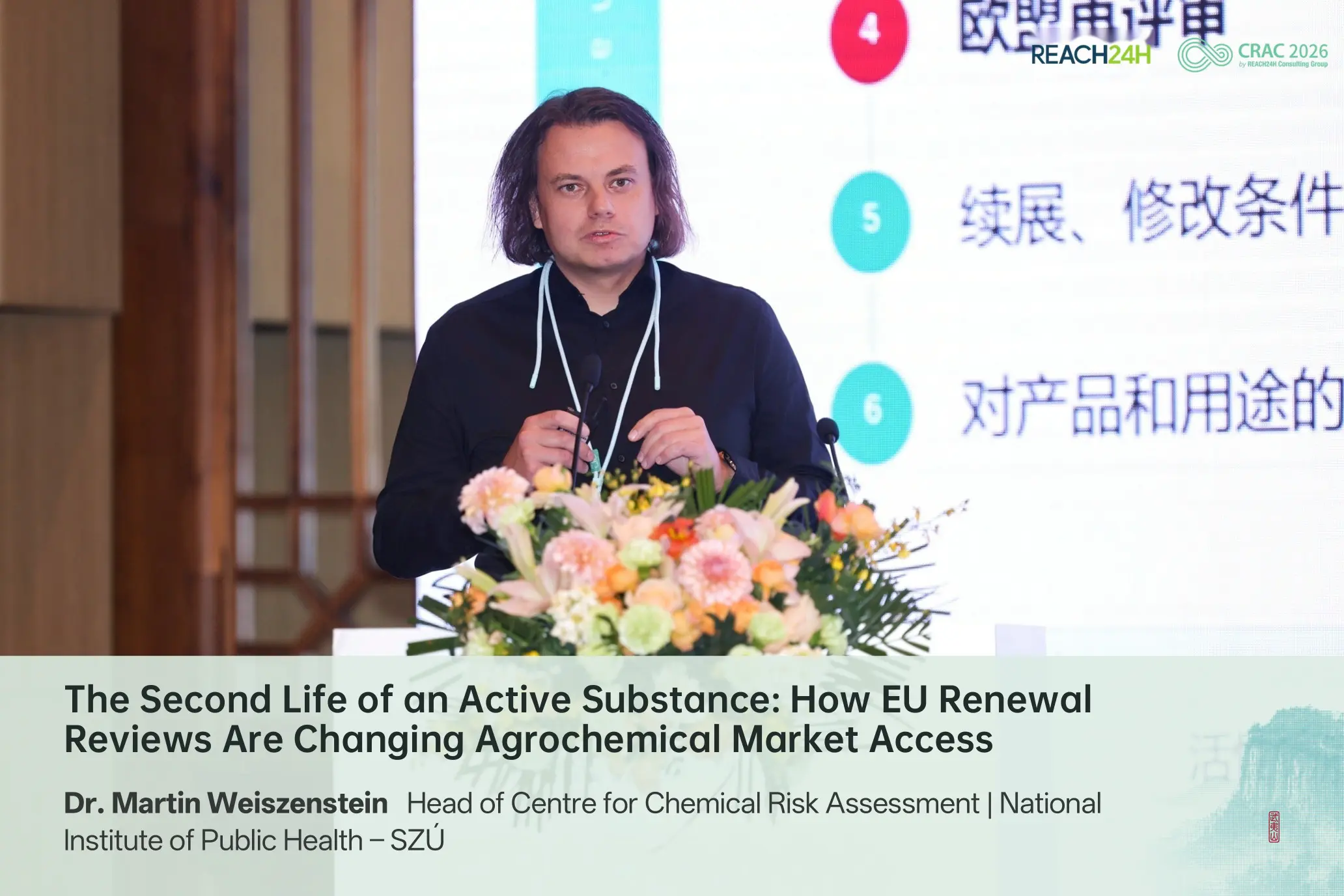
His presentation distinguished applicant status, consortium membership, data-access rights and the scientific adequacy of a dossier. These are related considerations, but one does not automatically establish the others. He also discussed the need for additional studies to address specific assessment questions and the importance of realistic project planning.
Camile Zhang, Regulatory Expert at REACH24H, discussed the practical application of Article 34 of Regulation (EC) No 1107/2009, which provides for exemption from submitting certain test and study reports when the specified conditions are met. She focused on technical-source compliance, formulation comparability and the legal basis for relying on existing studies, while highlighting differences in implementation across EU Member States.
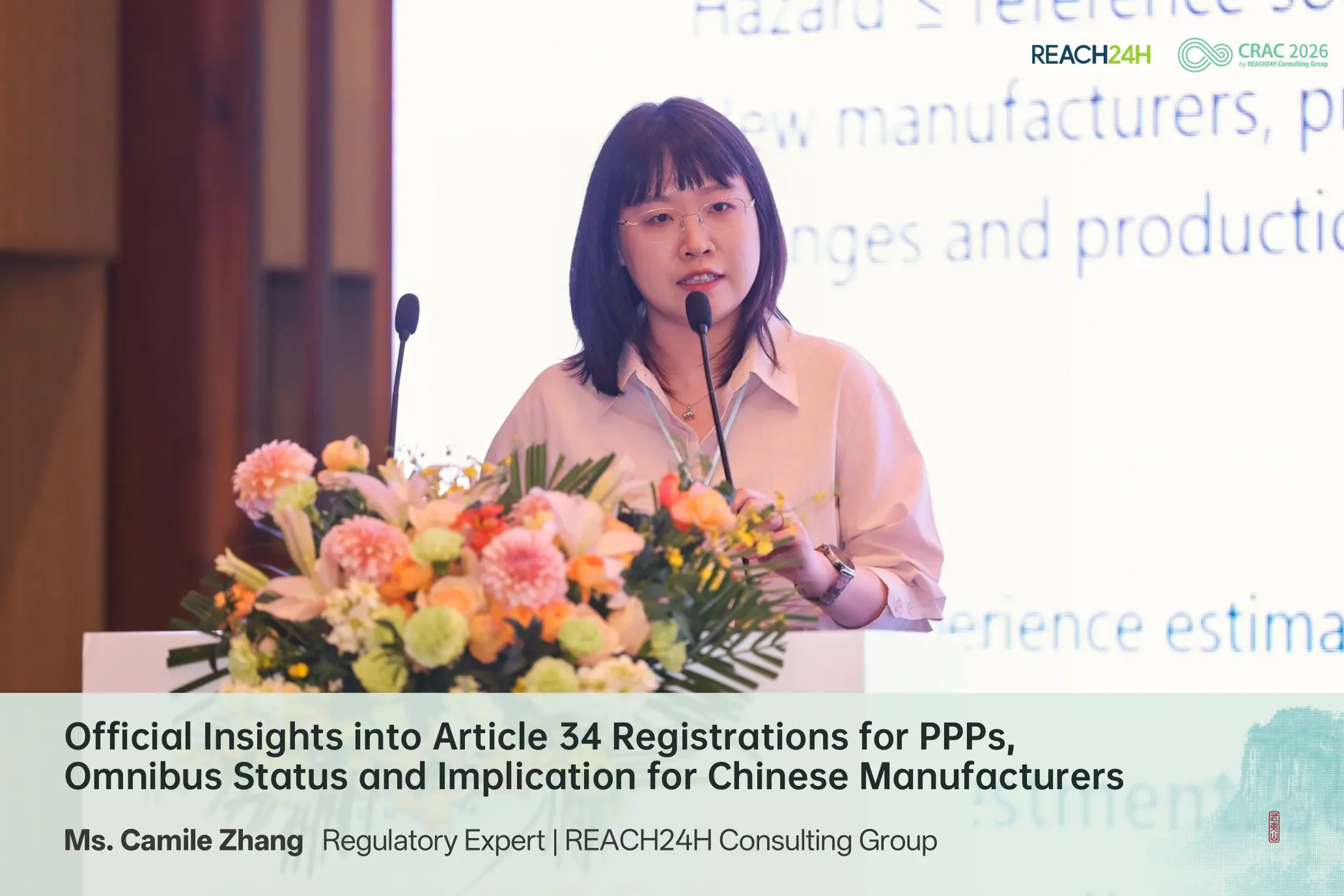
Her presentation also reviewed the evolving Omnibus proposals. For companies planning investment, the distinction between proposed changes and currently applicable requirements remains essential.
These discussions illustrated why EU plant protection product registration planning needs to bring together regulatory eligibility, data access, technical evidence and national implementation from the outset.
United States: Registration Readiness and Commercial Execution
Manojit Basu, Vice President of Science Policy and Regulatory Affairs at CropLife America, reviewed the U.S. regulatory and commercial landscape, including registration processes, GLP requirements, bilingual labeling and Endangered Species Act implementation.
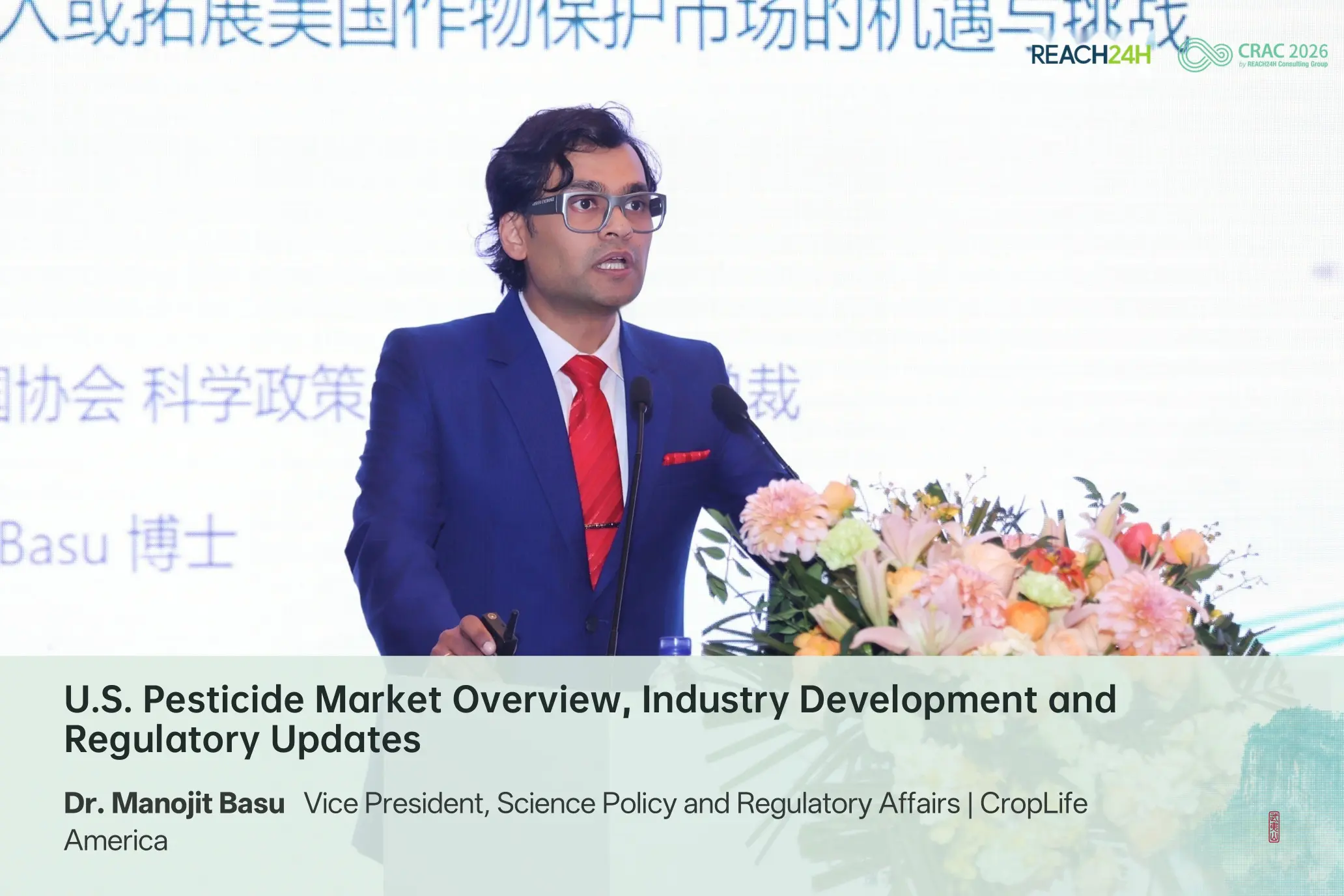
He also discussed how residue requirements in agricultural export markets can influence pesticide use patterns and product demand in the United States, adding another consideration for companies selecting products and planning their U.S. market strategy.
His presentation compared several routes into the market, from supplying existing registrants and private-label arrangements to developing an independent brand or acquiring an established business. Each requires a different combination of regulatory capability, investment, distribution access and local support.
The practical message was that registration planning needs to align with the operating model a company can sustain after launch.
Vietnam: Registration Reform and Local Supply Requirements
Pham Van Toan of VIPA connected Vietnam's regulatory developments with its agricultural demand and reliance on imported pesticide materials.
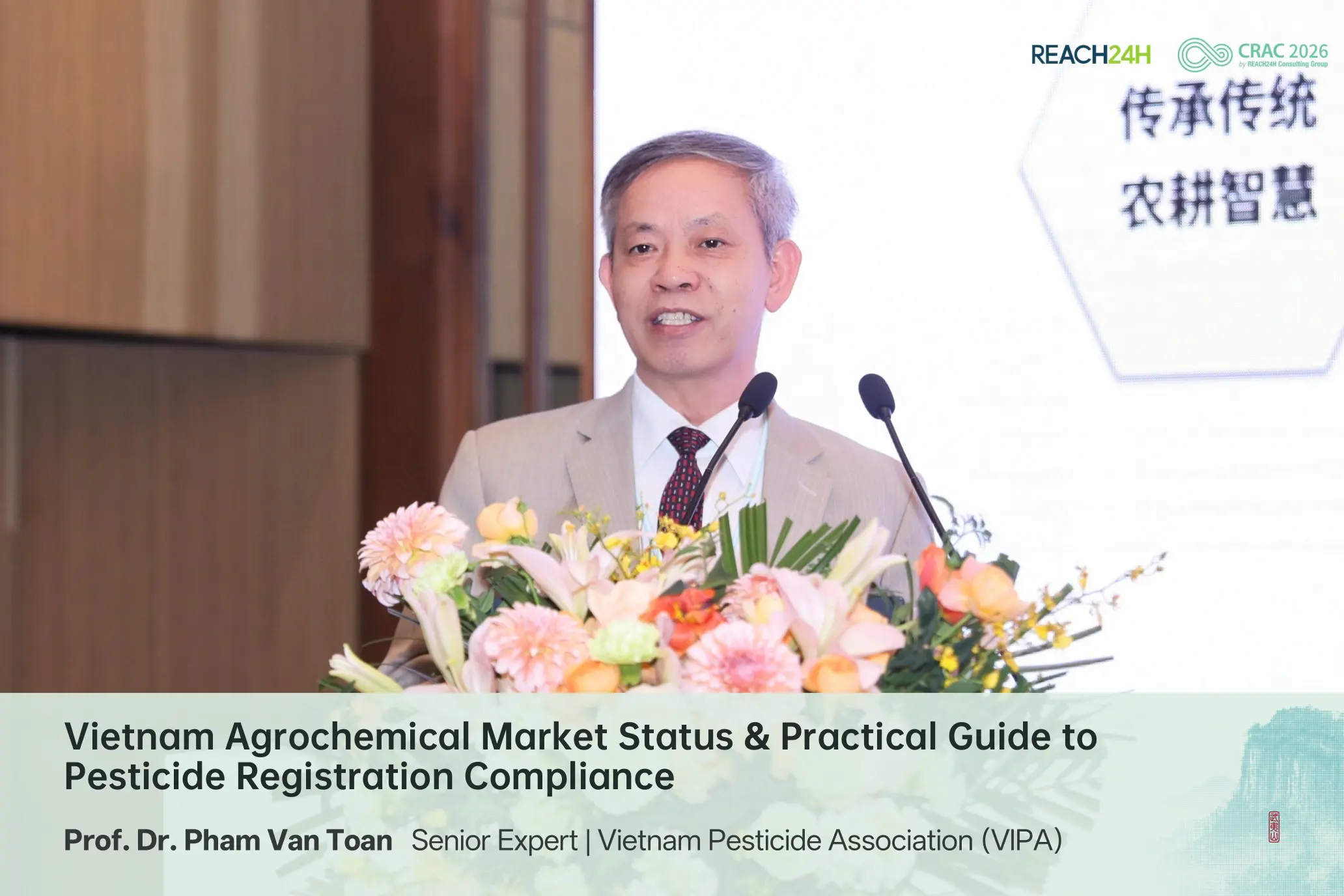
Alongside changes to registration procedures, he addressed permitted-product lists, local efficacy testing, import quality controls and labeling.
For prospective suppliers, his presentation showed the importance of considering registration alongside local formulation, distribution and product-quality requirements.
Argentina: Regulatory Changes and Local Formulation Opportunities
Daniel Mazzarella, Technical Coordinator at CIAFA, presented Argentina's evolving registration framework, including changes to registration validity, review procedures and regulatory convergence.
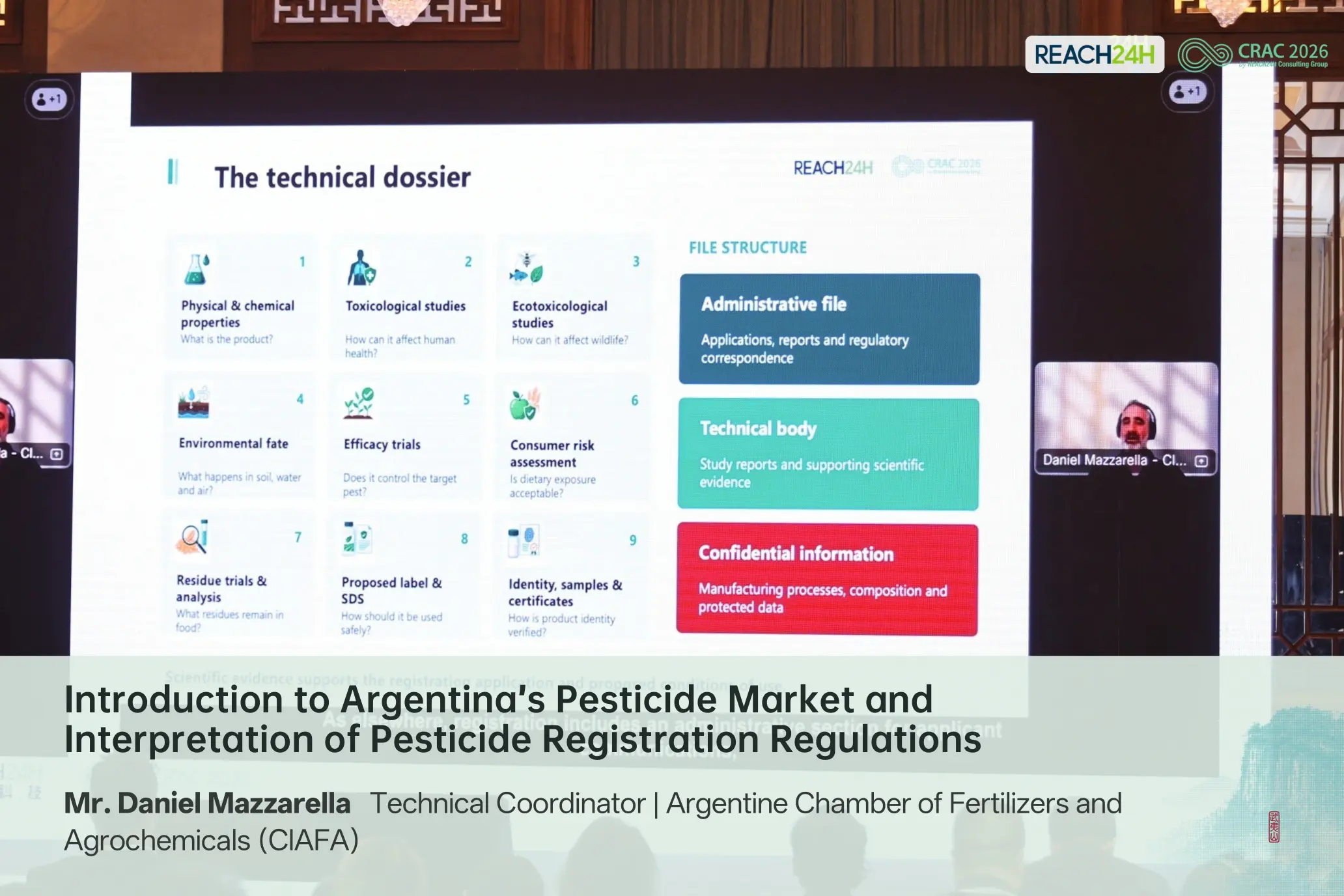
He also explained the importance of local formulation and imported technical material in Argentina's supply structure. Product-registration decisions therefore need to reflect how a company intends to participate in the market, including its relationships with local formulators and commercial partners.
Registration Strategy, Intellectual Property and R&D Partnerships
The morning program on October 22 shifted from individual regulatory systems to the capabilities needed to manage international portfolios. Speakers addressed global registration planning, intellectual property, research partnerships and product selection, with Canada providing a further market-specific perspective.
Planning Registration Across Multiple Markets
Ivy Zhang, Technical Manager at REACH24H, presented a staged approach to global registration planning. She explained how companies can identify shared data needs while accounting for requirements specific to each jurisdiction, rather than treating every application as an isolated project.
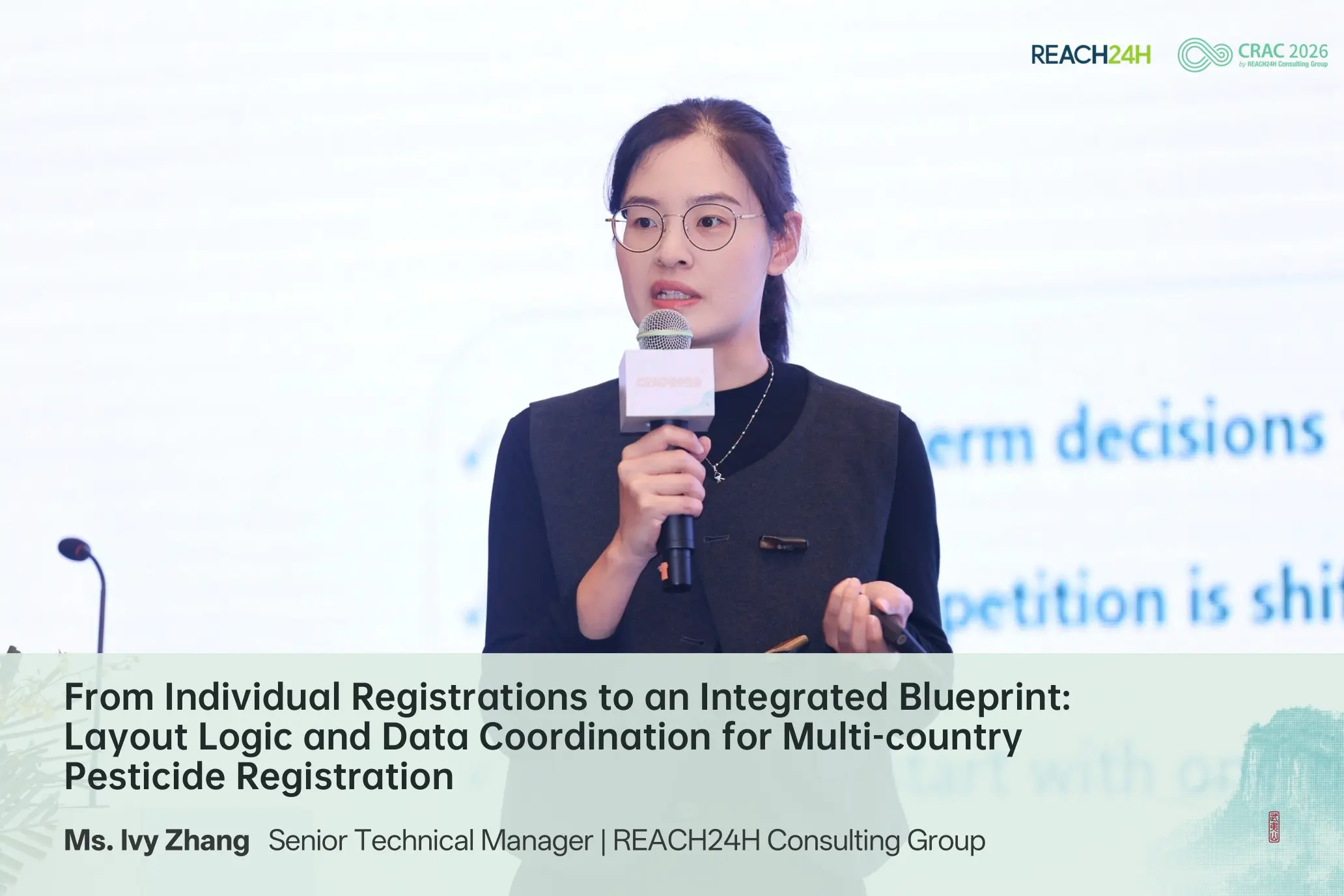
Her presentation emphasized decisions made before studies begin: laboratory qualifications, test methods, sample specifications and report preparation can all affect the usefulness of data across markets.
For biological products, classification and intended claims also require early attention. A coordinated strategy can help companies sequence investment and assess where additional evidence will be needed as their portfolios expand.
Assessing Intellectual Property and Freedom to Operate
Lichun Si of Beijing Yuehe Intellectual Property Agency examined patent strategy and freedom-to-operate assessment. She emphasized that expiry of a compound patent does not, by itself, resolve potential constraints involving manufacturing processes, intermediates, crystal forms, formulations or uses.
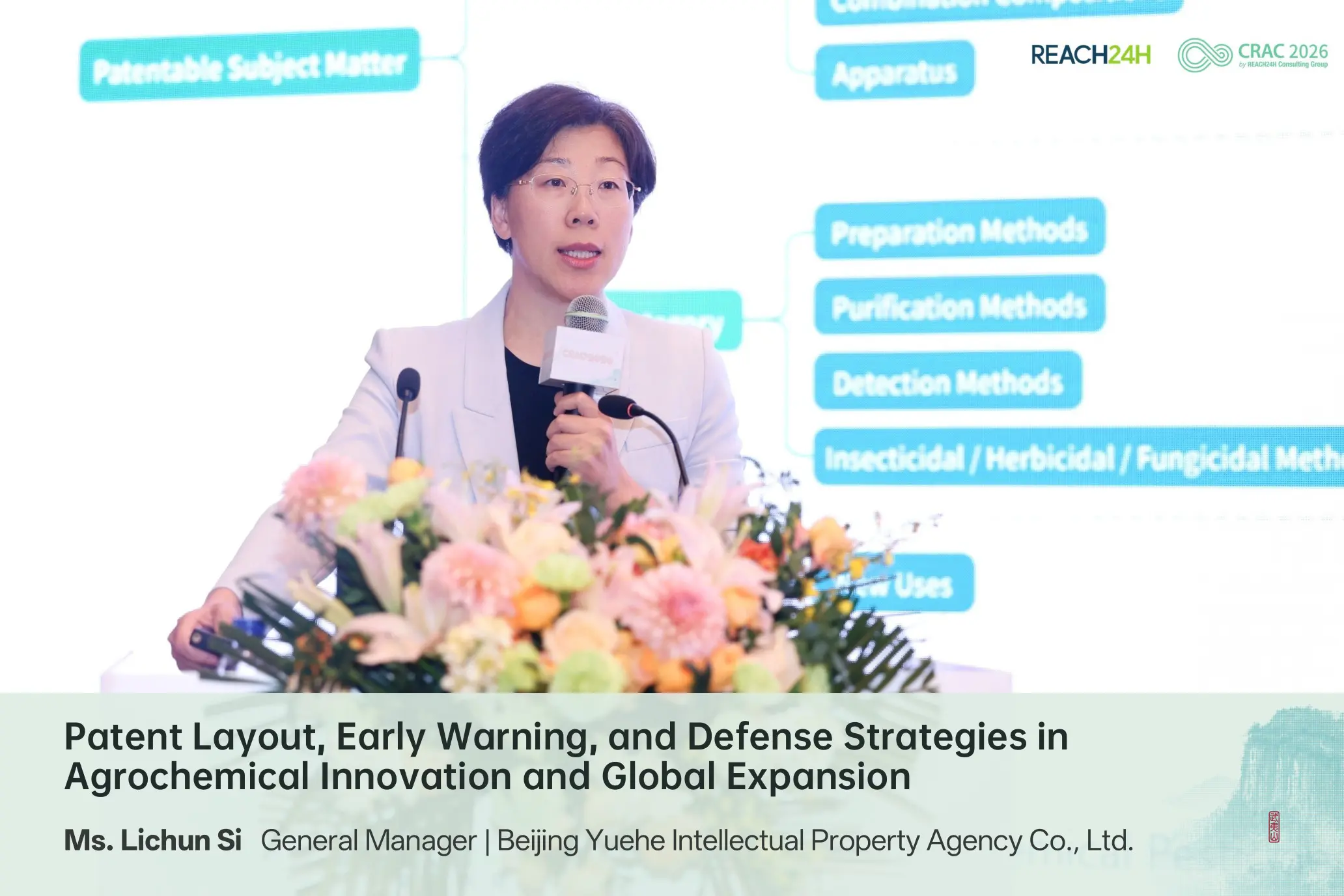
Her presentation connected patent searching and risk classification with monitoring and response options, including design changes and licensing.
It also highlighted the need to assess activities such as supplying samples for third-party trials or participating in overseas exhibitions in their specific legal and commercial context.
Selecting CROs and Managing Research Quality
Xinyou Sun of CropLife China linked global pesticide innovation with the selection and management of contract research organizations (CROs). He advocated introducing registration strategy early in development, before changes to specifications, processes or formulations become more costly.
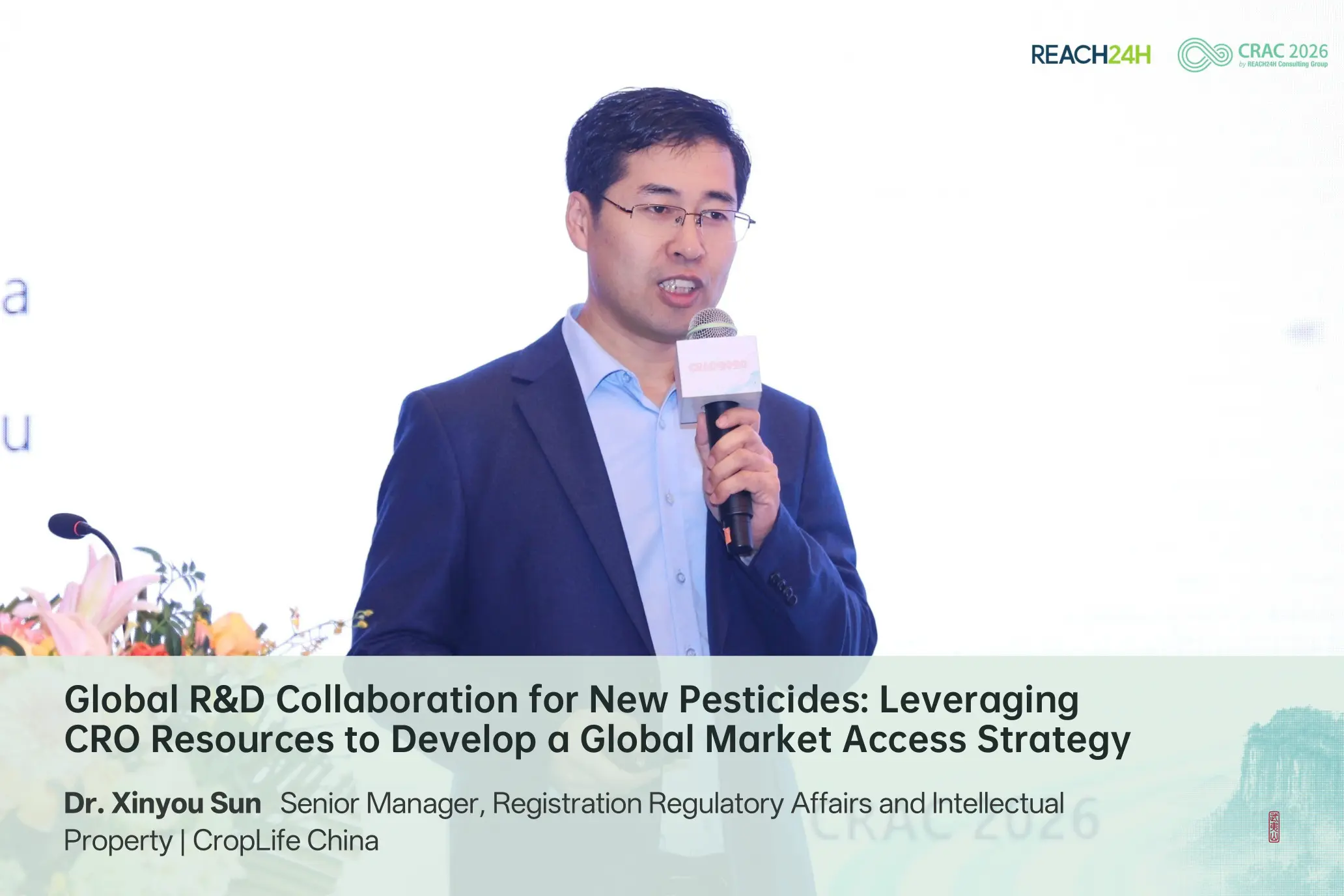
Technical competence and work quality were central to his CRO selection framework, alongside animal welfare, communication, timelines and cost. He also discussed the relevance and quality of historical control data, particularly for long-term toxicology studies.
His presentation extended beyond laboratory selection to the management of the research relationship: clear agreements, protocol review, milestone monitoring, deviation handling and report review all contribute to the quality and usability of the final evidence.
Canada: Product Selection, Data Costs and Lifecycle Compliance
Greta Guan, Regulatory Expert at REACH24H, examined how companies can assess opportunities in Canada beyond headline sales figures.
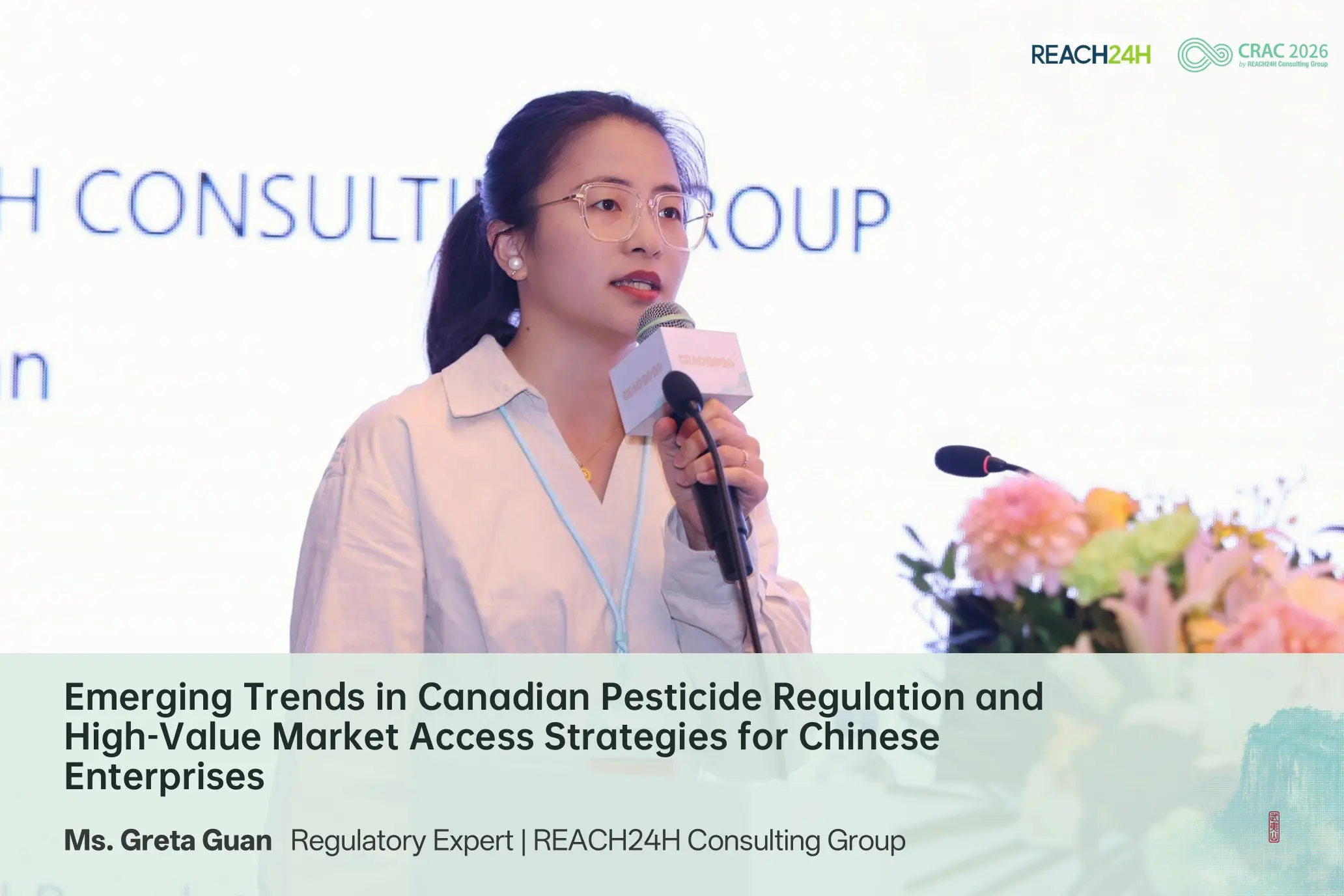
Her presentation connected market demand with product maturity, competition, data protection, potential data-compensation costs and the resources needed to maintain a registration. She distinguished the planning considerations for generic products and new active ingredients, emphasizing product screening, data-gap assessment and early regulatory consultation where appropriate.
The session also addressed lifecycle compliance under Health Canada's Pesticides Regulatory Directorate, formerly the Pest Management Regulatory Agency. Topics included continuous oversight and verification of product chemistry information, reinforcing the need to keep manufacturing information and regulatory records current after market entry.
One-to-One Discussions with Regulatory and Industry Experts
Alongside the main program, the forum included closed-door one-to-one meetings with invited speakers and experts.
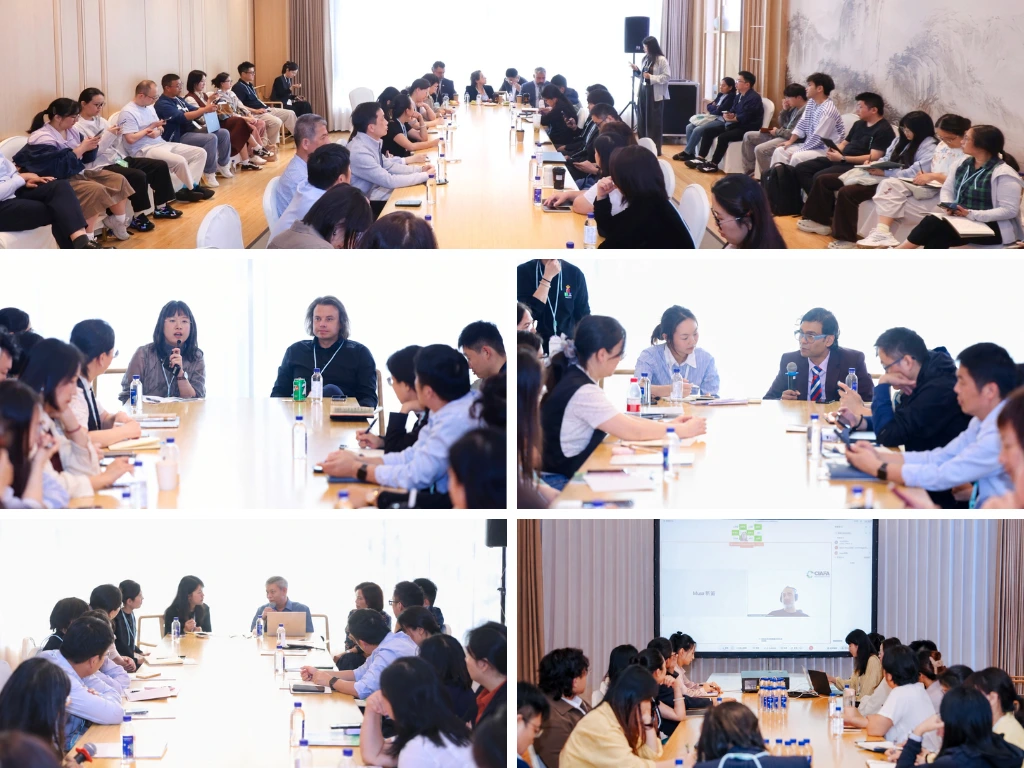
These smaller discussions gave delegates opportunities to raise questions about regulatory requirements in key markets and explore challenges specific to their products and registration plans.
By combining technical presentations with focused exchanges, REACH24H connected broader regulatory developments with the practical decisions facing participating companies.
Continuing the Exchange Beyond CRAC
REACH24H coordinated two parallel forums covering agrochemical regulation, chemicals compliance, low-carbon development and sustainability, bringing together international speakers and industry organizations for technical sessions and focused discussions. Within the agrochemical program, one-to-one meetings gave delegates additional opportunities to discuss questions relevant to their products and target markets.
REACH24H will continue sharing selected technical insights from the forum through subsequent articles. Its global agrochemical regulatory services support companies in translating these considerations into registration and compliance plans, including EU market-access strategy, U.S. EPA pesticide registration, and early safety assessment for new pesticides in China.
Discuss Your Agrochemical Registration Plans
To discuss a target market, product portfolio or registration program, contact REACH24H's agrochemical regulatory team.