
Introduction
On November 28, 2025, China's Ministry of Ecology and Environment held its regular November press conference, emphasizing the critical role of solid waste, heavy metal pollution, and new pollutant control to build a beautiful China.
The New Chemical Substance Environmental Registration, as a source control measure for new pollutant control, has imposed stricter requirements on the classification, management, and disposal of solid waste associated with new chemical substances.
In the context of increasingly stringent environmental regulations, chemical enterprises urgently need to understand solid waste management requirements, particularly the identification procedures, exemption conditions, and compliant disposal pathways for hazardous waste. This is not only crucial for registration compliance but also directly impacts operational efficiency and cost control.
To this end, REACH24H would assist enterprises in accurately identifying risks, efficiently fulfilling responsibilities, and achieving green, compliant, and sustainable development under the new pollutant control system by addressing the regulatory background, legal definitions, classification and identification, compliant disposal, and the impact on enterprises with corresponding recommendations.
Why Is China Focusing on Solid Waste and New Pollutant Control?
The "Recommendations of the Central Committee of the Communist Party of China on Formulating the 15th Five-Year Plan for National Economic and Social Development," adopted at the Fourth Plenary Session of the 20th Central Committee, explicitly proposed implementing comprehensive solid waste management actions and advancing new pollutant control.
Against this backdrop, the Ministry of Ecology and Environment has paid particular attention to the classification and disposal methods of solid waste across all exposure scenarios throughout the lifecycle, including production and processing, during the routine registration review of new chemical substances. Stricter requirements have been introduced.
For chemical enterprises, effectively managing and disposing of the diverse and large quantities of solid waste has become a significant challenge.
Accurately determining solid waste types and adhering to technical standards, especially the identification procedures and exemption rules for hazardous waste, not only helps enterprises meet new environmental standards but also plays a vital role in reducing management costs and improving resource utilization efficiency.
Definition and Classification of Solid Waste in China
Understanding solid waste (hereinafter referred to as "solid waste") requires moving beyond the misconception that it refers only to solids.
According to the Law of the People's Republic of China on the Prevention and Control of Environmental Pollution by Solid Waste (hereinafter referred to as the "Solid Waste Law"), solid waste refers to substances or materials in solid, semi-solid, or gaseous forms that are generated during production, living, and other activities, which have lost their original utilization value or are discarded or abandoned despite retaining utilization value, as well as substances or materials included in solid waste management as stipulated by laws and administrative regulations.
For chemical enterprises, solid waste takes on highly diverse forms, commonly including:
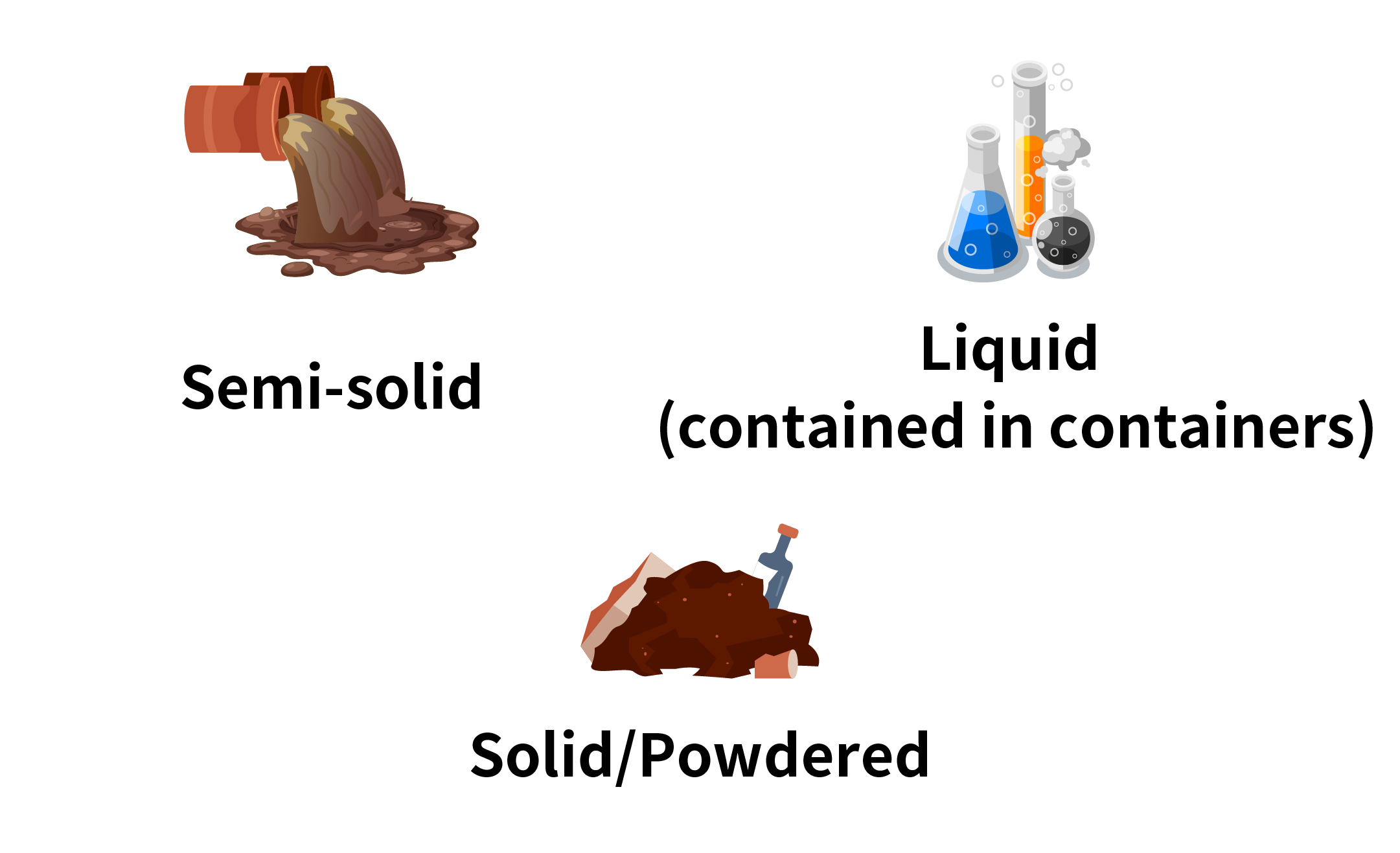
Semi-solid: Such as sludge generated from wastewater treatment plants (e.g., biochemical sludge, physicochemical sludge).
Liquid (contained in containers): Such as organic waste liquids, waste acids, and waste alkalis generated during production.
Solid/Powdered: Such as discarded packaging containers, reaction residues, and dust collected by air pollution control systems.
Based on their hazardous characteristics, solid waste is divided into two categories: general solid waste and hazardous waste:
General Industrial Solid Waste: Refers to solid waste that does not exhibit any of the hazardous characteristics of corrosivity, toxicity, flammability, or reactivity and is not classified as hazardous waste.
Hazardous Waste: Refers to solid waste that meets any of the following conditions: 1. Exhibits one or more hazardous characteristics such as corrosivity, toxicity, flammability, or reactivity. 2. Cannot be excluded from having hazardous characteristics and may pose harmful effects on the ecological environment or human health, requiring management as hazardous waste.
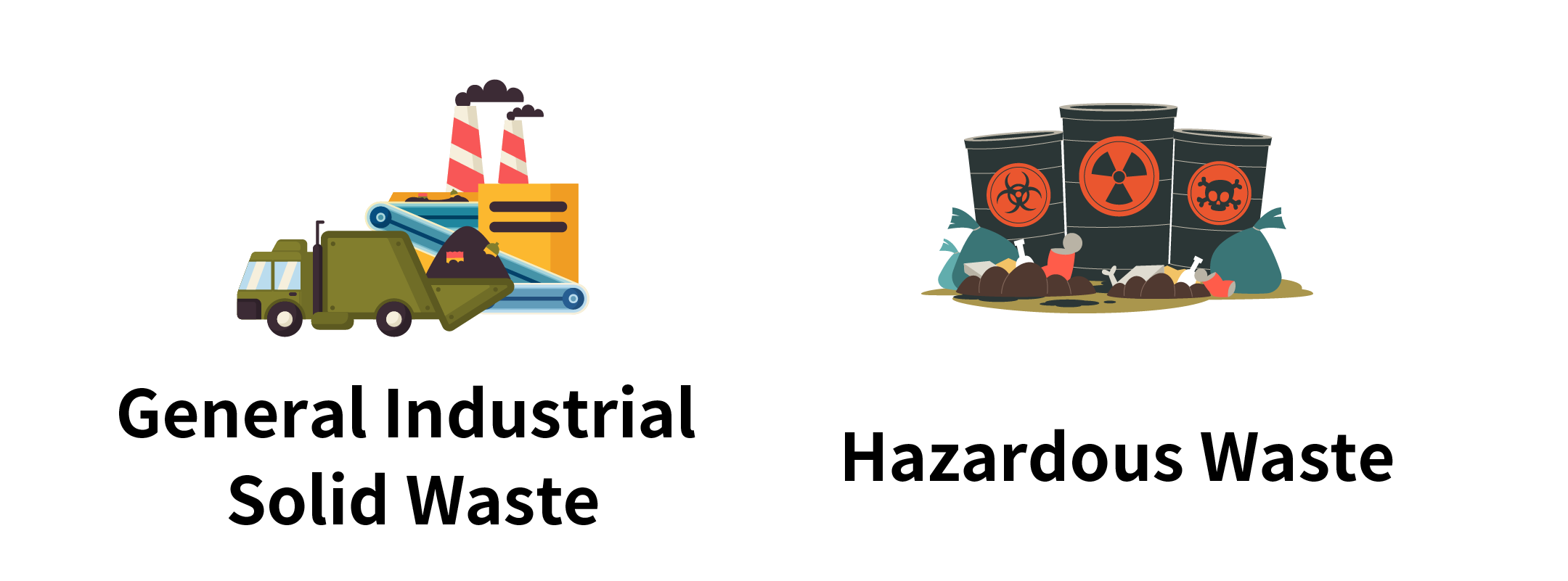
For chemical enterprises, accurately differentiating between these two types of solid waste is critical, as their management requirements and costs differ significantly in subsequent storage, transfer, and disposal stages.
Disposal Requirements for General Solid Waste and Hazardous Waste
The disposal requirements for general solid waste and hazardous waste differ fundamentally, and this distinction directly determines compliance costs and management complexity for enterprises.
Based on current standards, REACH24H has compared the differentiated management requirements for the storage, collection, transportation, incineration, and landfill of the two types of solid waste.
Disposal Stage | Hazardous Waste (HW) | General Industrial Solid Waste (GSW) | Impact on Enterprise |
Storage | High Standards, Strict Requirements: Must comply with GB 18597—2023. Storage facilities must have measures for anti-seepage, leak prevention, rain protection, and anti-dispersion. Anti-seepage layers require extremely high standards (e.g., at least 2mm thick HDPE membrane, permeability coefficient not greater than 10⁻¹⁰ cm/s). Real-time storage capacity at the storage point must not exceed 3 tons. | Differentiated Management: Storage and landfill sites must comply with GB 18599-2020. Classified into Class I and Class II sites based on waste characteristics. Anti-seepage requirements are lower than for HW but still require basic protection (GB 18599-2020). | Cost Difference: Construction and maintenance costs for HW storage facilities are significantly higher than for GSW. |
Collection & Transport | Full Manifest, Dedicated Vehicles: Must comply with HJ 2025-2012. Requires dedicated transport vehicles, professional personnel, strict packaging (GB 12463) and labeling (GB 190), and the implementation of the Hazardous Waste Transfer Manifest system. | Relatively Lenient: Transport generally refers to ordinary goods or local regulations, without the need for a transfer manifest, but still requires basic environmental protection measures such as anti-dispersion and anti-loss. | Management Difficulty: HW transport involves multi-departmental supervision (environmental protection, transportation), a long management chain, and high risk. |
Incineration | Extremely High Standards: Must comply with GB 18484—2020. Requires the incinerator to operate at a high-temperature section of ≥1100℃ with a flue gas residence time of ≥2.0 seconds to ensure a Destruction and Removal Efficiency (DRE) ≥99.99%. Emission limits for flue gas indicators (e.g., dioxins, heavy metals, particulates) are extremely low, requiring continuous online monitoring. | No Unified National Standard: GSW incineration generally refers to local or industry standards, with technical requirements and emission limits far lower than for HW incineration. | Technical Barrier: HW incineration facilities require huge investment, high operating costs, and extremely high demands on technology and management levels. |
Landfilling | Strict Technical Requirements: Landfilling is the last resort for HW disposal. According to the Solid Waste Law and GB 18598—2019, only HW that has been pre-treated (e.g., stabilization/solidification) and meets the entry requirements can be admitted to a Hazardous Waste Landfill. The standard imposes extremely strict regulations on site selection, anti-seepage systems, leachate collection and treatment, gas venting, and monitoring. | Classified Landfilling: Divided into Class I (low risk) and Class II (high risk) sites. Class II sites require a single artificial composite liner (e.g., 1.5mm HDPE membrane + 0.75m clay layer) and a leakage monitoring system. | Risk Level: HW landfilling is a high-risk disposal method. Enterprises must ensure that the entrusted disposal unit strictly complies with all technical requirements of GB 18598—2019; Otherwise, they will bear joint liability. |
Given the significant differences in disposal requirements, REACH24H recommends that chemical enterprises adopt source control and process optimization to reduce hazardous waste classification through conversion to general solid waste or reduce outsourced disposal volumes through resource utilization, thereby achieving cost reduction and efficiency improvement.
How to Identify Hazardous Waste in China?
Identification is the legal procedure for determining whether solid waste qualifies as hazardous waste and is the first step in compliance management for enterprises.
Identification Procedures: Inventory First, Supplement with Identification
Inventory Determination: First, refer to the National Hazardous Waste Inventory (2025 Edition). Solid waste listed in the inventory is directly classified as hazardous waste.
Identification Determination: For solid waste not listed in the inventory but potentially hazardous, identification must be conducted in accordance with the General Rules for Hazardous Waste Identification Standards (GB 5085.7-2019, hereinafter referred to as the "General Rules") and other relevant standards.
Identification Rules: Four Key Characteristics
According to the "General Rules," the determination of hazardous characteristics in solid waste is based on the following four categories of characteristics.
Hazardous Characteristic | Identification Basis | Typical Cases |
Corrosivity | pH value, corrosion rate, etc. | Strong acid, strong alkali waste liquids. |
Toxicity | Leaching toxicity, acute toxicity, etc. | Sludge, waste liquids containing heavy metals, and organic toxins. |
Ignitability | Flash point, ignition point, auto-ignition, etc. | Discarded organic solvents, paint residue. |
Reactivity | Explosiveness, water reactivity, acid reactivity, etc. | Discarded peroxides, Explosive waste. |
Enterprises should commission qualified institutions for identification and properly retain identification reports. For solid waste that has undergone pre-treatment (e.g., neutralization, stabilization) to eliminate hazardous characteristics, re-identification can be conducted. Once confirmed as non-hazardous, it can be managed as general solid waste, significantly reducing disposal costs.
China's Hazardous Waste Inventory and Exemption Rules
The National Hazardous Waste Inventory (2025 Edition) serves as the cornerstone of hazardous waste management, while the Hazardous Waste Exemption Management List (hereinafter referred to as the "Exemption List") provides policy flexibility to encourage resource utilization and reduce enterprise burdens.
Hazardous Waste Inventory
The inventory adopts a source classification method, specifying 50 major categories and over 400 types of hazardous waste. Chemical enterprises should focus on categories closely related to their production activities.
Exemption Rules
Exemption management refers to managing hazardous waste listed in the inventory as non-hazardous waste in specific or all stages of collection, storage, transportation, utilization, and disposal, provided certain conditions are met.
Full Process Exemption: Applies when waste meets exemption conditions throughout its generation, utilization, and disposal processes. The waste is treated as general solid waste, eliminating the need for transfer manifests, operating permits, etc.
Partial Process Exemption: Applies when exemption conditions are met only in specific stages (e.g., utilization or disposal). Outside these stages (e.g., generation, storage, transportation), the waste is still managed as hazardous waste, but procedures can be simplified in the exempted stages.
The "Exemption List" is a critical pathway for enterprises to "transform waste into resources." For example, HW08 waste mineral oil and mineral oil-containing waste, HW34 waste acid, HW35 waste alkali, etc., can be exempted from hazardous waste management requirements under specified utilization conditions.
Typical Exemption Cases (High Interest for Chemical Enterprises)
Waste Iron Oil Drums (HW08, HW Code: 900-249-08): Waste iron oil drums contaminated with mineral oil, provided that the seal is open, there is no dripping after static placement, and they are baled and compacted, meeting relevant ecological and environmental standards, and used as production raw material for metal smelting. The utilization process is exempt from hazardous waste management.
Oily Metal Scraps (HW08, HW Code: 900-200-08): Oily metal scraps classified as hazardous waste generated during machining, provided that after deoiling processes such as pressing, filtering, or centrifuging, they achieve no dripping after static placement, are packaged or pressed into blocks, meet relevant ecological and environmental standards, and are used as production raw material for metal smelting. The utilization process is exempt from hazardous waste management.
Waste Acid Only Possessing Corrosive Hazardous Characteristics (HW34): Used as a neutralizing agent for industrial wastewater treatment plants, provided that: the content of Class I pollutants in the waste acid is lower than the discharge standard of the wastewater treatment plant, and the content of other characteristic pollutants listed in the Hazardous Waste Identification Standard - Leaching Toxicity (GB 5085.3) is lower than 1/10 of the limit value specified in GB 5085.3. The utilization process is exempt from hazardous waste management.
Waste Alkali Only Possessing Corrosive Hazardous Characteristics (HW35):
1) Used as production raw material for comprehensive utilization, meeting relevant ecological and environmental standards;
2) Used as a neutralizing agent for industrial wastewater treatment plants, provided that: the content of Class I pollutants in the leachate of liquid or solid alkali prepared according to the HJ/T 299 is lower than the discharge standard of the wastewater treatment plant, and the content of other characteristic pollutants listed in the Hazardous Waste Identification Standard - Leaching Toxicity (GB 5085.3) is lower than 1/10 of the limit value specified in GB 5085.3. When either of the above conditions is met, the utilization process is exempt from hazardous waste management.
Consequences of Non-Compliance in Solid Waste Management: Legal and Economic Penalties
Improper management of solid waste, especially hazardous waste, can result in severe legal and economic consequences.
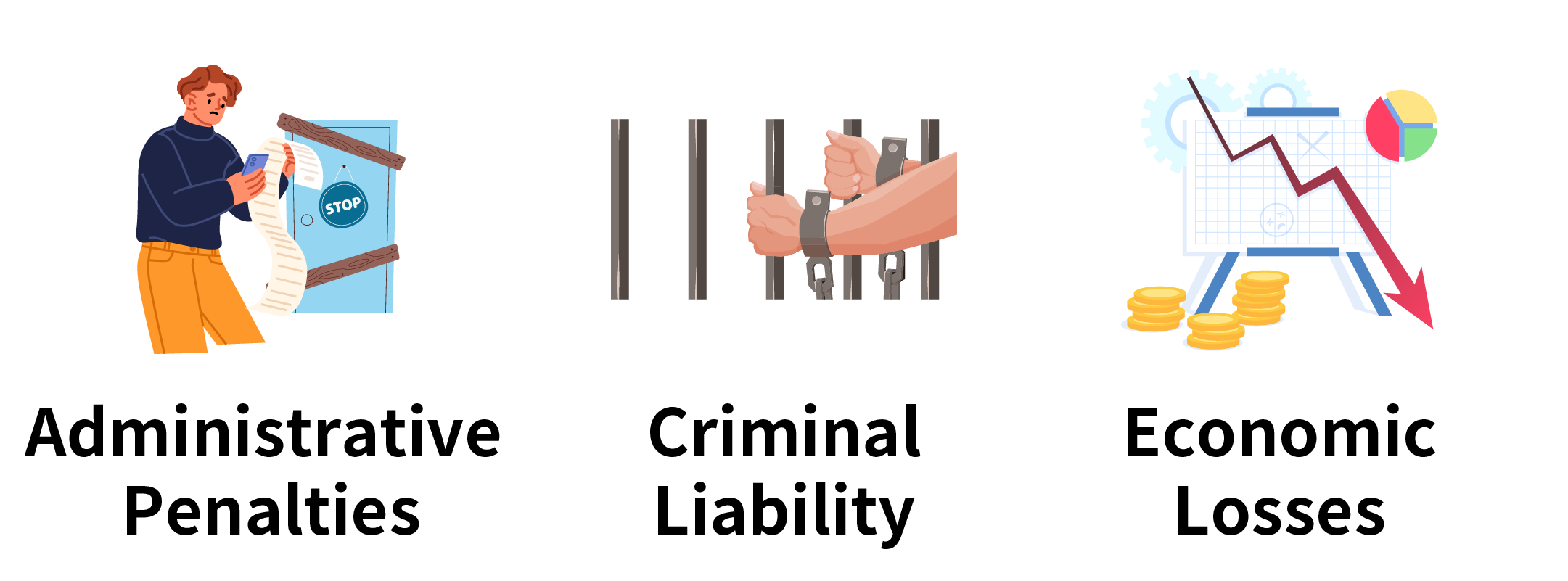
Administrative Penalties: According to the "Solid Waste Law," violations such as failing to set up storage facilities, not implementing transfer manifests, or illegal dumping can result in hefty fines and orders to suspend production or business operations for rectification.
Criminal Liability: Illegal discharge, dumping, or disposal of hazardous waste that severely pollutes the environment constitutes the crime of environmental pollution, and responsible individuals will face criminal prosecution.
Economic Losses: Violations can lead to production suspension, reputational damage, stock price declines, high environmental remediation costs, and loss of bank credit and government subsidies.
Recommendations for Enterprises: Building a Refined Solid Waste Management System
In response to increasingly stringent solid waste management requirements, REACH24H recommends that chemical enterprises build a refined management system through the following measures:
Establish a "One Waste, One Record" System: Maintain detailed records for all solid waste (including general and hazardous waste), specifying their sources, characteristics, flow, and disposal methods. For hazardous waste, ensure "account-material consistency and clear flow."
Strengthen Professional Technical Investment: Allocate resources for solid waste attribute identification and pre-treatment technology development, aiming to convert hazardous waste into general solid waste or meet exemption conditions through technical means.
Ensure Compliance with the Latest Standards: Regularly update and align with the latest standards, such as the Pollution Control Standard for Hazardous Waste Storage (GB 18597—2023), Pollution Control Standard for Storage and Landfill of General Industrial Solid Waste (GB 18599-2020), and Pollution Control Standard for Hazardous Waste Incineration (GB 18484—2020), ensuring storage facilities and disposal processes meet the latest technical requirements.
Select Disposal Units with Due Diligence: When outsourcing hazardous waste disposal, rigorously review the operating permits, disposal capabilities, and environmental credit of external units, and sign clear environmental responsibility contracts.
Provide Comprehensive Training: Regularly train personnel in production, environmental protection, warehousing, and transportation on solid waste management regulations and technical standards to ensure compliance awareness and operational capability from frontline employees to management.
Through scientific management and technological innovation, chemical enterprises can transform solid waste management from a compliance burden into an environmentally friendly, cost-controllable, competitive advantage, promoting sustainable coexistence between enterprises and the environment.


