Overview: US–Indonesia Trade Talks and Halal Certification Concerns
Recent trade discussions between Indonesia and the United States have drawn public attention to the potential implications for halal certification requirements on imported products.
During negotiations under the Agreement on Reciprocal Trade (ART) framework, halal certification was reportedly raised as one of the non-tariff regulatory measures affecting market access. Initial media coverage suggested that U.S. products might be allowed to enter the Indonesian market without complying with halal certification obligations. However, Indonesian authorities later clarified that the mandatory halal certification framework remains unchanged.
Indonesian Authorities Confirm Mandatory Requirements of Halal Certification
Ahmad Haikal Hasan, Head of the Halal Product Assurance Organizing Agency (BPJPH), reaffirmed that Indonesia’s halal certification requirements remain in line with Government Regulation No. 42 of 2024 on the Implementation of Halal Product Assurance. He stated that products falling within mandatory halal categories circulating in Indonesia—including imported products from the United States and other countries—must comply with applicable halal certification provisions.
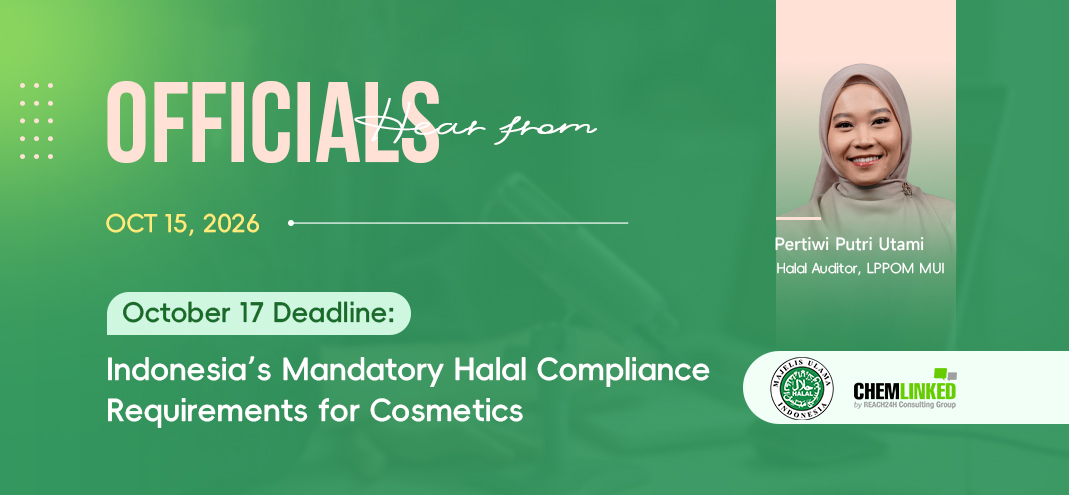
More recently, Indonesia reiterated its commitment to continue implementing the mandatory halal certification policy during the World Trade Organization Technical Barriers to Trade (TBT) forum on March 6, 2026. Authorities confirmed that the implementation timeline remains unchanged, with the transition period for several product categories—including imported products—set until October 17, 2026.
In addition, authorities clarified that products containing non-halal ingredients may still be imported and traded in Indonesia, provided that they clearly disclose non-halal information in accordance with applicable labeling requirements.
Mutual Recognition Mechanism between BPJPH and Foreign Halal Certification Bodies
At the same time, Indonesia continues to strengthen international cooperation to facilitate halal trade through the mutual recognition mechanism between BPJPH and foreign halal certification bodies. Under this framework, halal certificates issued by recognized foreign halal institutions may be accepted for products intended for the Indonesian market. In the United States, several halal certification bodies have been recognized by BPJPH, including Islamic Food and Nutrition Council of America (IFANCA), American Halal Foundation (AHF), Islamic Services of America (ISA), Halal Transactions of Omaha (HTO), and the Islamic Society of Washington Area (ISWA). According to BPJPH, this mutual recognition mechanism aims to simplify certification procedures while maintaining Indonesia’s regulatory authority and halal assurance system.
Compliance Recommendations for Exporters
While these mechanisms indicate ongoing efforts to facilitate international halal trade, the practical implementation of the provisions referenced in the ART framework remains unclear.
From a regulatory perspective, businesses exporting products to Indonesia should continue to comply with the existing halal certification framework while closely monitoring potential policy developments. As bilateral trade discussions progress, further clarification may emerge regarding the implementation of mutual recognition mechanisms and other technical arrangements that could influence how halal certification for imported products is administered in the future.
At present, detailed implementation mechanisms under the trade agreement have not yet been formally issued. Informal inquiries to BPJPH’s information center also suggest that the policy direction is still under internal discussion and has not yet been officially confirmed. Therefore, the provisions referenced in the trade agreement should currently be understood as a government-to-government policy commitment, rather than an operational exemption that can be immediately applied in practice. Businesses are advised to await further implementing or derivative regulations that will clarify how these commitments will be applied at the technical and operational level.
Contact Us
For more information and inquiries on Halal certification, please feel free to contact us at customer@reach24h.com.