Introduction
The EU Safety Gate (also known as the EU Rapid Alert System) has always been monitoring the safety of non-food products entering the European market. In 2025, the system recorded several thousand alerts for cosmetics from around the world, with Chemical Risk as the most reported one. These alerts reveal prominent safety and compliance issues in products on the market, and provide important references for enterprises aiming to enter the European market.
This article will analyze the 2025 Safety Gate Alerts, as well as the core requirements of the EU Cosmetic Regulation, and explore four key points to help achieve robust compliance.
Most Common Risks in Safety Gate Alerts
Chemical Risk is the most common reason for non-compliance, including potential harm to human health and the environment. It is usually manifested in the illegal existence of prohibited or restricted substances, as well as labelling errors. The second most common reason for non-compliance is Microbiological Risk.
Existence of Prohibited Substances
This is the primary reason for products being notified on Safety Gate, which directly violates the basic requirements for safety.
BMHCA (Lilial) and HICC (Lyral) are the most frequently detected prohibited substances. They were initially regulated as allergens and then banned in 2021 and 2017, respectively. The detection of these two substances accounts for about 90% of all alerts, reflecting the lag in the fragrance supply chain's response to regulation amendments.
Some substances have recently been prohibited, but are still being detected in market products, including TPO (Trimethylbenzoyl Diphenylphosphine Oxide, prohibited since September 2025) and Trimethylolpropane Triacrylate (prohibited since December 2023).
Other frequently detected prohibited substances include Glucocorticoids, Formaldehyde, Isobutylparaben, Cyclotetrasiloxane (D4), and Dibutyl Phthalate.
A series of heavy metals and their compounds have also been banned according to the EU regulation (such as Lead, Mercury, Arsenic, Cadmium, Antimony, Nickel, Selenium, Cobalt). Any cosmetic containing excessive levels (higher than technically unavoidable trace levels) of these substances will also be notified.
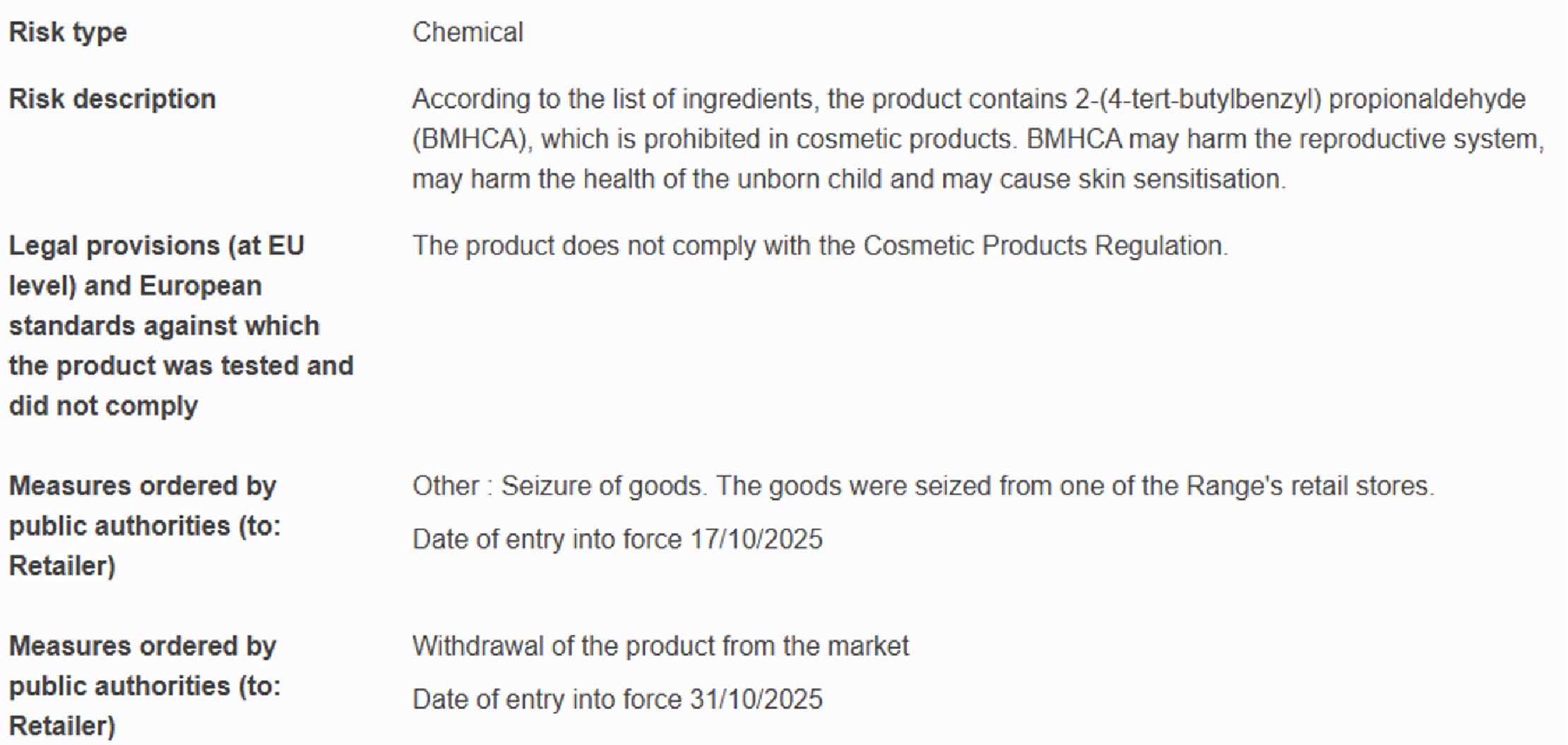
Example 1: Seizure of goods and withdrawal from market for containing BMHCA
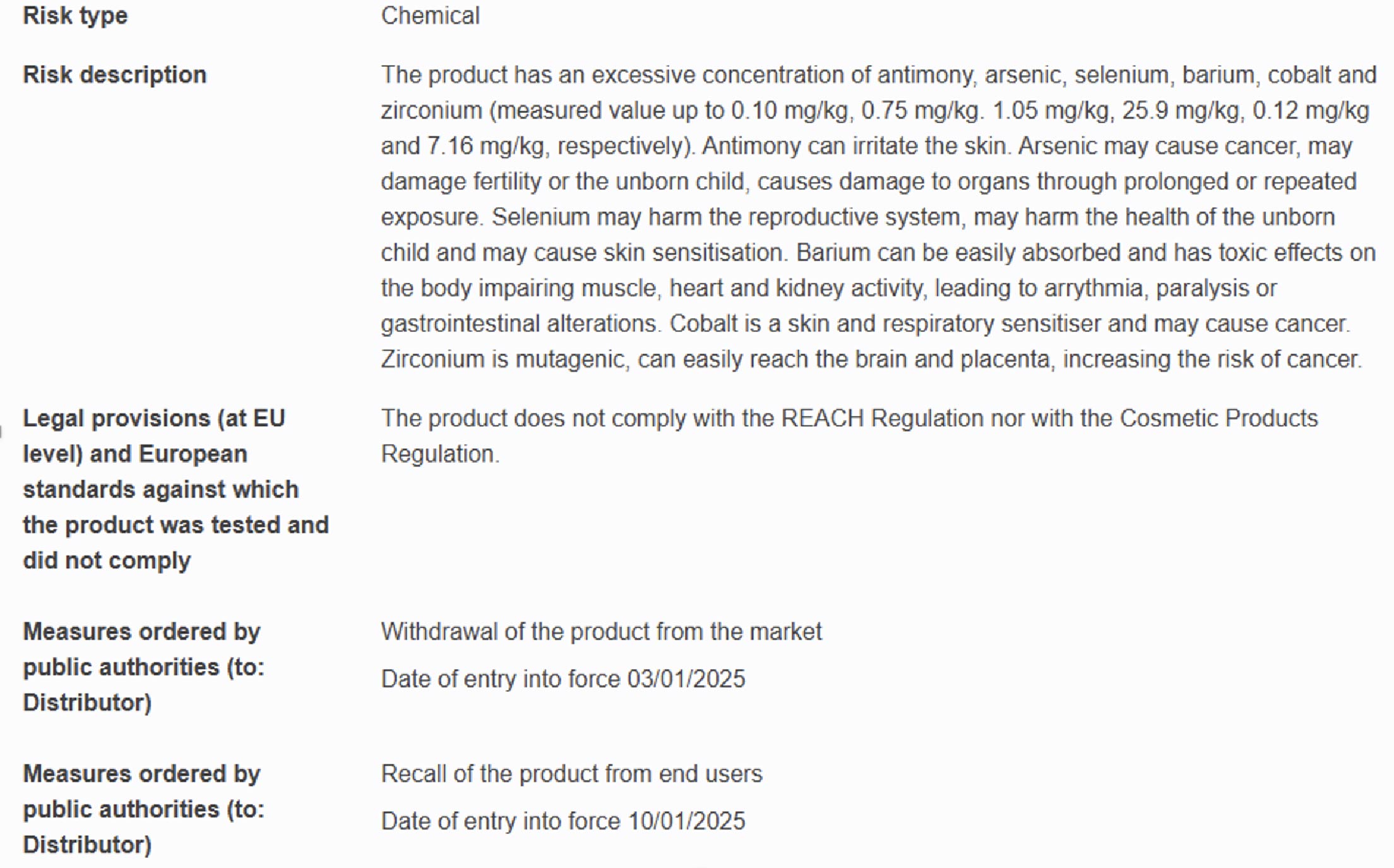
Example 2: Withdrawal of product from market due to excessive content of heavy metals
Restricted Substances Exceeding Limits
When using substances with specific restrictions in the regulation, attention shall be paid to the requirements of product type, application site, concentration, warning, etc.
When Hydrogen peroxide is used in tooth whitening products, the maximum concentration shall be determined based on the target user group. Improper formulation and failure to comply with the limit will trigger regulatory actions.
HEMA (2-hydroxyethyl methacrylate) and p-Hydroxyanisole (Mequinol) used in nail products are restricted to professional use only and must not be supplied to general consumers.
Methylisothiazolinone and Methylchloroisothiazolinone are prohibited in leave-on products.
Thioglycolic Acid must comply with limits of concentration, final product pH, and warnings when used in hair waving or straightening, depilatories, and other products.
Hydroquinone is prohibited for use in products other than professional artificial nail systems.

Example 3: A tooth whitening product rejected at import due to excessive Hydrogen Peroxide
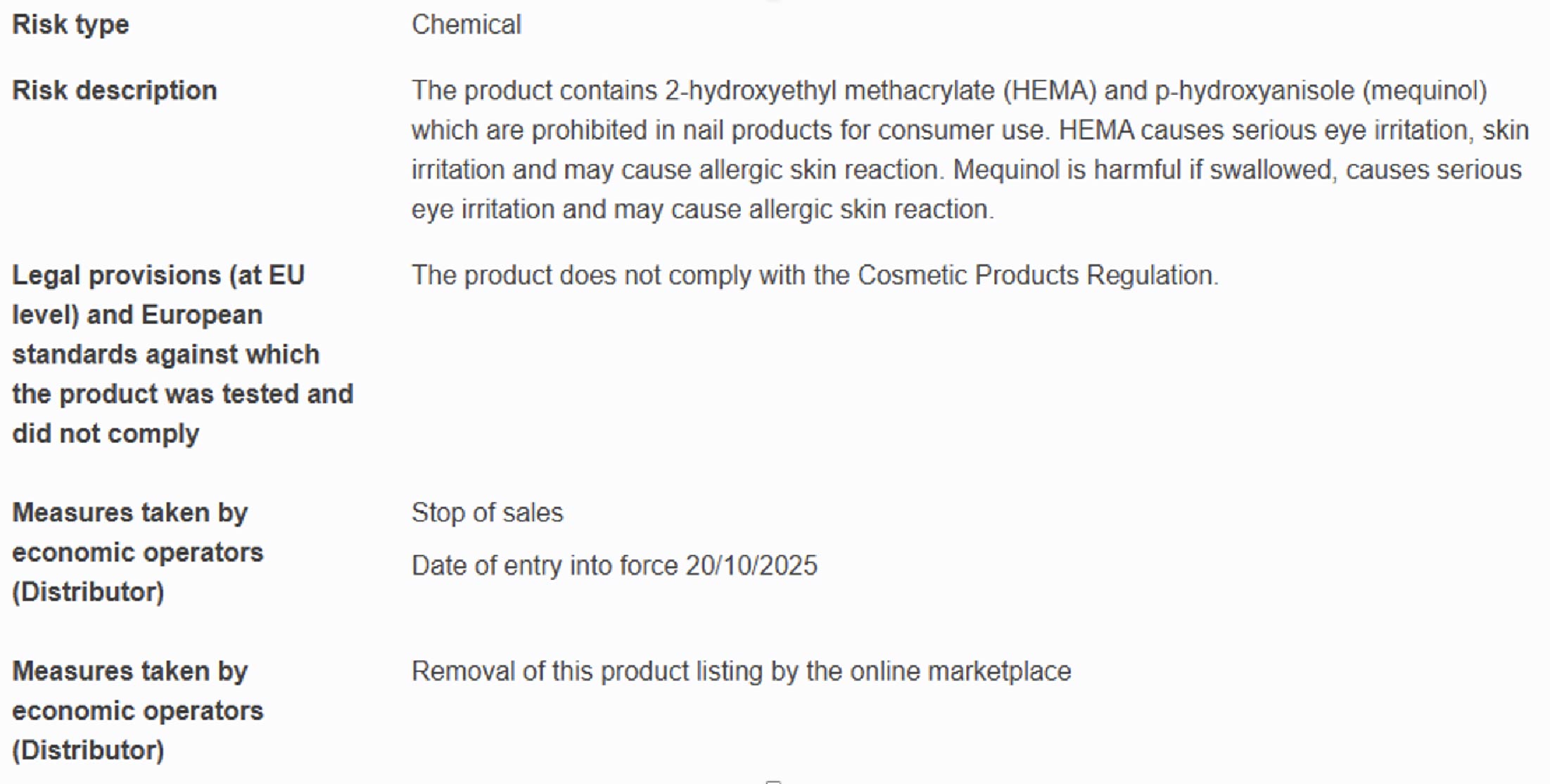
Example 4: A nail polish ordered to stop sales due to containing prohibited ingredients
Existence of Other Hazardous Substances
Although some substances have not yet been included in the regulation, their risks have received widespread attention. Some Member States may take the lead in initiating alerts.
Isopropyl Cloprostenate and Bimatoprost are prostaglandin analogues that may cause eye defect upon contact and show potential reproductive and developmental toxicity. Germany has already issued four related alerts for eye products.
Tetrahydrocannabinol (THC) is a cannabinoid with potential psychotoxicity, and one related product alert was issued by Lithuania.
Centella Asiatica and/or Bakuchiol extracts may cause skin irritation or allergic reactions, with one related product alert by France.
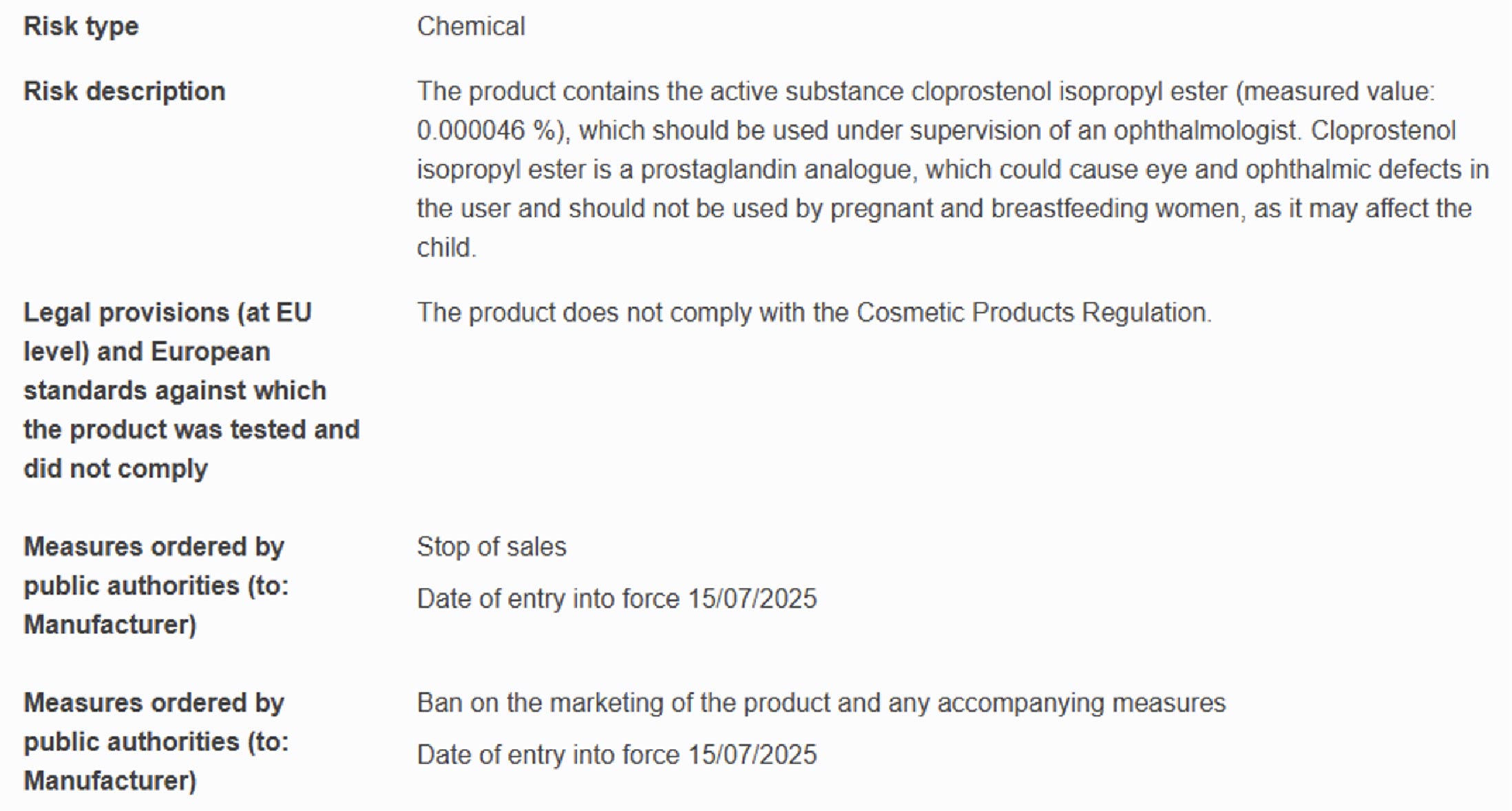
Example 5: An eyelash serum ordered to stop sales due to containing a prostaglandin analogue

Example 6: Withdrawal of a skincare product due to containing Tetrahydrocannabinol
Microbial Contamination
According to the ISO 17516:2014, the content of aerobic mesophilic microorganisms and four pathogens should be strictly controlled in cosmetic products.
The microbial contents of some products exceeded the standard, which mainly indicates the deficiency of the Good Manufacturing Practice (GMP), as it failed to control the microbial risks in the production environment or raw materials, thereby posing a threat to the product safety.

Example 7: Withdrawal from market due to microbial contamination
Errors in Labelling
The label is the first piece of information presented to the authorities and consumers. Ensuring the accuracy and completeness of the label information is not only related to compliance but also to consumer safety.
When the content of allergens in the product exceeds a certain standard, their presence shall be indicated in the list of ingredients on the packaging. Failure to mark, insufficient marking, or incorrect marking may all cause adverse reactions in some people.
According to the Commission Recommendation 2006/647/EC, the minimum degree of protection by sunscreen products shall be supported by a sun protection factor (SPF) of 6. Products with a lower SPF value may cause consumers to suffer from sunburn and other adverse consequences.
Cosmetics should be properly designed in terms of appearance, such as shape, color, size, etc., to prevent them from being mistaken for food and ingested.
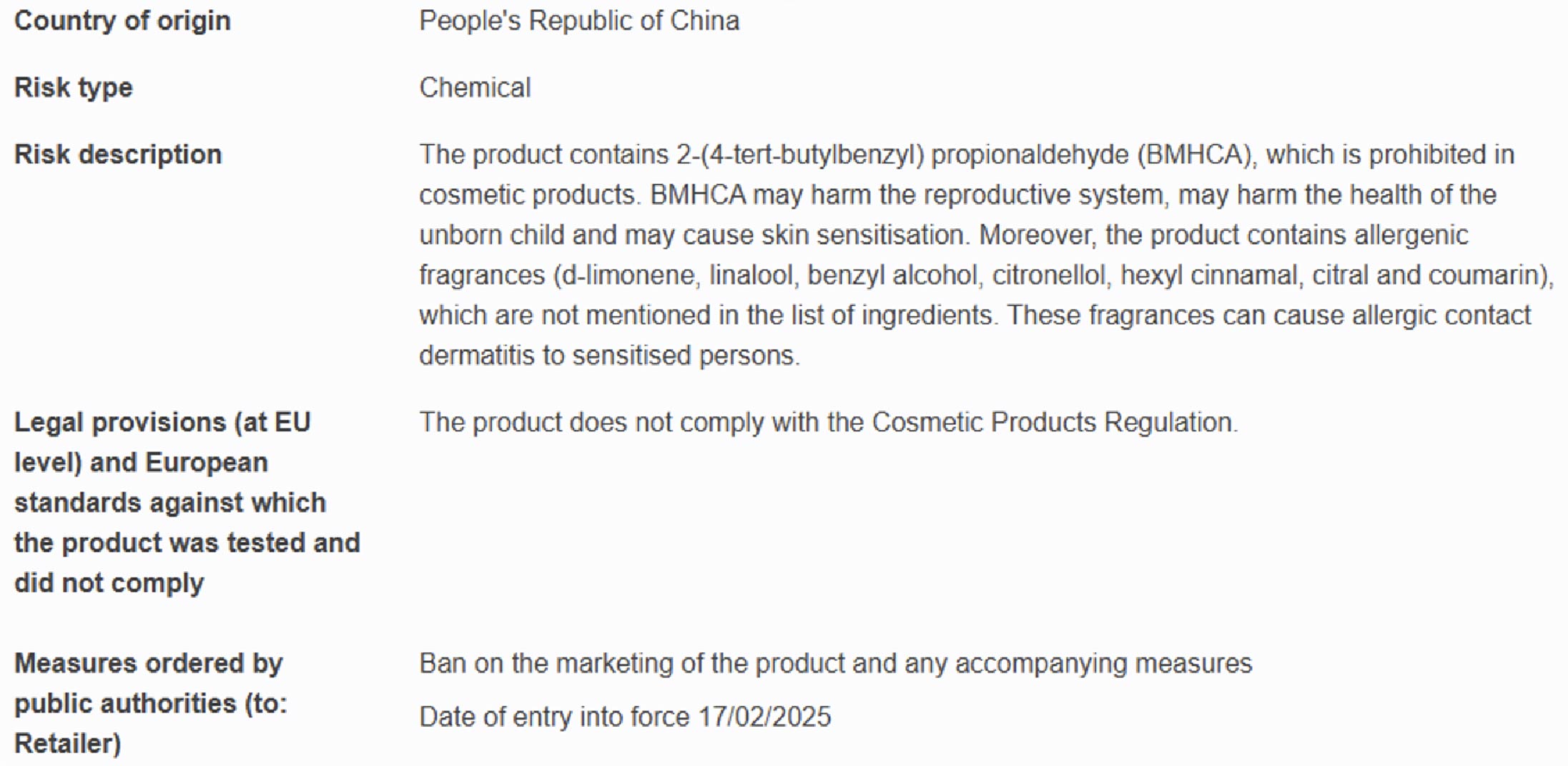
Example 8: A product banned from marketing due to missing allergen information
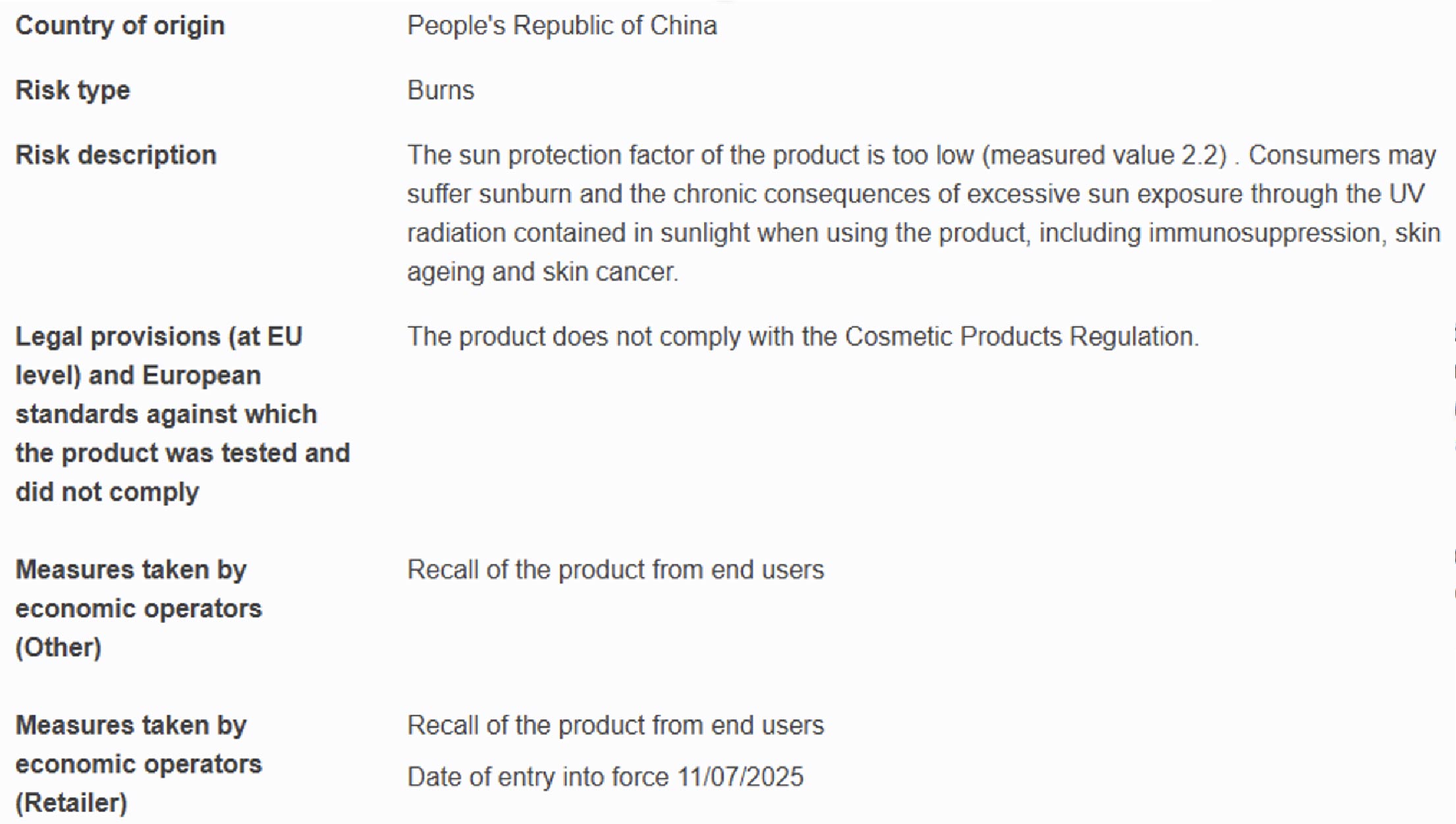
Example 9: A sunscreen product recalled due to inadequate sun protection

Example 10: A shower gel recalled due to the risk of being mistaken for foodstuff
Four Key Compliance Strategies for Enterprises
To ensure the smooth entry of products into the EU market and long-term circulation, it is recommended that enterprises incorporate the requirements of the EU Cosmetic Regulation into their daily operations. The following are four key strategies for enterprises.
Designate the EU Responsible Person (RP)
This is the prerequisite for entering the EU market. A legal or natural person established within the EU must be designated as the RP, who bears the final responsibility for product compliance.
Establish a Product Information File (PIF), including Cosmetic Product Safety Report (CPSR): Before placing each product on the market, a complete PIF must be established, including a safety assessment by a qualified assessor. The PIF must be accurate and detailed enough, kept by the RP and updated promptly.
Strictly Control the Supply Chain
Ingredient safety is the lifeline of product compliance. It is recommended to strengthen supplier management, such as providing comprehensive data for raw materials, and conducting tests on prohibited substances and other harmful impurities in each batch. Simultaneously, it is recommended to ensure production processes comply with internationally recognized GMP requirements like ISO 22716, controlling microbial contamination risks at the source.
Monitor Regulatory Dynamics in Real Time
The EU regulation is constantly updated, with recent focus on potential endocrine disruptors and Carcinogenic, Mutagenic, and Reprotoxic (CMR) risks. Companies are suggested to closely monitor changes to the regulation, audit formulations regularly, and respond promptly to the latest requirements.
Implement Precise Label Management
Labels should convey accurate key information. On the one hand, ensure all mandatory information (including the RP, ingredient list, net content, durability, etc.) is presented clearly and accurately. On the other hand, ensure effective consumer protection, for example, by providing necessary warnings, and ensuring that the packaging form and efficacy claims are not misleading.
Conclusion
The 2025 Safety Gate Alerts demonstrate that EU supervision of cosmetic safety is strict and continuous. Both the zero tolerance for risk substances and the liability tracing across the entire supply chain (importers, distributors, retailers) demand that companies establish a proactive, systematic compliance management system.
We sincerely invite you to contact us to jointly build a rigorous and efficient compliance system and achieve the long-term development of your brand in the European market.
For more information and inquiries, please feel free to contact us at customer@reach24h.com.